

Some journeys shouldn’t be survivable, let alone legal.
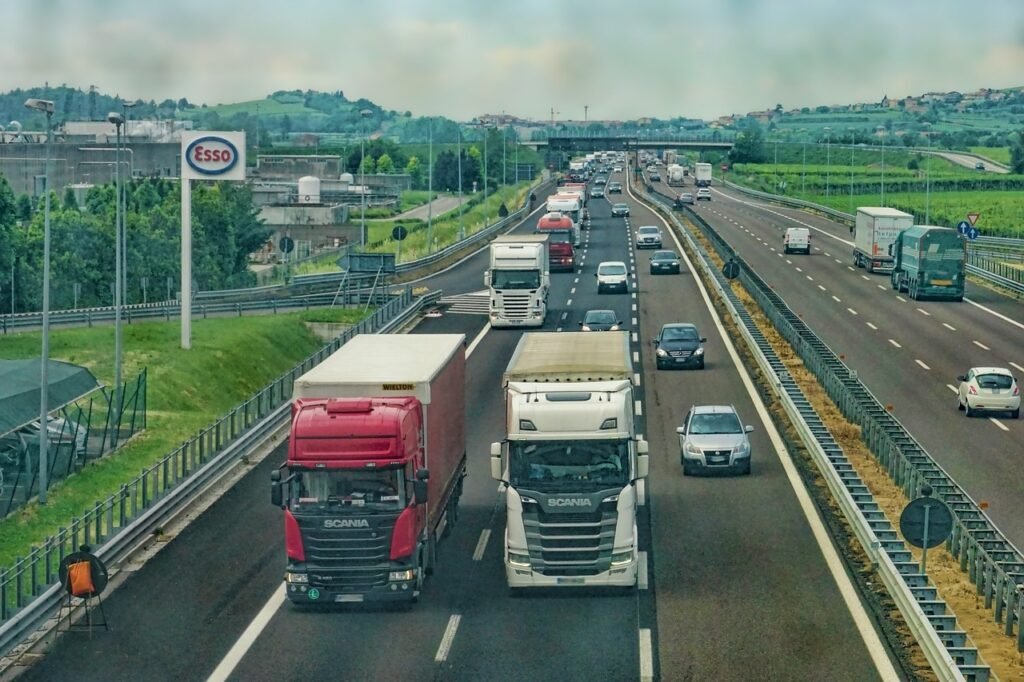
Millions of animals travel for days — sometimes weeks — by truck and by sea before slaughter or sale, under a patchwork of laws that mostly go unenforced. The alternative already exists: move the meat, not the animal.

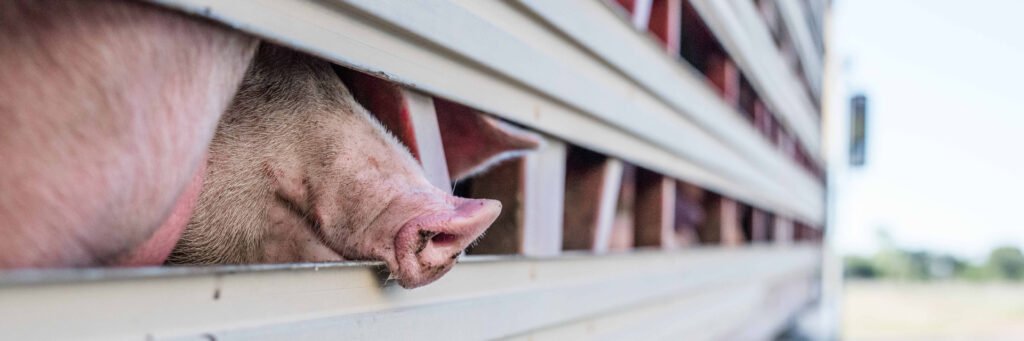
What the journey actually looks like
Humane Transport of Farmed Animals Act
Reintroduced by Rep. Dina Titus (D-NV) with bipartisan support, the bill targets the two biggest gaps in U.S. law: a rule almost nobody enforces, and no baseline requirement that an animal actually be fit to travel.
The Twenty-Eight Hour Law is the country’s oldest federal animal welfare statute — it requires animals traveling 28 hours or more to be offloaded for food, water, and rest. In practice, enforcement has been almost nonexistent: some interpretations hold that it only clearly applies to rail transport, a method that accounts for a small fraction of how farm animals actually move today.
H.R. 5286 would require federal agencies to actually build an enforcement process for the law, and separately would prohibit interstate transport of livestock considered unfit for travel — animals that are sick, injured, or otherwise unable to withstand the trip — bringing domestic transport rules in line with the fitness standards that already apply to U.S. live animal exports.
Those figures come from a 2025 Animal Welfare Institute report built on 17 years of USDA records obtained through the Freedom of Information Act — and they’re the entire basis for the bill’s core argument: a law with real teeth on paper is meaningless without anyone actually enforcing it.
The conditions the law is supposed to prevent
Overcrowding
Animals packed too tightly to lie down or rest, raising injury rates and physiological stress for the entire journey.
Inadequate space & design
Double-decker trucks and poorly designed loading ramps are especially punishing for larger animals like cattle.
Unfit animals shipped anyway
Sick, injured, or heavily pregnant animals are routinely transported despite being unable to safely withstand the trip.
No climate control
Extreme heat or cold with poor ventilation leads directly to heatstroke and hypothermia — a leading cause of in-transit deaths.
The Awassi Express, 2017
Maritime live export carries its own added risks — old, converted cargo ships, weeks at sea, and no easy way to intervene if conditions go wrong.
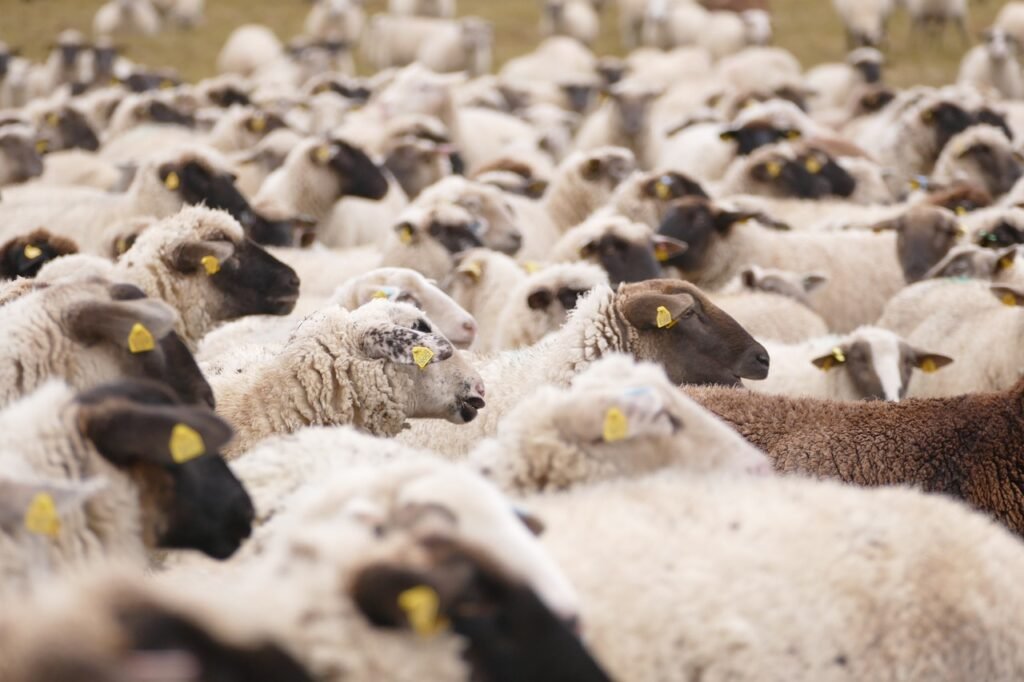
In August 2017, roughly 2,400 sheep died of heat stress aboard the Awassi Express during a voyage from Australia to the Middle East. Whistleblower footage, aired the following year, showed animals packed into pens so tightly many couldn’t reach food or water, struggling to breathe in extreme heat and humidity over a journey that can run up to three weeks. A federal investigation later confirmed the footage was genuine.
It wasn’t an isolated case. The same exporter had been linked to over 30 voyages since 2005 in which more than 1,000 animals died on a single shipment, and mortality on Middle East-bound routes has been shown to roughly double during summer heat. Ships in this trade can carry up to 70,000 animals at a time — a density that makes it effectively impossible to meet every animal’s basic welfare needs even under normal conditions.
The Awassi Express footage became the turning point in a two-decade campaign against Australia’s live sheep trade. Following the 2025 re-election of the Albanese government, the phase-out of live sheep export by sea is now fully secured — one of the most significant live-export reforms achieved anywhere in the world.
Rewriting the EU’s transport rules
The European Commission proposed replacing Regulation 1/2005, the EU’s core live-transport law, at the end of 2023. Denmark made it a top priority during its 2025 Council presidency — but agreement among member states has been slow.
The draft rules would shorten journey times further for the most vulnerable animals — unweaned calves, pregnant females, and end-of-life animals — increase minimum space allowances, and require real-time GPS tracking of transport vehicles. As of mid-2026, the file remains stuck between the European Parliament and Council, with four rotating presidencies having tried and failed to reach a common position.
Alternatives that don’t require the journey at all
Slaughter closer to the farm
Raising and slaughtering animals nearer to where they’re born eliminates the need for the longest, highest-risk journeys entirely — a position Compassion in World Farming has championed for years, and one that’s now an explicit EU policy priority.
Transport semen and embryos instead
Breeding programs don’t require shipping live adult animals across borders. Transporting genetic material accomplishes the same breeding goals without a single animal enduring the trip.
More local and mobile slaughter capacity
Investment in regional abattoirs and mobile slaughter units shortens the average distance an animal has to travel before processing, cutting both transport time and the number of vehicles on the road.
Enforceable maximum journey times
FOUR PAWS calls for an 8-hour cap for cattle, pigs, sheep, and goats, and 4 hours for poultry and rabbits — short enough that food, water, and rest stops become unnecessary rather than an afterthought.