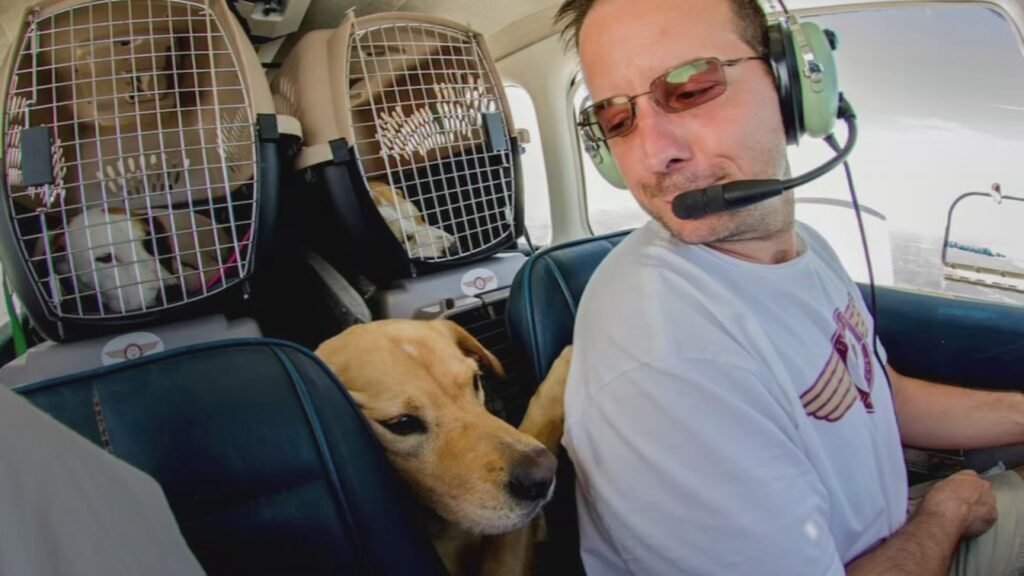


A single honest conversation freed a dog who had spent her entire life at the end of a tether. Here’s Maggie’s story, and why it matters for every chained dog still waiting.
She’s off the chain. She’s learning what safe feels like. She’s going to be somebody’s dog in a way that the tether never allowed her to be. That’s everything.
Maggie’s story ends well. Millions of dogs currently on chains across the United States do not yet have that ending.
he work of organizations like PETA, Chesapeake Humane Society, and the many regional chain-free advocacy groups operating in communities where tethering is most prevalent is the work that changes those endings, one conversation, one surrender, one rehabilitation program at a time.
No Longer Chained and Alone: Maggie’s Second Chance
A single honest conversation freed a dog who had spent her entire life at the end of a tether. Here’s Maggie’s story, and why it matters for every chained dog still waiting.
Maggie spent her life tethered. Not for an afternoon, not as a temporary arrangement while someone figured something out. Her world was a few feet of chain, a patch of dirt, and the particular loneliness of an animal who can hear and smell the world beyond her reach but can’t get to it. Then PETA intervened, a direct conversation with her owner produced a surrender, and Maggie’s life changed in a single afternoon.
PETA Community Animal Project fieldworkers located Maggie living on a permanent tether. Rather than pursuing legal action immediately, PETA’s team initiated a direct conversation with her owner, explaining what the chain was doing to her and offering a path forward. The owner agreed to surrender her. Maggie was transported to a rehabilitation program in partnership with Chesapeake Humane Society, where she is receiving the veterinary care and socialization she needs to prepare for adoption. She has never been inside a home before. She’s learning what that feels like.
The PETA Community Animal Project runs field operations across underserved communities in the rural South and mid-Atlantic, responding to cases of outdoor tethering, animal neglect, and dogs living in conditions that most people would never accept for a pet they genuinely cared for. The fieldworkers who located Maggie did not arrive with a citation book as their first tool. They arrived with food, with knowledge of the law, with an understanding of the person they were talking to, and with the patience to make the case that surrendering a dog to care is not failure. It’s the right thing to do.
That conversation-first approach works. Not always. Sometimes law enforcement and legal intervention are necessary, and PETA’s team uses those tools too. But when a fieldworker can sit with someone and explain, without condescension, what a dog on a chain experiences every day, owners sometimes hear that in a way that a citation never reaches. Maggie’s former owner heard it. That’s why she’s in a rehabilitation program right now instead of still tethered to a stake.
What a Chain Actually Does to a Dog
This part is important, and it doesn’t get explained often enough. People who tether dogs outside generally don’t think of themselves as cruel. They think the dog has air, water, and food. They think “outside” is natural for a dog. They’re wrong about what dogs need, and the gap between what people assume and what actually happens to a tethered dog is significant enough to describe in detail.
Psychological Deterioration
Dogs are social animals whose brains require stimulation, movement, and companionship to function without distress. Constant tethering produces boredom, loneliness, and frustration that compound over time into genuine psychological damage. This isn’t anthropomorphism. It’s behavioral science.
Aggression and Anxiety
A tethered dog cannot flee from perceived threats, which means its only available response is fight. Chained dogs are nearly three times more likely to bite than dogs with normal freedom of movement. The chain creates the aggression. The dog gets blamed for it.
Extreme Weather Exposure
A dog at the end of a tether cannot seek shelter if the shade moves, cannot retreat inside if a storm arrives, and cannot regulate its environment in any way. Heatstroke, hypothermia, and dehydration kill tethered dogs every year in preventable situations.
Physical Injuries
Chains entangle on trees, fences, and yard furniture, causing strangulation injuries and broken limbs. Collars worn continuously by growing animals or dogs that pull constantly embed into neck tissue, causing wounds that become infected and, if untreated, fatal.
Neurotic Behaviors
Long-term confinement produces stereotypic behaviors: repetitive pacing, incessant barking, self-mutilation. These aren’t personality traits. They’re symptoms of an animal that has been denied the conditions its mind requires to function normally.
Predator Vulnerability
A tethered dog has no escape route. If threatened by a roaming dog, a wild animal, or another predator, it can’t run. It’s completely exposed. This is an obvious physical danger that tethering imposes that cannot be mitigated by any other management practice.
The neurotic behaviors that develop in long-term tethering cases deserve specific attention because they’re the ones that get dogs labeled as “aggressive” or “difficult” after the damage is done. A dog that has spent two years on a chain develops behavioral patterns that reflect the conditions of its confinement, not its character. When that dog bites a child who runs toward it, the dog is blamed. The chain is rarely mentioned. Maggie’s rehabilitation will involve helping her unlearn what two years of tethering taught her about the world: that her range is a few feet, that humans approaching means uncertainty rather than warmth, that she cannot choose where to go.
The Legal Landscape: Catching Up to What the Science Already Knows
Where the Law Currently Stands
More than 30 states and hundreds of municipalities have enacted laws restricting continuous tethering of dogs, including time limits on how long an animal can be tethered, requirements for minimum tether length, prohibitions on tethering in extreme weather, and in some jurisdictions outright bans on using a tether as a primary housing arrangement. The definition of “adequate shelter” under animal neglect statutes in every state applies to tethered animals who lack protection from weather extremes. Humane officers have legal authority to seize animals showing signs of prolonged distress or physical harm in most jurisdictions. The law is not where the animal welfare science is, but it is moving in that direction.
The gap between what the law permits and what the behavioral science says causes harm to animals is still large in many states. A dog tethered for 11 hours a day in summer heat is within the legal limit in most places. A dog with a rusted chain embedded in its neck has been living in that condition for months before it becomes legally actionable. The laws that do exist are enforced inconsistently by under-resourced animal control agencies handling far more cases than their budgets allow them to address.
This is why organizations like PETA’s Community Animal Project, which operates the kind of consistent field presence that documents conditions and maintains relationships in underserved communities, produce outcomes that municipal animal control alone cannot. They’re in these neighborhoods before the situation becomes a legal emergency. They’re talking to owners before the chain has embedded. They’re the intervention that happens at the point where it can still produce a conversation rather than a citation or a case number.
What Guardianship Actually Means
Bringing a dog into your life is not a decorative decision. It’s a commitment to an animal that will experience every environment you provide as its entire world. A dog on a chain in a backyard doesn’t know that other dogs get to sleep on furniture and go for walks and sit in the car and follow their family from room to room. It only knows what it has. What it has, on a chain, is not enough. Not for a day, and certainly not for a life.
The owners who tether dogs permanently are not, for the most part, sadists. They’re people who got a dog without fully understanding what a dog needs, or who have circumstances that have changed since they got one, or who have simply not been told clearly enough what the tether is doing to the animal in their yard. Maggie’s former owner, when confronted with that information by a PETA fieldworker who explained it without judgment and offered a real alternative, made the right choice. Not every owner will. But enough of them will that the conversation-first approach saves animals that law enforcement alone would never reach in time.
Maggie Now
She’s in rehabilitation and heading toward a home
In partnership with Chesapeake Humane Society, Maggie is receiving the veterinary care, behavioral support, and socialization that prepares a previously tethered dog for life inside a family. She has never had that life before. She’s going to get it. When she’s ready for adoption, she will go to a home that understands her history and is committed to giving her exactly what the chain denied her: freedom to move, people to be with, and a life measured by something other than the length of a tether.
How to Help
If You See a Chained Dog
- Document the conditions with photographs and written notes including dates and times
- Report to your local animal control agency and follow up in writing to create a paper trail
- Know your local tethering laws: many municipal ordinances provide protections beyond state law
- Contact PETA’s Community Animal Project if you’re in a region they serve
- Support legislative efforts in your state to enact or strengthen tethering restrictions
- If the dog is in immediate danger, contact local law enforcement and emergency animal control
Maggie’s story ends well. Millions of dogs currently on chains across the United States do not yet have that ending. The work of organizations like PETA, Chesapeake Humane Society, and the many regional chain-free advocacy groups operating in communities where tethering is most prevalent is the work that changes those endings, one conversation, one surrender, one rehabilitation program at a time. Supporting that work, financially and through the kind of public engagement that makes tethering socially unacceptable before it becomes legally actionable, is what Maggie’s story is asking of everyone who reads it.
She’s off the chain. She’s learning what safe feels like. She’s going to be somebody’s dog in a way that the tether never allowed her to be. That’s everything.