

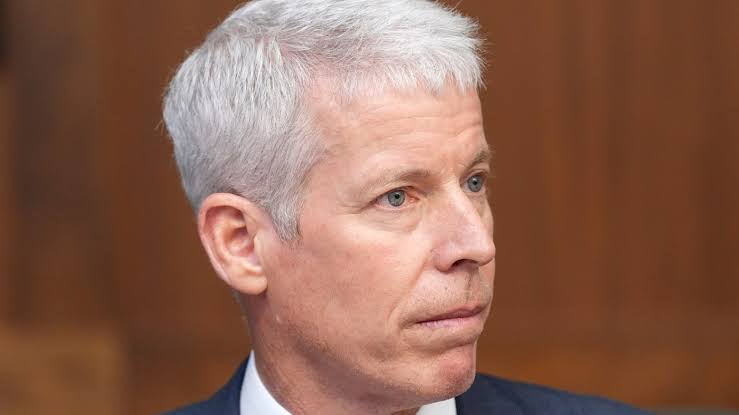
Two moves in eight days, a license to buy Russian diesel and a waiver of new sanctions, have put the Energy secretary on the Sunday shows defending a strategy that senators in both parties say hands Moscow money and gets Americans nothing at the pump.
Energy Policy · Russia
Wright Calls Trump’s Russian Diesel Deal a “Carrot” for Peace. Critics Call It a Lifeline
Two moves in eight days, a license to buy Russian diesel and a waiver of new sanctions, have put the Energy secretary on the Sunday shows defending a strategy that senators in both parties say hands Moscow money and gets Americans nothing at the pump.
Carrot or lifeline? It depends who you ask.
Energy Secretary Chris Wright took the question to the Sunday programs on October 18, appearing on ABC’s “This Week” and CNN’s “State of the Union” to defend the administration’s handling of Russia. “It’s not an economic lifeline for Russia,” he told ABC. In his telling, the policy is a bargaining tool, an incentive designed to coax Moscow toward the negotiating table rather than to fill its coffers.
The argument arrived after a rough week for the plan. A license authorizing Russian diesel imports and an executive order waiving the brand new Graham Act sanctions and tariffs had drawn a bipartisan backlash, a pair of letters from Congress and a blunt rebuke from Ukraine’s president. Prices at the pump, meanwhile, haven’t moved.
Two Waivers, One Week
The first move came on October 9, when the Treasury Department issued General License 135. It authorizes transactions involving Russian origin diesel, including importing it into the United States, until April 7, 2027. President Donald Trump has said Russia would initially supply more than 300,000 metric tons, a little over 2 million barrels, with shipments continuing in November and beyond. The license sits uneasily beside a 2022 law that bans U.S. imports of Russian energy. Sen. James Lankford said that law “still holds true,” and a law firm analysis notes the license does not expressly address it.
The second move came late on Friday, October 16, two days before sanctions and tariffs under the Graham Act were due to take effect. Congress passed that law to put pressure on Moscow over the war in Ukraine, and Trump signed it last month. His executive order waives the duties in two of its sections and most of its sanctions, including measures aimed at countries that buy Russian oil and gas, and it sets no end date. Secretary of State Marco Rubio said the president will take up to 60 days to weigh the economic effects, though neither the order nor the law itself spells out such a review. Earlier executive order sanctions on Russia stay in place.
“It’s not an economic lifeline for Russia.”Energy Secretary Chris Wright, ABC News
Wright’s Case
The secretary’s logic runs like this. Russia, he argued, can only benefit from the diesel arrangement by exporting diesel, and to do that it would have to use less at home, scale back the fuel consumed by its war effort, or repair damaged refineries. Those repairs, in his account, would depend on a peace deal or an energy ceasefire with Ukraine. In other words, Moscow gets paid only if it stops fighting. That is the carrot.
He also pointed to the sanctions that remain, saying the tightest pressure stays on Russian crude oil, forcing Moscow to sell at steep discounts. And he tied the diesel plan to a domestic problem the administration is under pressure to fix. Fuel prices have climbed since the United States went to war with Iran in late February, and Wright acknowledged public frustration, saying the administration is working on it. Rubio, for his part, was more blunt about the diesel itself: “That diesel is going to be sold one way or the other.”
The administration’s view
The license is a narrow incentive tied to ending the war.
Crude sanctions keep the squeeze on Russia.
More supply could ease fuel prices strained by the Iran conflict.
The critics’ view
Buying Russian fuel funds the war in Ukraine.
The license may conflict with a 2022 import ban.
The waiver removes pressure just as it was set to start.
The Backlash
Opposition has not been confined to one party. A Senate letter led by Sen. Richard Blumenthal on October 13 and a House letter signed by 22 members two days later both asked the administration to rescind the diesel deal. Sen. Thom Tillis called it “beyond irresponsible.” Collins, Murkowski and Curtis joined a group of senators urging the president to reverse course. Some lawmakers have accused Trump of capitulating to Putin.
Ukrainian President Volodymyr Zelenskyy called the waiver “wrong,” saying it helps only Russia and would embolden Putin and prolong the war. He has also argued that the diesel deal does not meaningfully affect U.S. prices, which he attributes to disruptions around the Strait of Hormuz. Trump has defended the decision as a “very good” one.
Is It Helping at the Pump?
So far, no. The AAA national average for diesel stood at about $6.32 a gallon this weekend, up 4.5 cents in a week and $2.69 above a year ago. That is a little over $189 to fill a 30 gallon tank, against roughly $109 last October. Prices are below the record of $6.53 set September 22 and about 12 cents below where they were a month ago, but nothing in the numbers points to the waivers. No one has put a cents per gallon figure on either one, and reports have not confirmed any shipment under the license. A Dallas Fed survey found 48 percent of oil and gas executives expect it will take more than four quarters for the gap between diesel and crude prices to return to 2025 levels.
There is a supply question, too. Russia’s ability to ship more diesel is limited by its own refining capacity, which Ukraine has been targeting with drones. Reports say a main crude unit at the Ryazan refinery shut after a strike on October 15. If the barrels aren’t there, the carrot is a theory about a bargain with nothing on the table.
What to Watch
Three things will tell us whether this is diplomacy or drift: whether any diesel is actually delivered under General License 135, whether the 60 day review produces a decision or a quiet extension, and whether Congress moves to block the license or reinstate the Graham Act measures. A court challenge over the 2022 import ban is also possible.
How It Unfolded
- October 9Treasury issues General License 135, allowing Russian diesel transactions through April 7, 2027.
- October 13 to 15Senate and House letters ask the administration to rescind the diesel deal.
- October 16Trump signs an order waiving Graham Act sanctions and tariffs, two days before they were due.
- October 17Rubio says the president will take up to 60 days to weigh the effects.
- October 18Wright defends the policy on ABC and CNN.
The strongest part of Wright’s case is that it can be tested. If Russia truly has to make peace to profit, there should be a visible sign: a ceasefire, a drop in strikes, a reason for Moscow to move. If there isn’t one, the carrot looks like what critics say it is. And the pump price, which is the thing voters will feel, doesn’t seem to care either way.