

Death Penalty · Florida
Florida Executes James Robertson as Thompson’s Warrant Is Withdrawn: Inside a Dramatic October on Death Row
A failed execution in Tennessee, a gravely ill man spared in Florida, a prisoner who killed to reach death row and got his wish, and two more warrants still ahead. October has been one of the most difficult months in recent memory for anyone watching capital punishment.
Two men were due to die on October 13. One did.
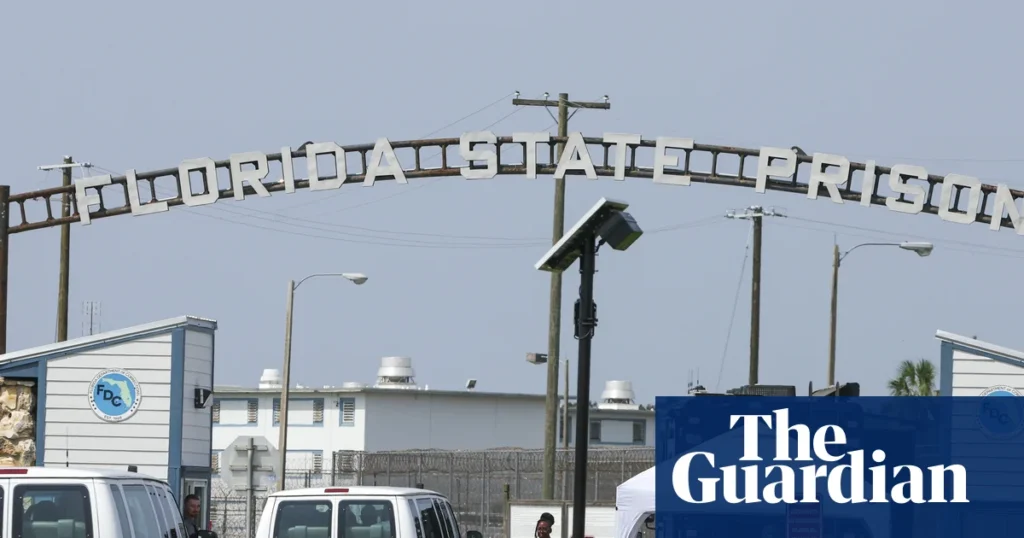
Florida executed James Robertson at Florida State Prison near Starke on Tuesday, October 13, for the 2008 murder of his cellmate, Frank Hart. It was the state’s 17th execution of 2026. Hours that were meant to be a double execution became a single one, because Gov. Ron DeSantis had withdrawn the death warrant of William “Bill” Thompson days earlier, without explanation. Between those two outcomes sits a month that has pushed the death penalty back to the center of the national conversation.
A Failed Execution Sets the Tone
The month opened with a scene few officials wanted to see. On Wednesday, September 30, Tennessee attempted to execute Christa Pike by lethal injection after a court ruling delayed the proceeding by about eight hours. Pike, 50, was convicted of the 1995 killing of 19-year-old Colleen Slemmer, a fellow student at a Knoxville Job Corps center. She received two doses of pentobarbital and survived, and her attorneys later described her condition as critical. Her lawyers had warned that her medical history could make the method especially painful and said staff struggled to place IV lines. Tennessee officials have maintained that their protocols were followed. Gov. Bill Lee canceled the state’s final scheduled execution of 2026, set for December 3, and ordered an independent investigation.
The episode landed in Florida with extra force, because the state had two men on the calendar for October 13 and one of them, William Thompson, was frail, ill and, his lawyers said, struggling with veins that would be hard to access.
The Thompson Warrant
William Lee Thompson, 74, was sentenced to death for the 1976 killing of Sally Ivester in a Dade County motel. According to court records, Thompson and another man forced Ivester and a second woman to call their families for money. When Ivester could raise only $25, she was beaten and burned, and she died of internal bleeding and multiple injuries. That crime and its brutality were never in dispute in the filings, and Ivester’s family has lived with it for fifty years.
DeSantis signed Thompson’s warrant on September 11. His attorneys told the governor they believed Thompson was incompetent to be executed because of dementia. A neuropsychologist who evaluated him on September 15 concluded that he lacked the mental capacity to understand his execution. By that account, he believed “Bush” was president and at times did not recognize that he had been sentenced to death. Under state law, the governor appointed a panel of three psychiatrists, which examined Thompson on October 1. Its findings were never released. His lawyers also filed a federal lawsuit seeking medical care for serious conditions, and more than 120 medical professionals publicly called for mercy.
On Thursday, October 8, hours after the Florida Supreme Court rejected a stay request, DeSantis sent a letter to the warden at Florida State Prison rescinding the warrant. No reason was given. It remains unclear whether the state will seek a new date or deal with his medical needs through other proceedings. Advocates describe the outcome as the result of legal pressure and public attention. The state has not said what drove the decision, and it is fair to note that.
The warrant was withdrawn. The reason never was.
The Conservative Case, on World Day
October 2 was International Wrongful Conviction Day, which the group Conservatives Concerned marked by recalling the 203 people exonerated from death row in the United States. Eight days later, on October 10, came World Day Against the Death Penalty. The organization, founded in 2013 after a small group of Montana conservatives pushed for repeal, argues that the risk of executing an innocent person is only one reason conservatives should oppose capital punishment. It also points to cost to taxpayers, doubts about public safety benefits, the experience of victims’ families and what it calls a conflict with conservative principles of limited government.
The group says New Hampshire, Colorado and Virginia have ended the death penalty with conservative support, while Nevada, Utah and Wyoming came within reach, and that its members are now backing repeal efforts in Ohio and Pennsylvania. It credits its network with helping stop executions of people including Robert Roberson, Tremane Wood and Sonny Burton. The 2026 theme for the day was humanizing the people affected by the death penalty, a theme Floridians for Alternatives to the Death Penalty, known as FADP, has built its work around, from vigils to its public statements after each execution.
October 13: A Day of Vigils
FADP and partners held two vigils outside Florida State Prison on the day of the scheduled executions, one around 11:15 a.m. ahead of Robertson’s noon execution and another around 5:15 p.m. for the evening execution that, as it turned out, did not take place. Other vigils and protests were held around the state and online.
Robertson strangled Frank Hart with tied-together socks while Hart slept in their cell at Charlotte Correctional Institution in December 2008. He pleaded guilty to first-degree murder, waived the penalty phase and asked the judge to impose a death sentence. He later waived all post-conviction proceedings. He told investigators he killed Hart so that he would be sentenced to death instead of spending the rest of his life in prison. Hart, a man serving his own sentence, was still a victim, and his family’s grief did not end because of the circumstances of his death.
Why This Case Is Different
Most of the debate over executions involves people fighting to stay alive. Robertson did the opposite. After years in one of Florida’s most restrictive custody levels, he told courts that death row was his goal. That raises a hard question that supporters and opponents of capital punishment answer differently: when a person commits murder in order to be executed, is the death penalty a deterrent, a consequence, or a lure? FADP argues the last. Supporters of the death penalty are likely to say that Robertson’s choices were his own and that the sentence reflects accountability for a killing.
The Statement From FADP on the Execution of James Robertson
Floridians for Alternatives to the Death Penalty issued the following statement after the execution. It is reproduced below in full, in the organization’s own words, and the views expressed are theirs.
STARKE, Fla.— Today, We the People of the State of Florida executed James Robertson for the 2008 murder of his cellmate, Frank Hart. James was the 17th person executed by the state this year.
Frank Hart may have been a fellow prisoner, but that does not make him any less of a victim. While he was doing his time and under the supposed watch and protection of our criminal justice system, his life was taken. He and his loved ones deserve our compassion, care, and love in their grief.
James chose to end his appeals and asked to die. We are often asked why we continue to oppose executions when the person being executed seemingly desires his fate. His case requires an honest conversation about how the death penalty does not deliver what it purports to. Supporters of capital punishment often claim it is a deterrent for future violence. In this case, not only was the death penalty not a deterrent, it was an inspiration. James repeatedly maintained that he committed this murder so that he could be sent to death row.
We cannot ignore this inescapable truth: the very existence of the death penalty led to Frank Hart’s murder.
An unstable childhood marked by loss, trauma, and multigenerational substance use landed James in trouble with the law before he was a teenager. He was sentenced to 10 years for assault and burglary shortly after his 17th birthday. He did not receive any rehabilitation in prison, and did not adjust well to prison life. Because of crimes he committed while incarcerated, almost 30 years later, he found himself not only still in prison but languishing in Close Management (“CM”), one of the most restrictive levels of custody available.
While on CM, James was stripped of his property, his visiting rights, and human connection. Confined to a cell for 23 hours a day, he described the experience as “torture.” This punishment, which James also called “inhuman,” was something he would go on to endure for years. The days and years trickled by without hope or any real chance at rehabilitation. The troubled teenage boy who entered prison became even more hardened. If 17-year-old James had any hope of a normal life after prison when he first arrived, that hope, just like his property and dignity, had been stripped away by 2008.
In that cell day after day, with a release date beyond his natural life span, James felt powerless over his future. At 45 years old, desperate to regain some semblance of control, he made a devastating choice.
James took Frank’s life not out of self-defense or due to a disagreement. He took his life with only one goal: to escape the current hell he was living in. He decided that he would trade his CM status for death row. James truly believed his life would be better on death row and actively sought out his own execution.
When the State initially refused to seek the death penalty, he had his trial lawyer beg the State to change its mind. He pled guilty and waived a jury recommendation for the death penalty. He refused to present any mitigation, and pleaded with the judge to sentence him to death. He tried to waive his direct appeal, but the law at the time required all capital cases to have at least one direct review by the Florida Supreme Court. He waived all future appeals and by 2016 he was eligible for execution.
James’s only consolation during his time on death row was that he was able to develop a relationship with a cousin. They corresponded for years, and his cousin sent him money every pay period. James finally felt the human connection of which he had long been deprived. If only James could have had that when he was a troubled teen, or a young man adjusting to prison life.
It is heartbreaking to contemplate the despair behind James’s decision, and the irreversible and senseless loss it caused. His case also asks us to confront a prison system in which someone can come to see execution as his only way out. The system and the state failed him in the decades leading up to his confrontation with Frank Hart.
We continue to oppose the death penalty in all cases, even when the condemned is asking to die, or worse, committing a murder in order to get to death row. We must also continue to confront the appalling conditions in the Florida Department of Corrections. If the Florida prison system refuses to rehabilitate those it confines and tries to rob incarcerated people of their very humanity, we can only expect the violence to continue.
The death penalty, the broken prison system, and all the citizens of Florida who continue to look away were all complicit in the murder of Frank Hart. And James, the troubled teenager who spent decades in near-isolation, now gets his final wish: to be executed in our names.
Statement issued by Floridians for Alternatives to the Death Penalty (FADP). The organization also encouraged donations to Florida Cares and the Florida Justice Institute, groups that work on prison conditions, in memory of Frank Hart and James Robertson.
What Is Still Ahead
William Reaves · Tuesday, October 20, 6 p.m.
Reaves is scheduled to be executed for the 1986 killing of Deputy Richard Raczkoski, and would be the 14th veteran executed under Gov. DeSantis. His case is before the Florida Supreme Court. His attorneys point to newly discovered evidence that a witness paid bribes to deputies involved in the investigation, which they say shaped the testimony used to show premeditation. They also say his jury never heard the full account of his Vietnam service and resulting PTSD. Reaves has acknowledged killing Deputy Raczkoski and has expressed remorse for decades. Deputy Raczkoski’s death was a profound loss for his family, and the state maintains the conviction was lawfully obtained.
Jesse Guardado · Thursday, November 5, 6 p.m.
Guardado was sentenced to death for the 2004 murder of Jackie Malone. He is a survivor of the Dozier School for Boys, where children suffered abuse so severe that Florida created a compensation program for survivors. His time there fell just outside the program’s dates, and his sentencing jury never heard about it. He waived his right to a lawyer at trial in hopes of sparing the victim’s family a long legal process, and advocates are asking the governor to consider clemency.
The pace is the larger story. Florida executed 19 people in 2025, about 40 percent of all executions in the country, and has approached that total again with weeks still left in 2026. Two events later this fall will take up the subject directly: a restorative justice conference at the University of Florida in Gainesville on October 29 and 30, and an international human rights and death penalty symposium at Florida State University’s College of Law in Tallahassee on November 13, with speakers including Sister Helen Prejean and former Mongolian President Tsakhiagiin Elbegdorj.
How the Month Unfolded
- September 11DeSantis signs William Thompson’s death warrant.
- September 30Tennessee’s attempt to execute Christa Pike fails.
- October 2International Wrongful Conviction Day. Advocates cite 203 death row exonerations.
- October 8DeSantis rescinds Thompson’s warrant without explanation.
- October 10World Day Against the Death Penalty.
- October 13Florida executes James Robertson. Vigils are held across the state.
- October 20William Reaves is scheduled for execution.
- November 5Jesse Guardado is scheduled for execution.
Every case this month carries a victim whose life ended too soon, and a family that has had to live with that. It also carries a person whom the state, in its own name, has decided to kill or spare. That is why the argument over the death penalty keeps returning to stories. The facts of a courtroom matter, the arguments in an appeal matter, and so does what a society is willing to do in the name of justice.