
Rescue Network · Wildlife Hazards
A Bird Speared by a Fishing Lure: How Wildlife Aid Freed Him and Watched Him Fly Away
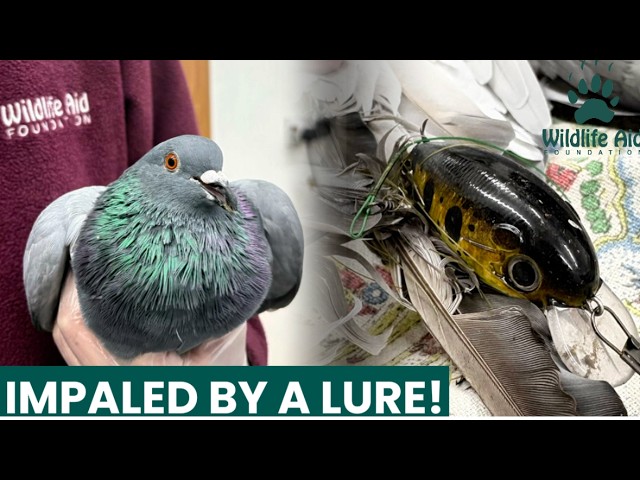
It was not a great choice of accessory. A sharp, bulky fishing lure had snagged his wing, and every minute it stayed there put his feathers, and his ability to fly, at greater risk.
Wrong place. Wrong lure. Right people.
Fishing tackle is designed to catch and hold. That is exactly what makes it so dangerous when it ends up in the wrong place. A lure left behind on a riverbank, caught in a tree or lost in the water can snag a bird in an instant, and once the barbs are set, a wild animal has no way of getting free. This bird reached the Wildlife Aid Foundation with a sharp, bulky lure hooked into his wing, a problem that needed urgent care before the damage to his feathers could get any worse.
The full rescue and release. Video courtesy of Wildlife Aid.
Freeing a Wing From a Lure
The charity’s veterinary team moved quickly to get him out of the grip of the lure. Removing a snagged lure from a wing is delicate work. The bird is frightened and the hooks are sharp, so the team has to keep the animal calm and still while working around bone, muscle and the long flight feathers that make flight possible. A wrong move can tear skin, break a feather shaft or push a barb deeper.
The news was good. When the lure was out, the vets found that the damage to his feathers was manageable. That matters more than it might sound. A bird’s feathers are not only for show, and the primary and secondary flight feathers in a wing form the surface that generates lift. Damage that is limited and repairable usually means the bird can recover its flight when the feathers regrow or settle, and the team said they hoped he would be flying again soon.
He took his own flight test. The vets had seen enough.
A Flight Test He Designed Himself
Wildlife hospitals normally test a recovering bird’s flight before release, watching for strength, lift, balance and stamina. This one saved the vet team the trouble. After deciding to run his own flight test, he flew so well that the team had seen enough and cleared him for release. He was ready to take on the skies once more. It’s a satisfying end to a rescue that began with a sharp object in a place where it should never have been.
If You Find a Bird Caught on a Lure or Hook
Stay calm and keep your distance. Don’t try to pull the lure out yourself, since barbs can cause more damage, and a frightened bird can injure you with its beak or talons. Cover the bird gently with a towel if you can do so safely, keep it quiet and warm, and call a local wildlife rescue for advice. If the bird is tangled in line, note where you found it and keep any tackle you remove so the rescuers can see what they are dealing with.
The Bigger Problem With Lost Tackle
This rescue ended well, but wildlife rescuers see far worse. Discarded hooks, line and lures injure and kill birds, mammals and fish every year, entangling wings, legs, bills and throats. Monofilament line is nearly invisible and slow to break down, and lures in particular carry multiple hooks that can catch anything that touches them. Most anglers are careful, and many already take their line home and bin it. The simple habits that protect wildlife are the ones every angler already knows: keep track of your tackle, retrieve snagged lures when it is safe to do so, and never leave line or hooks behind.
- ArrivalThe bird reaches Wildlife Aid with a sharp, bulky lure snagged in his wing.
- TreatmentThe vet team frees him from the lure.
- AssessmentThe feather damage is manageable, and a return to flight looks likely.
- Flight testHe runs his own test and passes it.
- ReleaseThe vets clear him to go back to the wild.
Not every rescue needs weeks of care. Some need steady hands, a good look at the damage and the confidence to let an animal show what it can do. This bird needed all three, and then he did the rest himself.