
COP31 Climate Talks in Turkey Collapse Without a Deal After Fossil Fuel Standoff
Two weeks of negotiations ended without an agreement, and a walkout by about 90 countries.
The United Nations COP31 climate summit in Antalya, Turkey, ended without a final agreement on Sunday, November 22, 2026. According to reports, it was the first time since the 2009 Copenhagen talks that an annual UN climate conference closed without adopting a consensus pact. Two weeks of negotiations, which ran roughly 50 hours into overtime, broke down in acrimony just before the U.S. Thanksgiving holiday week, with limited U.S. domestic coverage, according to reports. Here is a plain account of the collapse and what comes next, from the team behind our climate coverage.
TALKS ENDED NOV. 22 Antalya, Turkey | OVERTIME ~50 HOURS beyond the scheduled close | WALKOUT ~90 countries rejected the draft | NEXT SUMMIT COP32 Ethiopia, November 2027 |
What Happened in Antalya
Under UN climate rules, nearly 200 countries must reach unanimous consensus to adopt a final declaration. The central standoff, according to reporting, involved fossil fuels. Oil and gas producing nations led by Saudi Arabia and Russia refused to sign any text that referenced a transition away from fossil fuels. In the early hours of Sunday, the summit’s co-hosts, Turkey and Australia, presented a compromise draft that deleted every direct mention of fossil fuels. Roughly 90 countries, including the European Union bloc, Panama and small island states such as the Marshall Islands and Vanuatu, rejected the draft as greenwashing and walked out rather than sign what they considered an empty deal.
| WHO | POSITION AS REPORTED |
| Oil and gas producers, led by Saudi Arabia and Russia | Refused to sign any text that referenced a transition away from fossil fuels |
| Co-hosts Turkey and Australia | Presented an early Sunday compromise draft that removed every direct mention of fossil fuels |
| About 90 countries, including the EU, Panama, the Marshall Islands and Vanuatu | Rejected the draft as greenwashing and walked out |
| Developing nations | Objected after a proposed $120 billion adaptation finance target became a vague pledge without numbers or timelines |
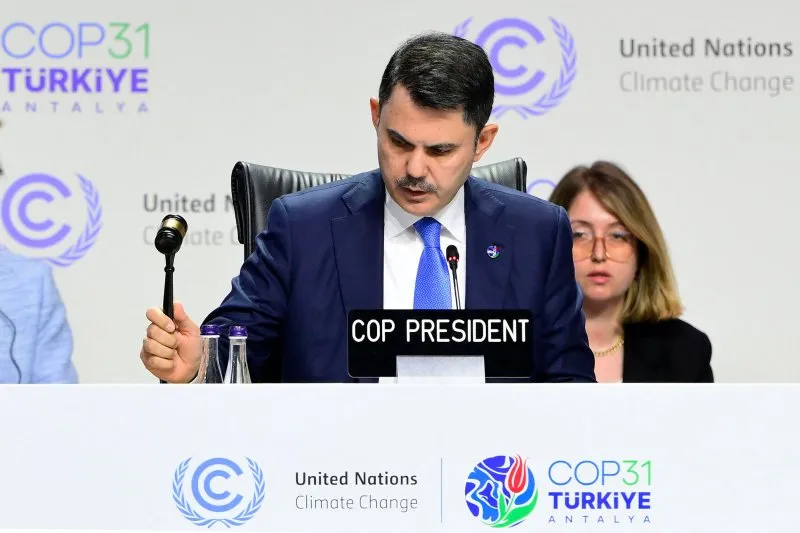
| COP31 President Murat Kurum | Pushed back, blaming the European Union for letting broader gains collapse over fossil fuel wording |
A Finance Fight and a Warming Warning
Money was a second fault line. Developing nations objected after a proposed $120 billion target to help poorer countries adapt to extreme weather was watered down into a vague pledge without hard numbers or timelines. Even so, the draft text carried one notable first, according to reports. COP31 was described as the first UN summit to formally acknowledge in its draft that the world is on track to overshoot the 1.5°C global warming threshold set under the 2015 Paris Agreement, a milestone that came attached to an agreement nobody adopted.
| The summit failed to produce a deal, but it did put an uncomfortable fact on paper. |
Blame and Backlash
As the dust settled, the sides traded accusations. COP31 President Murat Kurum pushed back publicly, blaming the European Union for letting broader gains collapse over fossil fuel wording, while the EU and island states have framed the walkout as a refusal to accept a hollow text. Both positions are attributed to the parties themselves, and the dispute over who bears responsibility is likely to continue as delegations return home.
What Survived and What Comes Next
Outside the failed main agreement, roughly 80 to 90 countries voluntarily backed Turkey’s 35 by 35 pledge, a goal to expand electricity to 35 percent of global energy demand by 2035, up from roughly 25 percent today. Smaller technical agreements on early warning weather systems and a just transition framework for energy workers also survived the collapse.
| WHAT SURVIVED | DETAILS |
| 35 by 35 pledge | Turkey’s voluntary goal of expanding electricity to 35% of global energy demand by 2035, from roughly 25% today, backed by roughly 80 to 90 countries |
| Technical agreements | Smaller agreements on early warning weather systems |
| Just transition framework | A framework for energy workers |
| Warming language | Draft text that, according to reports, was the first at a UN summit to acknowledge the world is on track to overshoot 1.5°C |
Attention is already turning to what happens next. On Friday, November 27, International Energy Agency chief Fatih Birol noted that real world market forces, including electric vehicle adoption, data centers and energy security, are still driving electrification forward regardless of the diplomatic breakdown. Meanwhile, UN climate chief Simon Stiell and European ministers are calling for reforms to the unanimous consensus rule before COP32 convenes in Ethiopia in November 2027, an idea that would change how every future summit operates.
We will keep following the aftermath of COP31 and what it means for climate policy, energy and communities. Read more in our climate section, and for ways to enjoy the outdoors close to home, visit Explore New Jersey Activities and Fun.
| Editor’s note: This article is informational and summarizes published reporting and statements from the parties involved. Positions and claims are attributed to those who made them, and Sustainable Action Now does not endorse any party’s account. Figures and details may be updated as more information emerges. Sustainable Action Now and Explore New Jersey are both interests of the editor, Don Lichterman. |
Keep Reading Sustainable Action Now More climate reporting is in our climate section, and more to do outdoors across New Jersey is at Explore New Jersey Activities and Fun. |