
Rescue Network · Badger Rescue
A Badger Strangled by Netting Is Cut Free and Returned to the Wild: What Garden Netting Does to Wildlife
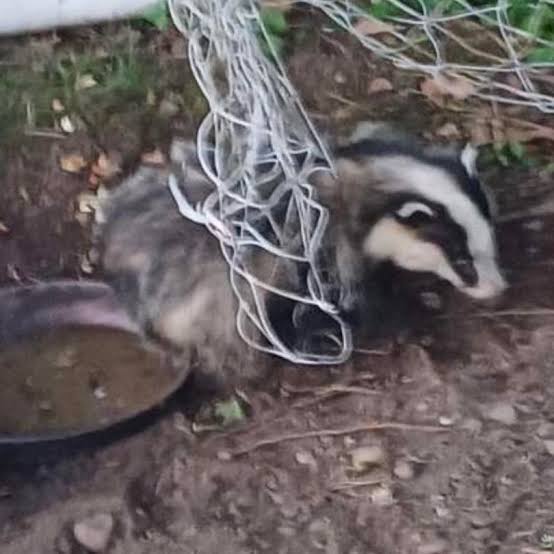
A call came in about a badger strangling herself. Soon a rescuer was beside her with a cutting tool. After a long recovery, she went back to the wild.
The netting was tight. Every struggle made it tighter.
When Wildlife Aid received the call, the message was simple and urgent: a badger was caught in netting and choking herself trying to get out. Rescuer Louis and his team rushed to the scene. What they found was worse than the phone call suggested. The netting was wound so tightly around the animal that freeing her safely was no easy task, and every second she fought made the problem worse.
The full rescue, treatment and release. Video courtesy of Wildlife Aid.
The Rescue
Badgers are powerful animals with strong forelimbs and sharp claws, and a trapped, panicking one is dangerous to handle as well as to herself. Louis worked to free her from the netting, but it was bound so firmly that pulling or unwinding wasn’t an option. The team had to cut. With the right tools, supplied for the team by Leatherman, he cut the netting away until the animal could breathe and move freely.
The video, shot on a GoPro, follows the whole operation, from the call to the cutting to the treatment at the Wildlife Aid hospital, and on to her release. It runs just over four minutes. The moment the netting comes off is the kind of footage that stays with viewers, partly because of how ordinary the cause was. This was not a trap set by anyone. It was a piece of netting left where a wild animal could find it.
Nobody set a trap. Someone just left the net out.
Arriving in Terrible Condition
Getting out of the netting was only the start. At the hospital, the team found that the badger was wounded, dehydrated and exhausted. The veterinary team stabilized her first, treating the wounds and getting fluids into her, and then began what Wildlife Aid describes as a lengthy recovery that was monitored closely. Constriction injuries can be deceptive. The Fox Project has noted that some constriction wounds take up to five days to show, which is why wildlife experts say an animal released at the scene after being cut loose can still be in serious trouble.
That is exactly the difference here. The badger didn’t just get a haircut from a pair of cutters. She was admitted, assessed, treated and watched until the vets were satisfied she was healthy. Only then was she cleared for release.
If You Find a Tangled Animal
Wildlife groups advise keeping your distance, because approaching can frighten the animal and make the entanglement worse. Call a local wildlife rescue, or a local badger group for badgers, and let trained people handle it. Even if an animal is freed on the spot, hidden injuries from tight netting can develop over days, so it should be examined by a veterinary professional.
The Release
The last chapter of the video is the one that matters most. After her recovery, the badger was taken back to the wild and let go. For rescuers, a release is the point of the whole effort. The animal that arrived in a tangle of netting goes back to the wild under her own power. Wildlife Aid called her a little girl who deserved a fighting chance, and the vets and rescuers gave her one.
A Preventable Problem
Her story is not rare. The Badger Trust, citing RSPCA figures, reports 1,355 netting entanglement cases in 2024, nearly half of them in May, June and July. It calls unsecured netting a growing but preventable cause of injury and death for wildlife including badgers and foxes. Nets can tighten around limbs, cut off blood supply and trap nocturnal animals for hours before anyone notices. In one two week stretch this spring, an RSPCA officer attended six incidents involving fox cubs tangled in netting across Surrey and south London, and one cub had to be euthanized after severe injuries.
- Take sports netting down. Football goals, tennis nets and cricket nets should be tied up or stored after each use.
- Swap garden netting for something safer. Rigid metal mesh or wooden panels are less likely to trap animals than loose plastic.
- Dispose of old netting. Put discarded netting in the bin instead of leaving it on a shed floor or in a hedge.
- Ask your neighbors. Schools, clubs and councils often leave nets out, and a polite request can change that.
- Know who to call. Keep the number of a local wildlife rescue handy before you need it.
The Day in Order
- 0:00An urgent call: a badger is strangling herself in netting.
- 0:17Louis and the team arrive and begin cutting her free.
- 3:00At the Wildlife Aid hospital, the vets stabilize a wounded, dehydrated badger.
- 3:43A lengthy, closely monitored recovery.
- 4:11Cleared by the vets, she is released back into the wild.
The people at Wildlife Aid would tell you that the best part of the job is the part where they never see the animal again. A badger moving through woodland at night, doing what badgers do, is the whole point. The netting that nearly killed her is a reminder of how little it takes to put a wild animal in danger, and how much it takes to get her out.