
Climate · International Policy
COP31 and the Climate Reality Gap: Why the Energy Transition Is Outrunning the UN Negotiating Process
Delegates have gathered in Antalya for the 31st UN climate conference, but the world they are negotiating about is changing faster than the process built to manage it. Energy markets are moving in real time, warming is on track to overshoot the Paris limit, and the money promised to poorer countries still has not caught up.
Is the old COP agenda built for the new world? Increasingly, the answer sounds like no.
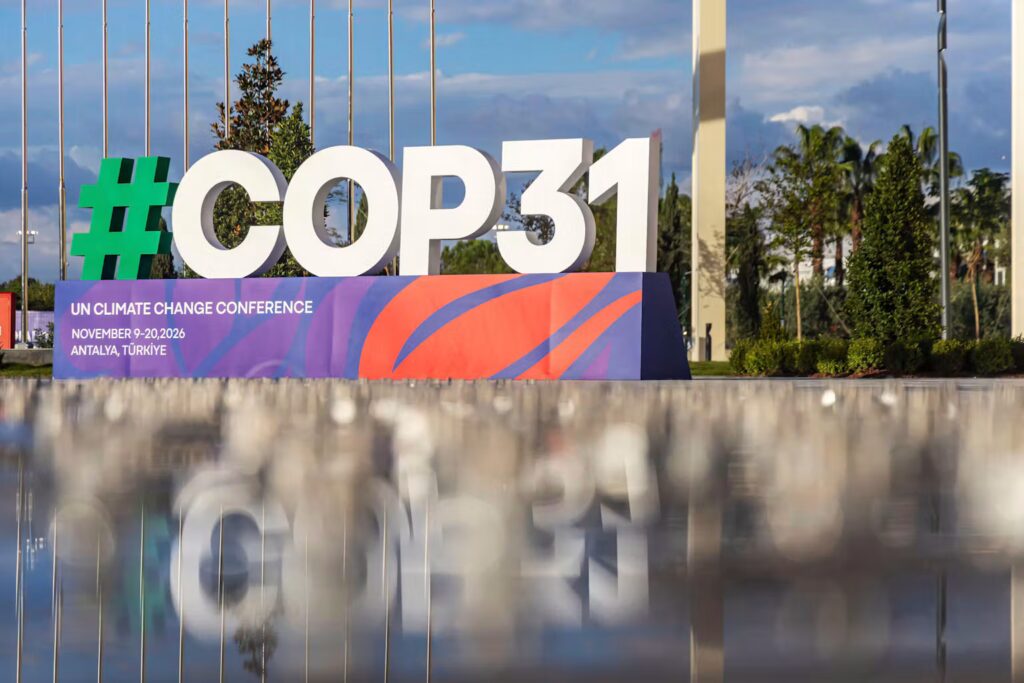
The 31st Conference of the Parties opened on November 9 in Antalya, Türkiye, and runs through November 20, with Türkiye hosting and Australia presiding over the formal negotiations under Climate Change and Energy Minister Chris Bowen. The meeting arrives at a peculiar moment. Technology, markets and the weather itself are all moving faster than the diplomatic machinery that was designed, a generation ago, to coordinate them. A consensus system in which nearly 200 governments must agree on every word of a text produces careful, durable language, but it does so on a timetable measured in years. The energy transition, by contrast, is now unfolding in quarters. Gerald Butts of the Eurasia Group put the question bluntly in a recent assessment, asking whether the old COP agenda is purpose built for the new world and answering that it is clearly not. For more reporting on the global climate crisis and the policies that address it, visit the Sustainable Action Now climate coverage.
Where the Science Stands Entering Antalya
The starting point for this year’s talks is sobering. Warming is now widely expected to exceed 1.5 degrees Celsius above preindustrial levels, the aspirational limit set in the 2015 Paris Agreement, and the best remaining hope cited by the United Nations is to hold the temperature rise below 1.8 degrees. National climate plans submitted so far promise roughly half the emissions cuts that were expected a year ago, largely because the United States has pulled back, and together they point toward about 2.8 degrees of warming by the end of the century. The United States will not take part in the official negotiations after withdrawing from the Paris Agreement a second time, although about 20 House Democrats and Senator Sheldon Whitehouse are among those expected to attend. Analysts at the United Nations University note that exceeding 1.5 degrees now looks likely, that returning below it would require sustained emissions cuts and carbon removal, and that some impacts of an overshoot would not fully reverse.
A Process Built for a Slower Century
The mismatch between the pace of negotiation and the pace of change has several sources. Consensus decision making means that any single bloc can hold up a text, and critics of the process observe that the result often tracks the positions of the countries most reliant on fossil fuels. The central planning documents also rest on projections prepared years before the events they describe, while the physical climate evolves through thresholds and feedbacks that do not wait for treaty reviews. A two year review of Paris Agreement progress, for instance, runs until 2028. Scientists have warned about developments such as the destabilization of ice sheets and prolonged, compounding droughts that unfold on timescales shorter than a typical implementation cycle, which leaves negotiators trying to adjust a framework that was set before the changes became visible.
Meanwhile, much of the momentum in the real economy comes from outside the formal text. Electric vehicles, cheaper clean power and the electrification of heating and industry are advancing through investment decisions made by companies, utilities and national governments, not through the line by line bargaining of the conference. Türkiye and Australia have proposed a voluntary global goal of reaching 35 percent electrification of the energy supply by 2035, up from about 20 percent today, but the proposal itself has run into disputes over whether the target should specify clean electricity. The conference’s own agenda is also being tested by rising demand for power from data centers and cooling, which has pushed fossil fuel use up in some places.
The pace of the energy revolution is overwhelming the pace of international climate negotiation.
Adaptation, Finance and the Trust Deficit
The most persistent fault line is money. Under the finance goal adopted at COP29 in Baku, developed countries committed to mobilize at least 300 billion dollars a year by 2035 for developing nations, within a broader aspiration of 1.3 trillion dollars from all sources. The goal replaced an earlier pledge of 100 billion dollars a year, which wealthy countries were widely reported to have met only in 2022, two years behind schedule. Analysts at the climate research group E3G describe finance as the deepest fracture between the negotiating parties, concerning volume, access and architecture alike. Procedures for obtaining funds remain complicated, institutional capacity is limited, and too little of the support arrives as grants. The loss and damage fund, created to assist countries struck by climate disasters, faces a major shortfall.
The urgency is sharpest on adaptation. Vulnerable countries are already coping with storms, droughts and rising seas, and many say their priorities have shifted from long term emissions cuts to survival and resilience now. Negotiators were unable to agree on the Global Goal on Adaptation at the June meetings in Bonn, leaving open how to apply the 59 adaptation indicators that were adopted at COP30, and countries have committed to at least triple adaptation finance for developing nations by 2035. Around 30 countries backed the Taku Pakasoa Declaration at the Pre-COP held in Fiji and Tuvalu, which called for faster emissions cuts, accessible finance and ocean protection, a reminder that Pacific island states bring the most direct experience of what delay costs.
What the formal COP track offers
Legitimacy and a seat for nearly every country.
Durable, negotiated commitments that can anchor finance.
A second Global Stocktake launching at COP31 and concluding at COP33.
Where it struggles
Consensus slows decisions to the pace of the most reluctant party.
Action agenda pledges are voluntary and lack formal accountability.
Finance promises arrive late, and trust erodes with each delay.
The Deeper Structural Disconnect
Observers who study the gap argue that money is only part of it. Political and corporate systems operate on short cycles, with elected officials facing voters every two to four years and companies reporting earnings every quarter, while the climate responds on decades long timelines. The United Nations process rests on national sovereignty, and no central authority can compel compliance, so the system depends on pledges that each government can revise according to its domestic politics and energy security. Behavioral researchers add that people tend to respond to immediate, visible danger and find it harder to sustain urgency about a threat that builds gradually, a pattern that can leave societies informed but slow to act. And some strategies lean on technologies not yet available at scale, such as large scale carbon capture or geoengineering, which can become a reason to postpone harder choices today. Those assessments are widely made by climate analysts, though how much weight each factor deserves remains debated.
An Implementation COP, or Just a Slogan?
European Union climate chief Wopke Hoekstra has said that this will be an implementation COP, a framing echoed by the host. The test will be whether it produces measurable follow through on finance, adaptation and electrification, or whether the action agenda, which covers methane, sustainable cooling, artificial intelligence and fossil fuels, remains a collection of voluntary pledges. Several initiatives have weakened in the past year: the United States and European Union have loosened some methane rules, and some banks have left a climate finance alliance.
Alternatives to a Single Global Track
Because the central negotiation moves slowly, economists and policy experts increasingly argue for adding faster channels alongside it, not replacing the process. One idea is a climate club, a smaller coalition of motivated and economically aligned countries that agree on regional carbon pricing and trade mechanisms without waiting for universal consensus. Coalitions working on fossil fuel transition roadmaps are an example of groups moving ahead where progress is uneven. Another approach comes from the bottom up, where cities and states test infrastructure mandates, public private clean technology investments and grid upgrades that can be adapted and scaled quickly. The Antalya presidency’s own proposals follow a similar logic, including a Climate Implementation Bridge intended to help countries turn plans into fundable projects. Critics caution that smaller coalitions can exclude the poorest countries and that voluntary clubs can lack enforcement, which is why most proponents describe them as complements to the UN framework.
The hosts face their own credibility tests. Analysts at E3G note that both Türkiye and Australia are among the few wealthy economies without a coal phaseout date, and that Türkiye is still planning new coal. How the two presidencies address that contradiction may influence how seriously other governments treat the electrification and fossil fuel language they are asking for.
- 2015The Paris Agreement sets the goal of holding warming well below 2 degrees, pursuing 1.5.
- 2024COP29 in Baku adopts the new finance goal of 300 billion dollars a year by 2035.
- 2025COP30 in Belém adopts 59 adaptation indicators and a pledge to triple adaptation finance by 2035.
- November 9 to 20, 2026COP31 convenes in Antalya and launches the second Global Stocktake.
- 2028A two year review of Paris Agreement progress concludes.
The outcome in Antalya will not settle whether the United Nations climate process can keep up with the world it governs. It will, however, show whether the conference can connect its negotiating rooms to the energy transition taking place outside them, and whether the countries with the most to lose from delay will see financing and adaptation support in time to matter.