

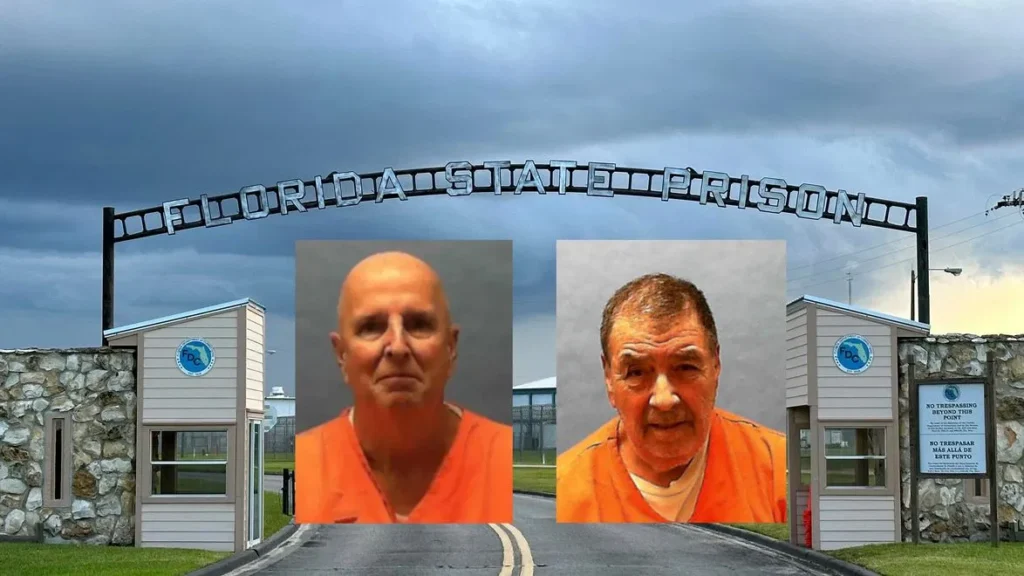
On July 28, 2026, the State of Florida executed two men on the same gurney, in the same room, by the same execution team, separated by six hours. James Duckett died at noon. Dominick Occhicone died that evening. The day became the first double execution in Florida in more than 60 years, carried out by a governor who did not bother to provide the standard 30-day review window before setting the dates, and who offered no public explanation for the decision to schedule both men to die on the same afternoon.
Before this day passes into the abstraction of execution statistics, it deserves to be examined in full: who these men were, what the evidence against each of them actually consisted of, what the conduct of the State of Florida during their final weeks reveals about the priorities of the administration that killed them, and what it means when a government exercises its most irreversible power with this degree of recklessness.
At Sustainable Action Now, we have been covering Florida’s unprecedented 2026 execution pace, and the July 28 double execution is the point in that coverage where everything that has been building requires the most direct possible language. The Florida Abolitionists for Death Penalty, whose statements on both executions are among the most carefully documented accounts of what happened, have given voice to the families, the advocates, and the questions that will outlast both deaths. We are adding our voice to theirs.
James Duckett: The Man Florida Executed Rather Than Exonerate
James Duckett had been on Florida’s death row since his conviction for the 1987 murder of Teresa McAbee, an 11-year-old girl whose death he maintained for the entirety of his incarceration he did not cause. He was a police officer at the time of the alleged crime. He was convicted on the basis of evidence that has, since his trial, substantially unraveled. And he died on July 28 rather than being given access to forensic technology that might finally have established whether the biological evidence preserved from Teresa’s clothing came from him or from someone else.
The case against James Duckett at trial rested on two primary evidentiary pillars, and both have been compromised in documented and serious ways in the years since his conviction.
The first was an eyewitness: a pregnant teenager who testified that she saw Teresa get into Jim’s patrol car. In the years following the trial, evidence emerged that this witness had been coerced, bribed, and threatened by police to maintain her identification. Two other witnesses who had seen Jim driving away without Teresa in his vehicle were never presented to the jury by his own defense attorney, a failure of representation whose consequences he has been living with ever since.
The second was a forensic hair comparison: an FBI analyst who testified that a single hair found in Teresa’s clothing “almost certainly” came from James Duckett. That analyst was later identified through an extensive FBI review as someone who had routinely exaggerated or falsified positive matches in case after case. The same review concluded that microscopic hair comparison, the methodology used in Jim’s trial, is essentially junk science and should not be used as reliable evidence of identity. The hair in question contained no root and was therefore not suitable for DNA comparison. The State of Florida was notified of the FBI review’s findings regarding this analyst in 2012. It did not disclose this information to the defense until 2026, after Governor DeSantis had already signed Jim’s death warrant.
What remained, as Jim’s execution date approached, was a microscopic slide from Teresa’s clothing that contained preserved biological material: sperm heads, fragile but present, that modern forensic technology might finally be able to yield a DNA profile from. Othram, Inc., an internationally recognized forensic laboratory specializing in recovering DNA from small and degraded samples, was identified as the technology capable of performing this analysis. Jim’s lawyers requested that the sample be sent to Othram.
The State fought this at every step. The Assistant Attorney General handling the case argued that Othram was somehow “corrupted” and that the evidence had to remain in Florida, where it was ultimately sent to a laboratory that lacked the capability to perform meaningful analysis on samples of this type. The result was precisely what forensic experts warned would happen: the testing produced no meaningful result, and in the process, the fragile biological sample was consumed and destroyed. The evidence that might have answered the question of James Duckett’s guilt or innocence is now gone forever, destroyed by a state-directed process that chose an inadequate laboratory over the objections of everyone who understood what was at stake.
What followed this destruction was not, as one might expect, a period of regulatory review or a discussion about what the remaining physical evidence from Teresa’s clothing and fingernail scrapings might yield through additional testing. Instead, the State moved to lift the stay of execution and urged the governor to set a new execution date. He set it six hours before Dominick Occhicone’s scheduled death.
The Florida Abolitionists for Death Penalty have drawn attention to a detail that should be included in any honest accounting of this case: while State lawyers were in court arguing that Othram could not be trusted with evidence that might save Jim’s life, the Acting Attorney General was publicly announcing a statewide partnership with that very same laboratory to solve Florida’s coldest murder cases. The announcement described Othram as “leading the nation” in advanced forensic DNA analysis. The hypocrisy is not subtle, and it is not deniable. The State chose not to use its most advanced forensic technology in a capital case specifically in the context where that technology might have produced an exculpatory result.
James Duckett’s case contained nearly every hallmark that wrongful conviction researchers identify as indicators of high risk: a non-unanimous jury recommendation of 8 to 4 for death, unreliable forensic evidence from an analyst with a documented history of false testimony, an eyewitness with documented evidence of coercion, prosecutorial misconduct in the failure to disclose the FBI findings, and trial counsel failures in not presenting available witnesses. Florida has exonerated more people from death row than any other state in the country. The people of Florida must now live with the possibility that the 136th person executed in the state’s modern era of capital punishment was one more person who should have joined that exoneration record instead.
Teresa McAbee was an 11-year-old girl who deserved decades of life that were stolen from her in 1987. She also deserved the certainty that the right person was held responsible. Florida destroyed the evidence that might have produced that certainty, and then executed a man without it.
Dominick Occhicone: The 80-Year-Old Grandfather Whose Sentence Would Not Be Legal Today
Dominick Occhicone was 80 years old when Florida executed him on the evening of July 28. He had been on death row since his conviction for the 1986 murder of Martha Artzner in Pasco County. He received a simultaneous life sentence for the murder of Raymond Artzner. His death penalty recommendation came from a jury that voted 7 to 5 in favor of it, a divided verdict that the Florida Abolitionists for Death Penalty have noted would not qualify him for execution under any current law in the country, including current Florida law, which now requires a unanimous jury recommendation for death.
The Artzner murders were real, and the grief of the family that has carried them for 40 years is real. Martha and Raymond Artzner were deeply loved, and their absence has been a wound in their family for four decades. Nothing about the execution of Dominick Occhicone restores what was taken from them in 1986, and they deserve to be remembered for more than the circumstances of their deaths.
What is also real is what Dominick Occhicone was by July 28, 2026: an 80-year-old man, physically diminished, walking with difficulty, sustained by the ordinary routines of an elderly person who had been incarcerated for 40 years and had spent those years in genuine transformation from the man who committed violence in an alcohol-fueled crisis in 1986. He prayed his rosary every day. He found sustaining comfort in his Catholic faith and in the religious volunteers who ministered to him on death row. He was not afraid of death, he had said, but embraced in faith the knowledge of what he believed came next.
In those 40 years, he learned he had two daughters he had not known about. One of them found out who her biological father was 15 years ago, struggled with what that meant, and eventually developed a genuine relationship with him. He met his grandchildren. They played cards on visitation days. He sent birthday cards and holiday cards. He tried to be, within the impossibly constrained circumstances of death row, the father he had not been. His son, who had suffered under the shadow of his father’s alcoholism, crimes, and absence, and who had become part of a cycle of generational illness and incarceration, wanted to speak to his father before the execution. Prison rules prohibiting communication between incarcerated people denied them that final conversation. His son now sits in a cell in the same town where his father’s body will be cremated.
Alcoholism is a medically recognized disease. It does not excuse violence. It does not eliminate responsibility. But a legal system that claims to account for the full circumstances of a human life cannot pretend that the disease context of a killing is irrelevant to how it should be adjudicated. The jury that voted 7 to 5 for death rather than the life sentence that the other five jurors believed was appropriate was a jury divided precisely about this question, and under no legal standard that exists anywhere in the United States today would that divided verdict have qualified Dominick Occhicone for execution.
The Florida Abolitionists for Death Penalty put it precisely: in no other state in the country, including present-day Florida, would Dominick Occhicone have been eligible for execution. The sentence was produced by a legal standard that has been recognized as constitutionally inadequate and subsequently abolished. He was executed under it anyway.
Two Executions, One Day, and What It Requires Us to Reckon With
The decision to schedule both executions on the same day, made without the standard 30-day review window and without any public explanation, deserves explicit attention because it is not a neutral administrative choice. Executions are the most solemn and irreversible acts that a government performs in the name of its citizens. The execution team, the corrections officers, the medical personnel, the spiritual advisors, the legal witnesses: every person involved in the process carries something from it that cannot be put down. Florida required all of them to do it twice in the same afternoon, on the same gurney, in the same room.
The Florida Abolitionists for Death Penalty named what this means directly: that much death inside one room, whether participating in it or witnessing it, causes damage that cannot be undone. When this state-sanctioned killing spree finally ends, we will be left to reckon with the people it required us to become.
Florida has now executed more people in 2026 than all other states in the country combined. The governor signed both death warrants. The execution team carried them out. The Acting Attorney General stood before cameras and invoked “law and order” while simultaneously arguing in court against using the nation’s most advanced forensic technology to establish whether the man he was about to execute had actually committed the crime he was condemned for.
The families of Martha and Raymond Artzner are left with whatever they were looking for from this execution. The Duckett family is left with the knowledge that the question of Jim’s guilt or innocence was deliberately made unanswerable before he was killed. Teresa McAbee’s family is left without the certainty that the right person was held accountable. And everyone who lives in Florida is left with the responsibility that democratic accountability requires: the power exercised in their name belongs to them, and what is done with it reflects on them.
There are no do-overs in capital punishment. The death penalty’s finality is the precise reason why its administration demands a standard of certainty and procedural integrity that the July 28 double execution did not approach. The State destroyed the evidence that might have answered the question of guilt. It refused to examine what remained. It set two execution dates on the same afternoon without explanation. And it used its ultimate authority to make all of those choices irreversible.
That is not law and order. It is power without accountability, exercised with a speed and indifference to its own consequences that should alarm every person in Florida regardless of where they stand on the death penalty in the abstract.
Dominick Occhicone is gone. James Duckett is gone. Teresa McAbee has been gone for 39 years, and the question of what the preserved biological evidence from her clothing would have shown is now permanently unanswerable.
Florida must live with all of it.
Sustainable Action Now will continue following the campaign against capital punishment in Florida, the legislative and legal work of the Florida Abolitionists for Death Penalty, and the national movement toward abolition. The next execution warrant in Florida has already been signed.
We are asking Florida to stop. We are asking you to be part of asking.
Sustainable Action Now covers capital punishment, criminal justice reform, and the organizations working to end state-sanctioned killing across the United States. This article draws on the official post-execution statements of the Florida Abolitionists for Death Penalty.