
Politics · Disaster Relief
Trump Approved Florida Hurricane Isaias Aid in 12 Days, While Six Earlier Disaster Requests Waited
The Florida Panhandle got its federal money fast. Six earlier requests from elsewhere, three of them from tribal nations, were still waiting. The approvals landed days before Election Day, in a state where the governor’s race is tight.
Speed is a choice. So is the order.
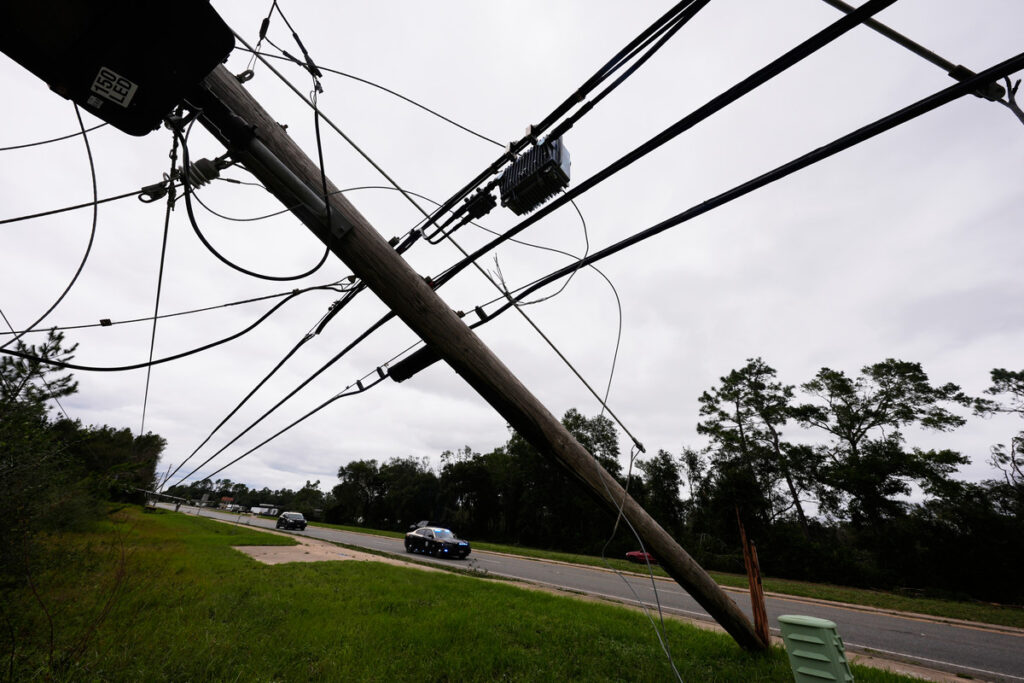
When Hurricane Isaias struck the Florida Panhandle on October 9, it left a familiar wreckage of downed trees, flooded streets, flattened storefronts and a long list of households waiting for help. What followed from Washington was not familiar. According to POLITICO’s review of federal records, President Donald Trump approved Governor Ron DeSantis’s request for major disaster aid in 12 days, a pace faster than all but four other requests that did not receive expedited treatment during his current term. The approvals arrived just before Election Day, and ahead of six disaster requests submitted earlier that had not been acted on.
What Isaias Did and What Florida Got
Isaias hit the Panhandle on October 9, with a path that carried it through Santa Rosa, Escambia, Okaloosa and neighboring counties. The damage was widespread enough that early reports described two deaths and about 700,000 customers without power. Florida’s Office of Insurance Regulation has received more than 62,000 claims, most from the western Panhandle, and about 52,000 of them involve residential property. Santa Rosa County alone accounts for almost 29,500 claims and Escambia for just over 19,000. Potential insured losses in the state have been estimated at roughly $652 million.
On Tuesday, October 27, the president approved a major disaster declaration that opened roughly $237 million in federal aid for 15 counties: Bay, Calhoun, Escambia, Franklin, Gadsden, Gulf, Holmes, Jackson, Jefferson, Liberty, Okaloosa, Santa Rosa, Wakulla, Walton and Washington. That money covers public assistance, including emergency work and the repair or replacement of damaged public facilities. Two days later, on Thursday, October 29, he amended the declaration to add individual assistance for households in eight counties: Bay, Escambia, Gulf, Holmes, Okaloosa, Santa Rosa, Walton and Washington. That aid can include money for temporary housing, basic home repairs and other disaster related expenses, typically about $4,000 per household for hotel rooms, supplies and minor repairs, along with low interest loans for property losses insurance doesn’t cover.
“Under Donald Trump, even disaster relief comes with a political loyalty test.”Rep. Frank Pallone, Democrat of New Jersey
The Order of the Line
What drew attention was not the aid itself but its timing relative to everything else on the president’s desk. POLITICO reported that the White House had not acted on six other disaster requests submitted before DeSantis’s, and that three of the six came from tribal nations, which depend heavily on federal help after emergencies. The report did not identify the pending requests or explain why they remained unresolved. In his second term, Trump has averaged about 50 days to act on a request, roughly twice his first term average, and he has typically decided requests in batches, sometimes clearing as many as 14 on a single day after a month or two of silence. Florida’s approvals broke that pattern.
The Florida decision follows a pattern the same reporting described in Ohio, where the president approved aid the day before campaigning there while five earlier requests remained pending, and in Wisconsin, where he announced approvals without informing the governor. A broader independent analysis of federal data found that major disaster declarations are taking nearly 10 weeks on average under the current administration, compared with three weeks or less over the previous two decades, and that the administration denied 26 percent of major disaster requests in 2025, compared with a 15 percent average over the prior twenty years. An Associated Press analysis found that roughly 85 percent of requests from states that voted for Trump in 2024 were eventually approved, compared with about half of those from states that voted for Kamala Harris.
What critics say
The timing is “very suspicious,” said Rep. Bennie Thompson, who promised an investigation if Democrats win the House.
Approvals cluster around states and moments that matter politically.
Six earlier requests were skipped over.
What the White House and allies say
“There is no politicization to the President’s decisions on disaster relief,” the White House said in a statement.
Presidents hold the sole authority to approve or deny requests, and the administration says it conducts thorough reviews.
Representatives and senators from the region said the president answered their calls.
The Politics on the Ground
The Panhandle is deep Republican territory, and that is part of why the storm has become a campaign issue. Florida’s governor’s race is tight, with Democrat David Jolly and Republican Byron Donalds both courting voters in the region. Jolly has argued that the federal response is the president’s responsibility, saying, “we know who’s in charge,” and has described his strategy in the Panhandle as trying to “lose by less” in a part of the state where Democrats have long lost badly. Donalds has attributed some of the delay to bureaucracy, calling it “a little bureaucratic in FEMA.” Florida Republicans issued statements welcoming the approval on Wednesday evening, before the administration had publicly announced the aid. Congressman Jimmy Patronis called the declaration a critical step toward getting families the resources they need, and Senator Ashley Moody’s office said the president had answered her call.
The White House did not answer questions about the timing of the Florida decision. It did say the president’s disaster decisions are not politically driven, and it noted, correctly, that the law gives presidents exclusive authority over these requests. That authority is exactly what makes the order of approvals a political question. No rule requires a president to move down a list in sequence, and a decision to act quickly on one request is not by itself evidence of favoritism. Skepticism grows when the pattern repeats in places where the political stakes are highest.
A FEMA Under Strain
The delays come as the agency that carries out disaster response has been weakened. FEMA lost more than 17 percent of its trained staff in 2025, including hundreds of people on call for disaster response, and a plan to cut its staffing by half was found unlawful by a judge in September 2026. Administration officials, including Homeland Security Secretary Markwayne Mullin, defend a leaner agency and say states should shoulder more of the burden.
If You Were Hit by Isaias
For households in the eight individual assistance counties, the practical steps are straightforward. Survivors are told to file insurance claims first, then apply to FEMA through DisasterAssistance.gov, the FEMA app, or by phone at 1-800-621-3362. Brett H. Howard has been named federal coordinating officer for recovery in the affected areas, and FEMA has said more counties could be added later if the state requests it and further damage assessments support it.
- October 9Hurricane Isaias strikes the Florida Panhandle.
- Mid OctoberGovernor DeSantis requests federal disaster aid. Reporting on the exact date varies.
- October 27The president approves a major disaster declaration, about $237 million for 15 counties.
- October 28Florida Republicans announce the approval before the White House does.
- October 29Individual assistance is added for eight counties.
- November 3Election Day.
Whether the speed of Florida’s approval was a reasonable response to a severe storm or part of a pattern of political sorting, the effect on the ground is the same. Families in Pensacola, Milton and Gulf Breeze will get help sooner than they would have under the administration’s usual pace, and that is a genuine good. The unanswered question is about everyone else in line. Six requests were waiting before Florida’s arrived, and the communities behind them, including three tribal nations, still do not have an answer.