
Abuse of Animals · Wool Industry
Live Lamb Cutting Explained: What Mulesing Is, Why Australia’s Wool Industry Still Uses It, and What the Alternatives Show
The procedure is meant to protect sheep from a deadly parasite, but animal welfare groups say it inflicts suffering that pain relief does not erase and that a breeding alternative makes unnecessary. Producers and industry bodies say the picture is more complicated. Here is what each side says and what the data show.
A fashion supply chain question with a lamb at the center of it.
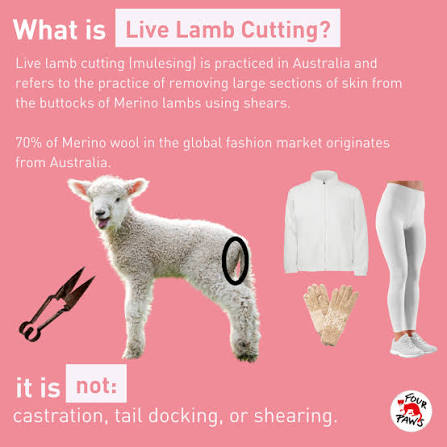
A sweater made from fine Merino wool often traces back to Australia, and in a large share of cases to a flock whose lambs were mulesed. Mulesing is the surgical removal of strips of wool bearing skin from the breech, the area around a lamb’s tail and hindquarters, and it has been used on Australian Merino sheep since the 1930s. The animal protection organization FOUR PAWS, which now calls the practice live lamb cutting, says more than 10 million Merino lambs a year, aged roughly 2 to 12 weeks, are restrained in metal cradles while skin and flesh are cut away. In a video the group has released, veterinarian Dr Sy Woon explains what the procedure involves and why she believes pain relief does not make it acceptable. The wool industry sees it differently, describing mulesing as a preventive measure against a serious disease. This feature lays out both positions as part of the Sustainable Action Now coverage of animal welfare and cruelty.
Why the Procedure Exists
The reason for mulesing is flystrike, a condition in which blowflies lay eggs in the moist, soiled wool around a sheep’s rear end and the hatching maggots feed on the animal’s skin. According to the Western Australian Department of Primary Industries and Regional Development, the maggots cause considerable distress and, if untreated, can kill a sheep within a few days. CSIRO, Australia’s national science agency, estimates that flystrike costs the wool and sheep meat industries more than 320 million dollars a year in lost production. Heavily wrinkled Merinos, bred for wool yield, are especially prone to it, because skin folds around the breech trap moisture. Mulesing removes that wool bearing skin, leaving scarred, bare skin that attracts fewer flies. The National Farmers Federation has described mulesing as the most effective practical way to eliminate the risk of flystrike, and the national body for wool growers has said it will support a phase out only when a universally accepted alternative exists.
What Welfare Groups Say
FOUR PAWS and other welfare organizations, including RSPCA Australia, argue that the cost to the lambs is too high and that an alternative is already available. They point out that lambs are restrained while the skin is cut, that the wound takes weeks to heal and that, in FOUR PAWS’ words, the pain lasts for days. Pain relief is widely used, with CSIRO reporting that about 75 percent of mulesed Merino lambs receive it, and a 2017 industry survey found more than 80 percent of mulesing producers using pain relief. Veterinary guidance in Western Australia recommends a registered product such as Tri-Solfen when mulesing is performed. Critics respond, as the FOUR PAWS video does, that pain relief reduces suffering during and after the cut but does not make the procedure painless or remove the stress of restraint and wounding. The group also uses the term live lamb cutting in place of mulesing because it believes the older word hides what happens to the animal.
A Promise That Was Not Kept
The wool industry has been under pressure over this issue for more than two decades. In 2004, after international boycotts by retailers, Australian wool industry leaders committed to phase out mulesing by the end of 2010. In July 2009, they abandoned that deadline. Australian Wool Innovation, the industry’s research and marketing body, has said that a fixed deadline is not based on sound health and welfare science and risks worse outcomes for sheep and for supply, and that it has no power to impose one. Progress since then has been slow by the measure of many observers. RSPCA Australia said in 2024 that fewer than 20 percent of Australian wool sold at auction was declared mulesing free, while the Australian Veterinary Association, which ratified a policy in July 2026 supporting a phase out, puts the figure at about 25 percent for this year. FOUR PAWS says around half of Australian wool producers have stopped the practice, which is a different measure, since it counts producers and not wool volume.
Two Ways of Counting
Estimates of how much wool comes from mulesed sheep vary because organizations count differently. Some measure wool declared mulesing free at auction, some survey producers, and large flocks behave differently from small ones. Readers comparing figures should check which measure each uses.
The Alternative and the Market
The alternative that welfare groups and a growing number of veterinarians favor is breeding sheep with smoother, less wrinkled skin that are naturally more resistant to flystrike. CSIRO has developed breeding guidelines for building flystrike resistance into Merino flocks, the Australian Veterinary Association describes a genetic pathway for the transition, and the Western Australian agriculture department says research shows unmulesed sheep can be managed with little extra time or cost. Some farmers who changed their breeding have reported benefits, including better lamb survival, though FOUR PAWS acknowledges that research linking plain bodied sheep to higher survival is limited. Industry bodies note that the change takes years because it depends on genetics, and that flystrike control in unmulesed flocks requires management that suits local conditions.
Australia matters because of scale. FOUR PAWS says it supplies about 80 percent of the fine wool used in global fashion, while RSPCA Australia puts its share of apparel wool at 70 percent, and both describe Australia as the only country where mulesing is still practiced on wool sheep. The market has begun to respond. FOUR PAWS says more than 340 fashion and apparel brands have publicly committed to sourcing certified mulesing free wool, and nearly 150 companies have signed its Brand Letter of Intent, which calls on the Australian industry to stop by 2030. Whether the supply side can keep pace with that demand is now the central question for growers, brands and regulators.
Readers who want to weigh the issue can read the video’s argument alongside the positions of Australian Wool Innovation, the national wool growers’ body and the RSPCA, and can look for certification labels on wool products that state a mulesing free origin. The debate is likely to continue, and more reporting on animal welfare in fashion and agriculture is collected in the Sustainable Action Now abuse of animals section.