
Politics · Federal Disaster Aid
Trump Approved Ohio Disaster Aid the Day Before Rallying for Husted. Fifteen Other Requests Are Still Waiting
A major disaster declaration for seven Ohio counties landed one day before the president campaigned for Sen. Jon Husted. Critics see federal relief bending to the election calendar. The White House says that is simply wrong.
The paperwork came first. The applause came second.
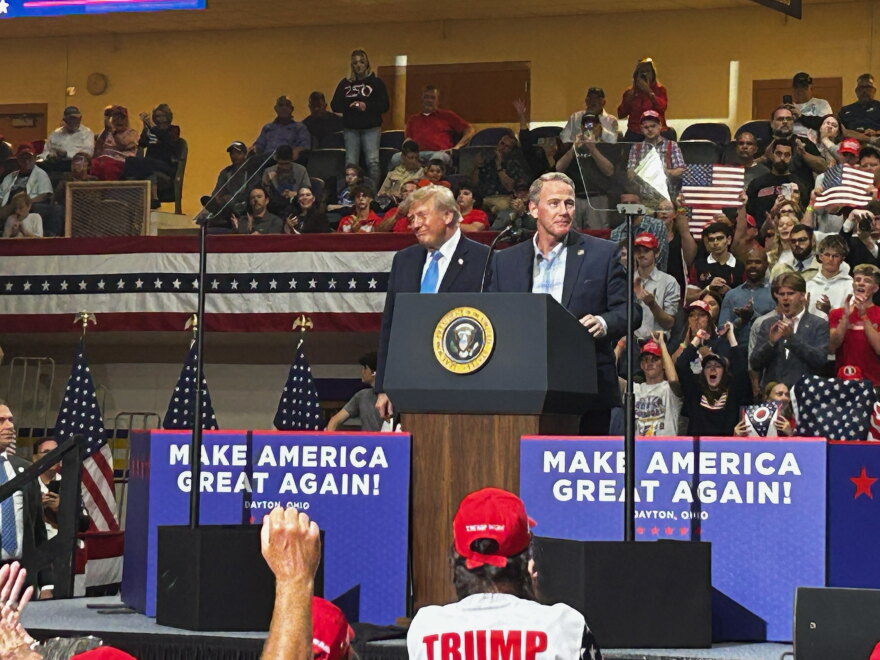
On October 2, President Donald Trump signed a major disaster declaration unlocking federal help for residents of seven Ohio counties hit by a punishing stretch of August weather. The next day, standing in front of a crowd in Vandalia, he made sure the room knew about it. Sen. Jon Husted, the Republican fighting to hold his seat, had asked for assistance, Trump told the audience. “You had some bad storms, and Jon and everybody wanted me to help, and I took care of it.”
To the families who lost roofs, cars and basements, the declaration is real money and real relief. To critics, the timing is a pattern, and the pattern is the story. Fifteen other requests from states, tribes and territories were still waiting for an answer when Trump took the stage in Ohio, including two from Hawaii after back-to-back hurricanes there in August and September.
What Happened in Ohio
The storms were not minor. Between August 10 and August 23, heavy rain and severe weather swept through the state, producing flash flooding and 17 confirmed tornadoes, 14 of them on August 11 alone. State officials said western Hamilton County endured its worst flooding since 1959. Crews carried out roughly 59 water rescues. Two people died and four were injured. Flooding damaged a substation operated by AEP, which left some communities without power for days. Preliminary assessments counted at least 50 homes and businesses destroyed, 806 with major damage and 475 with minor damage.
Gov. Mike DeWine asked for a presidential major disaster declaration in a letter dated September 2, covering 23 counties, from Adams and Athens to Washington. He requested FEMA’s individual assistance program, which pays for temporary housing, home repairs, rental help, replacement of personal property, crisis counseling, disaster unemployment benefits and legal services, along with low-interest federal loans for uninsured losses. DeWine wrote that the damage exceeded what the state, local governments and relief groups could handle on their own. Husted, Sen. Bernie Moreno and Rep. Troy Balderson all publicly backed the request.
The approval that arrived a month later was partial. It covers Hamilton, Clermont, Franklin, Licking, Morgan, Muskingum and Perry counties. Adams, Brown, Butler, Highland and Warren were also on the governor’s list and remain under federal review, according to his office. Residents of the approved counties can apply through DisasterAssistance.gov, the FEMA app or by phone, and the speed of that process now matters more than the politics for people still hauling ruined furniture to the curb.
“Recovery isn’t partisan.”Sierra Lindsey-Kos, Extreme Weather Survivors
The Rally and the Waiting List
The Vandalia event was one stop on a long run of midterm rallies, and Ohio is not a throwaway state this year. A Marist poll found Democrat Sherrod Brown leading Husted by 8 points, a striking number in a state Trump has carried three times, and the same survey found 56 percent of Ohio voters strongly disapprove of the president’s job performance. Ramaswamy, the Republican nominee for governor, shared the campaign billing. In that setting, a federal check for storm victims is more than a policy decision. It is a talking point with a ZIP code attached.
Critics pointed to the queue. By the Associated Press count, 15 requests were still pending, and Trump did not act on them before heading to rallies in Oklahoma and Nebraska, where the races are less consequential. Hawaii’s two requests, tied to the hurricanes that struck the islands in August and September, were among those left unresolved. Some earlier reporting suggested that requests from Indiana, Minnesota, Utah, Wisconsin and Guam were older than Ohio’s, but the situation has moved. FEMA has since confirmed declarations for Wisconsin, West Virginia and Guam, so the list of who is still waiting is shorter than it first looked, and it is changing.
A Pattern Beyond Ohio
Ohio is not the only place where disaster dollars and campaign messaging have collided in recent weeks. In Wisconsin, Trump endorsed Rep. Tom Tiffany for governor and posted that about $17.9 million in disaster funds was on the way, before Gov. Tony Evers’s office said it had not been told. Evers accused the president and Tiffany of continuing to “play politics with emergency aid.” Trump has also tied disaster funding to endorsements in Iowa, where he backed Ashley Hinson, and in Kentucky, where he backed Andy Barr.
The most jarring moment came in North Carolina, where Trump acknowledged the state is still owed billions in Hurricane Helene recovery money. Speaking in support of Michael Whatley, he said, “Now if Michael loses, I’m not sending it,” then quickly added, “No, I’m only kidding, you’re getting it.” A Republican congressional candidate in the state said she was not sure he was joking, and meant it as a point in his favor, arguing he was trying to persuade voters. Opponents heard something else, a president who treats a promise of federal help like a campaign prop.
What the Data Says
A July Associated Press analysis found Trump approved more than three quarters of disaster requests from states that voted for him in 2024, but fewer than half of those from other states. The analysis does not establish motive, and states differ in the severity of their disasters and the completeness of their paperwork. It does show why critics see a partisan tilt, and why a single approval timed to a rally draws such scrutiny.
The White House Response
The administration rejects the premise. White House spokesperson Lauren Bis said there is no politicization in the president’s decisions on disaster relief, and FEMA said that suggesting otherwise does not reflect how the process works. Supporters note that Ohio’s request was backed by its Republican governor and its entire congressional leadership, that Ohio’s damage was well documented, and that approving a request is the job of a president, not a favor. They also point out that presidents of both parties have announced aid in swing states and that every sitting president in modern memory has wanted credit for helping.
That last point is the strongest one on the defense side, and Andrew Rumbach of the Urban Institute concedes it, noting that politicians have always tried to use disasters to their advantage. His objection is about degree. He called the current White House behavior unusual and frankly concerning. Rafael LeMaitre, a former FEMA spokesperson, said that even the perception that relief and votes are linked has traditionally been out of bounds, because it erodes trust in the system that people depend on when the worst day of their lives arrives. FEMA also has not explained why a release about a September nor’easter named only 18 Republican members of Congress, even though the affected states were led by Democrats.
Why It Matters Beyond November
Disaster declarations are supposed to follow a dull, predictable logic. A governor documents the damage, FEMA reviews it, and the president decides. When the outcome starts to look like it depends on who is running for what, the damage does not stay in the election cycle. States begin to wonder whether paperwork or politics will decide their recovery. Emergency managers begin to wonder whether to plan on federal help at all. And communities already coping with floods, fires and storms get a lesson that has nothing to do with preparedness.
There is also a timing problem that no one can spin. A major hurricane is approaching the Gulf Coast as these arguments play out, and the system that will have to respond is the same one under political strain now. Fifteen requests are waiting. Seven Ohio counties have their answer, and five more are still hoping for theirs. The question for the weeks ahead is simple and uncomfortable: will the next decision be made on the damage, or on the map?
How the Week Unfolded
- August 10 to 23Severe storms bring flash floods and 17 tornadoes to Ohio.
- September 2Gov. DeWine asks for a major disaster declaration covering 23 counties.
- October 2The president approves a declaration for seven counties.
- October 3Trump rallies in Vandalia and credits Husted for the aid.
- October 7National coverage questions whether disaster relief is being tied to the midterms.