

Recipes · Plant Based Dinners
Vegan Shepherd’s Pie and Vegetarian French Onion Soup: A Cold Weather Dinner Built on Lentils and Slow Onions
One dish hides its vegetables under a cloud of buttery mashed potatoes. The other turns plain onions into something dark, sweet and almost meaty. Both prove that winter comfort food doesn’t need meat.
Cold nights. Hot oven. Good plan.
The temperature drops, the light goes early, and the kitchen suddenly feels like the best room in the house. Two recipes from the Food with Feeling kitchen suit that mood perfectly, and they pair well enough to serve on the same table: a lentil shepherd’s pie baked under a golden roof of mashed potatoes, and a vegetarian French onion soup finished under a bubbling cap of toasted bread and cheese. Together they make up the Sustainable Action Now vegan shepherd’s pie with French onion soup guide, a full meatless menu with every measurement, swap and storage tip in one place.
The Shepherd’s Pie That Doesn’t Miss the Meat
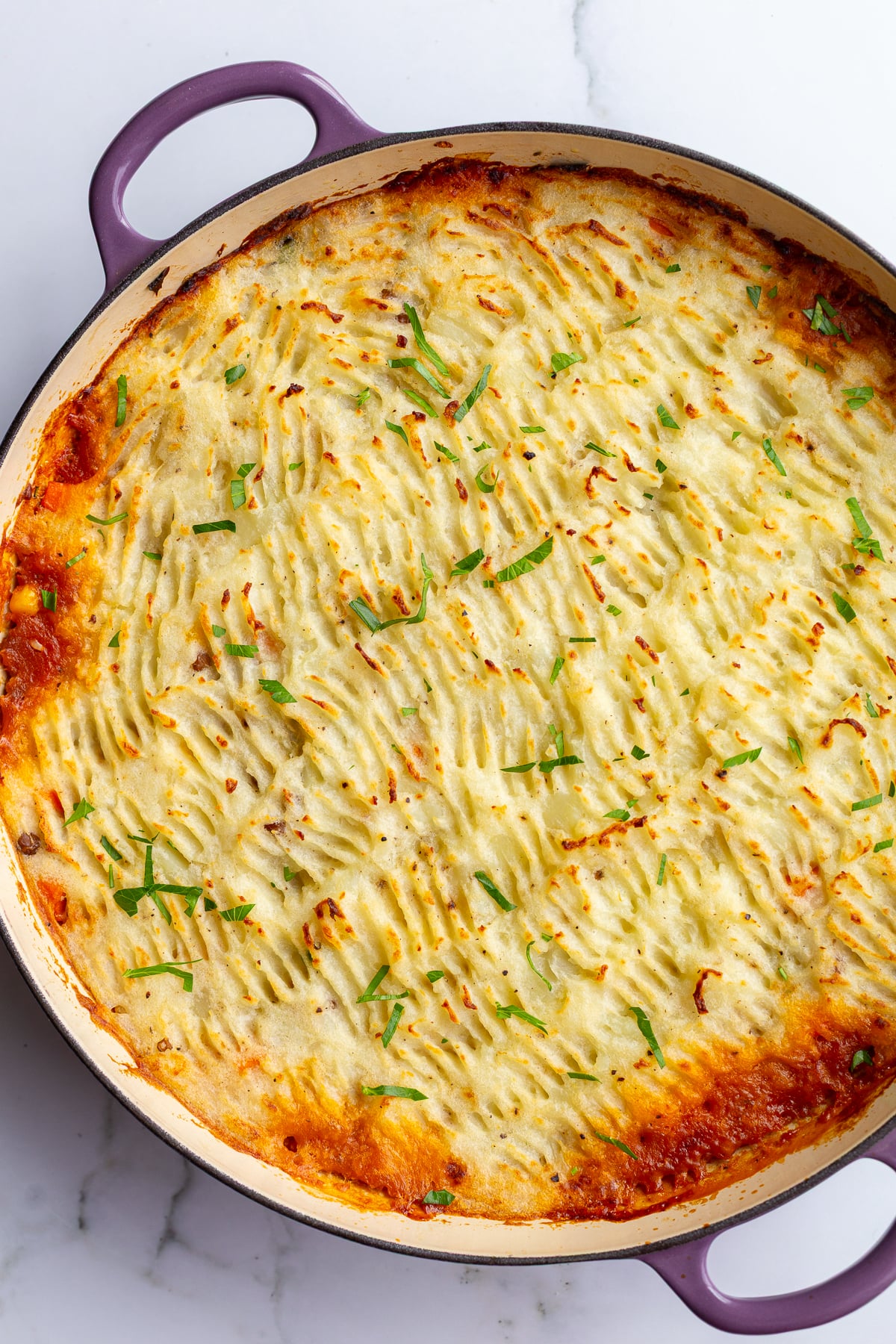
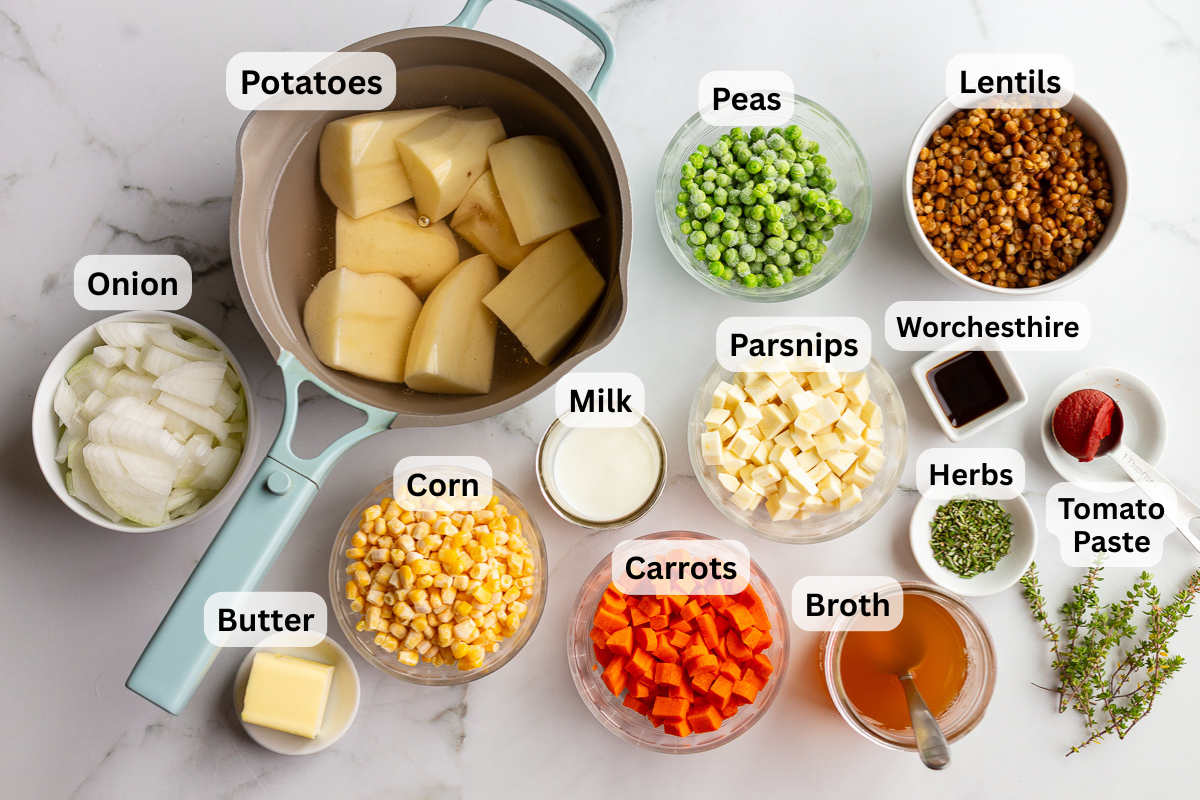
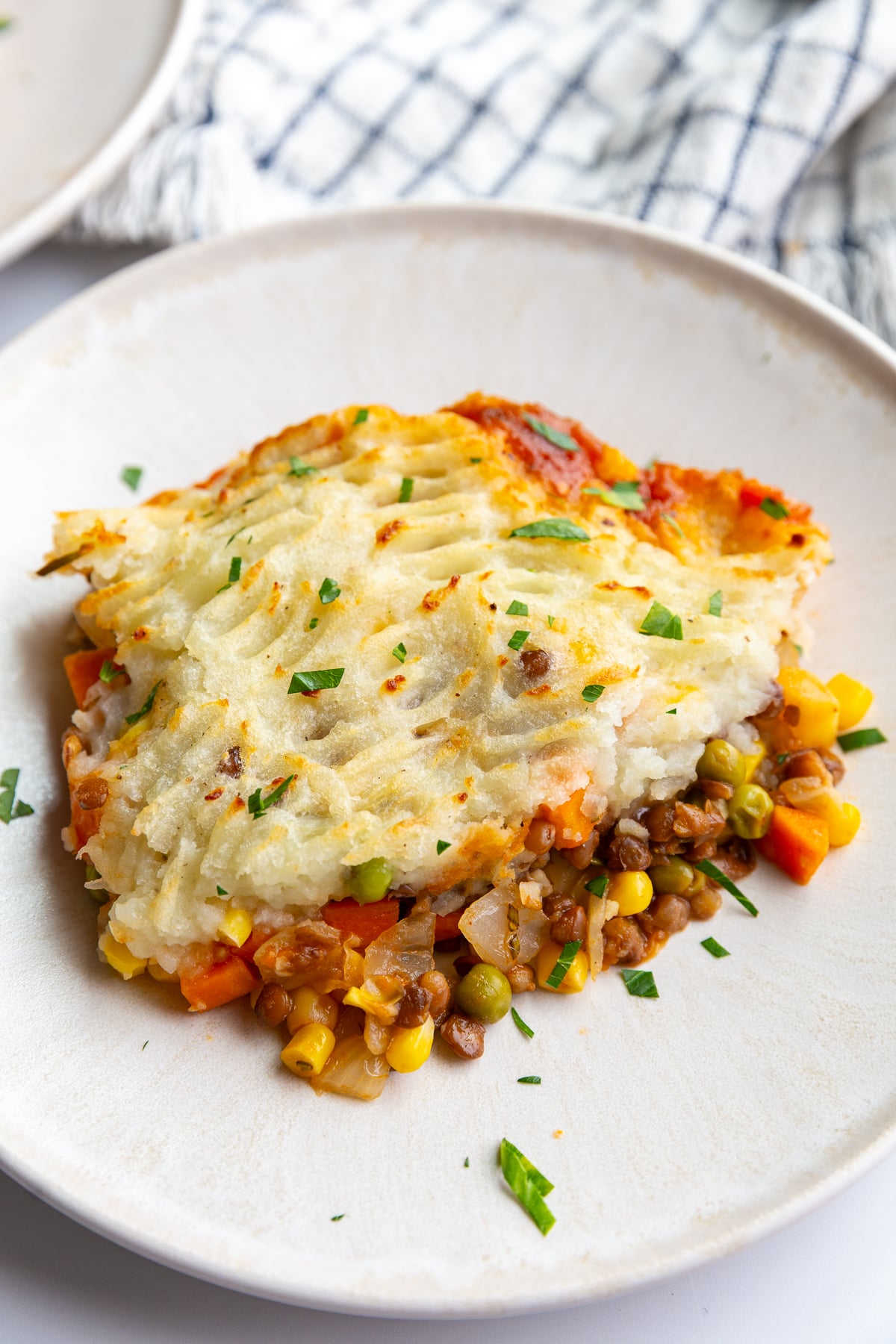
Traditional shepherd’s pie is a British and Irish classic, a savory minced lamb filling sealed under mashed potato and baked until the peaks brown. This version swaps the meat for cooked lentils and leans on vegetables for body. Diced parsnips, carrots and onion go into the skillet first, followed by sweet corn and peas, then a gravy built from vegetable broth, tomato paste, Worcestershire sauce, rosemary and thyme. The lentils are folded in gently at the end so they hold their shape instead of dissolving into paste.
The result is hearty without being heavy. Parsnips lend a quiet sweetness, tomato paste adds depth, and the herbs give the whole thing a smell that fills the house within minutes of going into the oven. The topping does the rest. Russet potatoes mashed with vegan butter and a splash of plant milk turn creamy, with a few small lumps left in for texture, then get raked into peaks with a fork so the edges crisp as they bake. Its creator, Brita Britnell, calls it ridiculously comforting, and it’s hard to argue.
Why Lentils, and Which Ones
Lentils are a smart stand-in for ground meat. They bring protein and fiber, they absorb the flavors around them, and they have just enough bite to feel substantial under a mound of potatoes. Green or brown lentils work best because they stay intact in a saucy filling. Red lentils will work in a pinch, but they break down and make the filling softer and mushier. Cooks who want a different texture can use plant based ground beef in place of the lentils, and any of the vegetables can be swapped for whatever is already in the refrigerator.
The recipe is plant based when the butter, milk and Worcestershire sauce are vegan, and that last item deserves a glance at the label, since many traditional brands contain anchovies. The dish is also naturally gluten free as written, provided the vegetable broth and Worcestershire are gluten free too. Yukon Gold or sweet potatoes can stand in for russets, and olive oil can replace the butter in the skillet.
Rake the potatoes with a fork. Those little peaks are where the crunch lives.
French Onion Soup Without the Beef
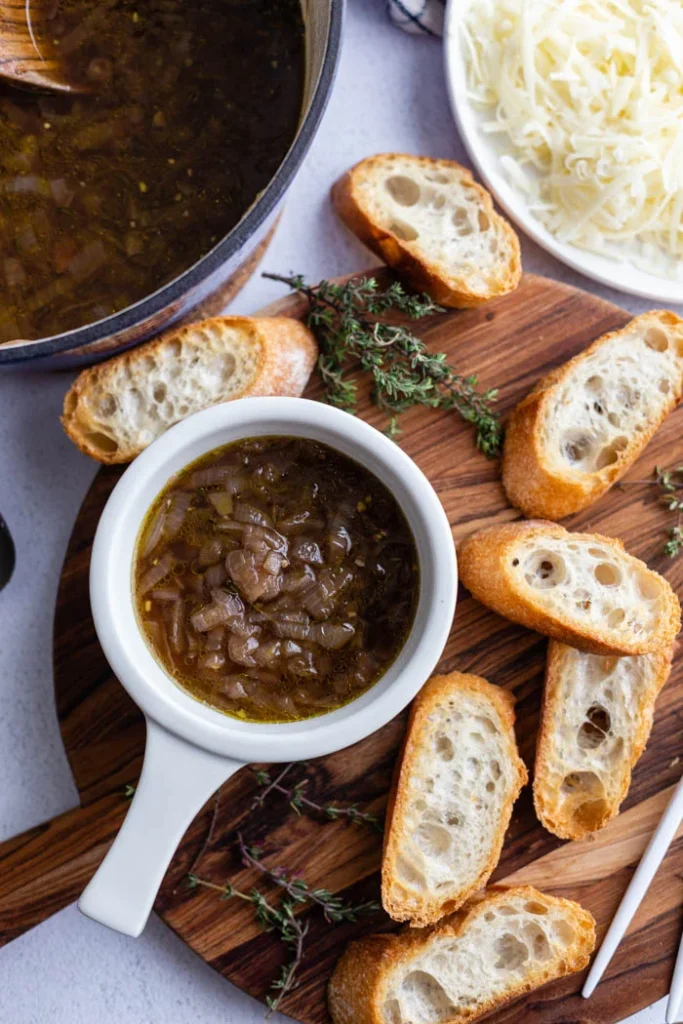
French onion soup is a lesson in patience. The classic version gets its savory depth from beef stock, and a vegetarian version has to earn that depth some other way. Here, the work is done by the onions themselves, three pounds of them, sliced into half moons and cooked slowly in olive oil, then butter, then sugar and salt, until they turn the color of strong tea. Red wine, vegetable broth, Worcestershire sauce, bay leaves and thyme fill in the rest. The wine also supplies the dark color that vegetable broth alone can’t.
Brita Britnell describes the recipe as one that took little effort to make vegetarian, and she’s right that the substitution is mostly a matter of finding the flavor and color beef stock would have provided. It takes about an hour and 25 minutes from start to table, most of which is the unhurried caramelization of the onions. That time can’t be rushed, and it’s the reason the soup tastes the way it does.

The classic finish
Ladle the soup into oven proof bowls.
Top with toasted bread and grated cheese.
Broil until the cheese melts and bubbles at the edges.
The easier finish
Melt the cheese onto the toast first.
Set the cheesy toast on top of the hot soup.
Skip the broiler and the oven proof bowls entirely.
Making It Vegan, and Other Swaps
The soup bends easily. Use vegan butter, leave off the cheese or replace it with a vegan one, and it becomes fully vegan. The author suggests a vegan Parmesan style cheese, and any melty cheese such as Swiss or fontina works if you aren’t avoiding dairy. If you’d rather skip the wine, use extra vegetable broth plus a small splash of soy sauce. A good baguette is non negotiable, because the toast has to hold its shape against the broth. And as with the pie, check the Worcestershire sauce, since some versions contain fish.

A Salt Note Worth Reading
Vegetable broths vary widely in sodium. If yours is low sodium, you may need a little more salt, and if it’s regular, taste before you add any. The recipe’s automatically generated nutrition estimate lists a high sodium figure for the soup, so cooks watching salt intake should choose a low sodium broth and season at the end.
Serving Them Together
As a pairing, the two dishes make sense. The soup is bright, brothy and savory, and the pie is rich and filling, so a small bowl of one can open a meal built around the other. The soup recipe serves four generous portions, but it stretches to six if you serve it as an appetizer or side. The pie serves six. Add a green salad with something sharp in the dressing and you have dinner for a crowd with almost no meat anywhere near the stove.

Make Ahead, Store, Freeze
The shepherd’s pie is a natural make ahead dish. Assemble it the night before, cover and refrigerate, then bake when you’re ready. Leftovers keep covered in the refrigerator for up to five days, and single servings reheat in the microwave in 30 second bursts, covered, until warm. For longer storage, cool the pie fully, wrap it tightly in plastic and then foil, and freeze it for up to about three months, then bake from frozen at 350°F for about an hour. The soup can be made through the simmering stage ahead of time, with the toasting and broiling saved for serving.

About the Recipe Creator
Both recipes come from Brita Britnell, the author of Food with Feeling, a vegetarian food blog. She develops easy, approachable recipes aimed at encouraging more people to try meat free meals, and these two are good examples of the approach: familiar dishes, ordinary ingredients, and results that don’t announce what’s missing.
Vegan Shepherd’s Pie
Recipe by Brita Britnell of Food with Feeling · Prep 20 min · Cook 30 min · Total 50 min · Serves 6
Mashed potato topping
- 1½ pounds russet potatoes, peeled and quartered
- 6 tablespoons vegan butter, divided (2 for the skillet, 4 for the potatoes)
- ¼ cup plant based milk
- Salt and pepper
Filling
- 1 cup diced parsnips
- 1 medium onion, chopped
- 1 cup diced carrots
- 3 cloves garlic, minced
- 1 cup frozen corn
- 1 cup frozen peas
- 1 cup vegetable broth
- 1 tablespoon tomato paste
- 1 teaspoon vegan Worcestershire sauce
- 2 teaspoons fresh rosemary
- 1 teaspoon fresh thyme
- 1 cup cooked lentils
Instructions
- Heat the oven. Preheat to 400°F.
- Boil the potatoes. Cover them with cold water, add about a teaspoon of salt, bring to a boil, then simmer until fork tender, about 20 minutes. Drain.
- Start the filling. Melt 2 tablespoons of the butter in a large skillet over medium heat. Cook the onion, parsnips and carrots for about 8 minutes, until the onion turns translucent. Add the garlic and cook 1 minute more.
- Build the gravy. Stir in the corn, peas, rosemary, thyme, Worcestershire, broth and tomato paste. Fold in the lentils gently, then take the pan off the heat. If your skillet isn’t oven safe, move the filling to a baking dish.
- Mash. Mash the potatoes with the remaining 4 tablespoons of butter until creamy with a few small lumps. Stir in the milk and season with salt and pepper.
- Assemble. Spread the potatoes over the filling and drag a fork across the surface to make peaks.
- Bake. Bake about 30 minutes, until the potatoes begin to brown. For a darker top, broil briefly and watch closely.
- Serve. Garnish with fresh herbs.
Notes
- Use green or brown lentils for the best texture. Red lentils make a mushier filling.
- Swaps: Yukon Gold or sweet potatoes, olive oil for butter, plant based ground beef for lentils, any vegetables you like.
- Make ahead: assemble the night before, cover and refrigerate.
- Refrigerate leftovers up to 5 days. Freeze up to about 3 months and bake from frozen at 350°F for about an hour.
Nutrition per serving, estimated
307 calories, 48 g carbohydrates, 9 g protein, 10 g fat, 8 g fiber, 7 g sugar, 387 mg sodium. Values are automatically calculated, so treat them as approximate.
Vegetarian French Onion Soup
Recipe by Brita Britnell of Food with Feeling · Prep 15 min · Cook 1 hr 10 min · Total 1 hr 25 min · Serves 4
Ingredients
- 3 pounds yellow onions, about 5 large, halved and sliced into half moons
- 4 tablespoons olive oil
- 2 tablespoons butter (vegan if desired)
- 1 teaspoon sugar (coconut sugar works)
- 1½ teaspoons salt
- 4 cloves garlic, minced
- 8 cups vegetable broth
- ½ cup red wine, such as merlot or pinot noir
- 1 tablespoon vegetarian Worcestershire sauce
- 2 bay leaves
- 1 tablespoon fresh thyme (dried works)
- ½ teaspoon freshly ground black pepper
- 4 thick slices French bread
- 1 cup freshly grated Gruyère cheese (optional, or use a vegan cheese)
Instructions
- Soften the onions. Heat the olive oil in a large pot over medium high heat. Add the onions and cook, stirring often, until they soften, about 20 minutes.
- Add the butter. Stir it in and keep cooking 15 to 20 minutes, until the onions start to brown. Watch the heat and lower it if they begin to burn. Slow browning is the goal.
- Finish the onions. Add the sugar and salt and cook 15 minutes more, until well browned. In the last couple of minutes, add the garlic.
- Deglaze and simmer. Pour in the wine and scrape up the browned bits. Add the broth, Worcestershire, bay leaves, thyme and pepper. Bring to a simmer, cover, and cook 30 minutes, stirring every few minutes.
- Toast the bread. Heat the oven to 400°F. Brush or spray the bread with oil, set it on a baking sheet, and toast for 10 minutes, flipping halfway, until lightly toasted.
- Assemble and broil. Season the soup with more salt and pepper if needed. Ladle into oven proof bowls, top with the bread, and sprinkle the cheese over all four bowls. Set the bowls on a baking tray and broil until the cheese melts and bubbles.
- Serve. Serve right away.
Notes
- Vegetable broths vary in sodium. Add a little more salt if yours is low sodium.
- No oven proof bowls? Melt the cheese on the toast first, set it on the soup, and skip the broiling.
- Check that the Worcestershire is vegetarian, since some contain anchovies.
- For a vegan version, use vegan butter and skip or replace the cheese.
Nutrition per serving, estimated
683 calories, 75 g carbohydrates, 21 g protein, 32 g fat, 8 g fiber, 23 g sugar, 3,489 mg sodium. These values are automatically calculated and approximate, and they include the cheese.
Recipes · Plant Based Desserts
Vegan Peach Cobbler: An Oil Free, Dairy Free Dessert With a Whole Grain Topping
Tender peaches, a soft golden crown, and not a drop of butter, oil, eggs or dairy. This is the cobbler you can serve warm to anyone at the table.
Warm fruit. Soft batter. Done.
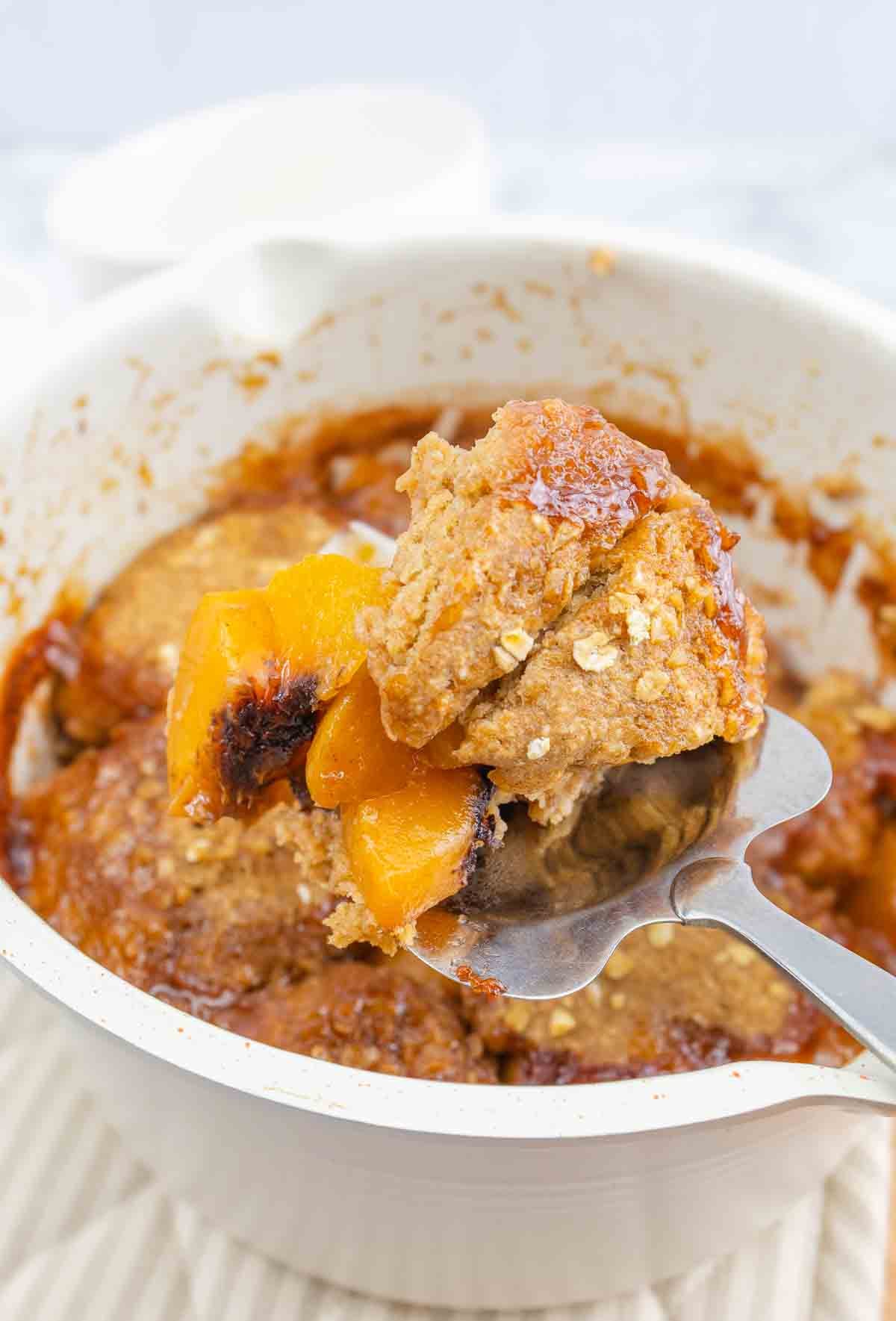
A good cobbler has always been a humble dish, fruit under a blanket of batter, baked until the juices bubble at the edges. This version keeps the comfort and strips out what many home cooks are trying to avoid. The filling is sweetened by ripe peaches and a little maple syrup. The topping uses whole wheat and oat flours instead of white flour and butter. There is no oil in it anywhere, and nothing that comes from a cow. It is a Sustainable Action Now vegan peach cobbler recipe built for people who want dessert to taste like dessert and still sit lightly on a plant based table.
Where This Recipe Comes From
The cobbler was developed by the niece of the EatPlant-Based creator, who tested it twice with small adjustments before it reached the site. Peach season is the natural time to make it, when local produce stands and grocery stores are stacked with fruit that smells like summer, but frozen peaches work well too, so the dessert does not have to wait for July. The same kitchen also publishes a refined sugar free apple crumble and dairy free sweet potato muffins for readers who want to keep going down the dessert list.
Why It Works
Four ideas hold the recipe together. First, the sweetness is natural. Peaches and maple syrup carry the filling and the batter, with only a spoonful of brown sugar in the topping. Second, it is free of oil, butter, eggs and dairy, which makes it friendly to vegan, dairy free and egg free guests without announcing itself as a substitute. Third, the flours do real work. Whole wheat gives the topping structure and a faintly nutty flavor, while oat flour keeps it soft and adds a gentle sweetness. Fourth, it adapts to the season, since the same dish is just as good served warm in June or reheated in January.
What Goes Into It
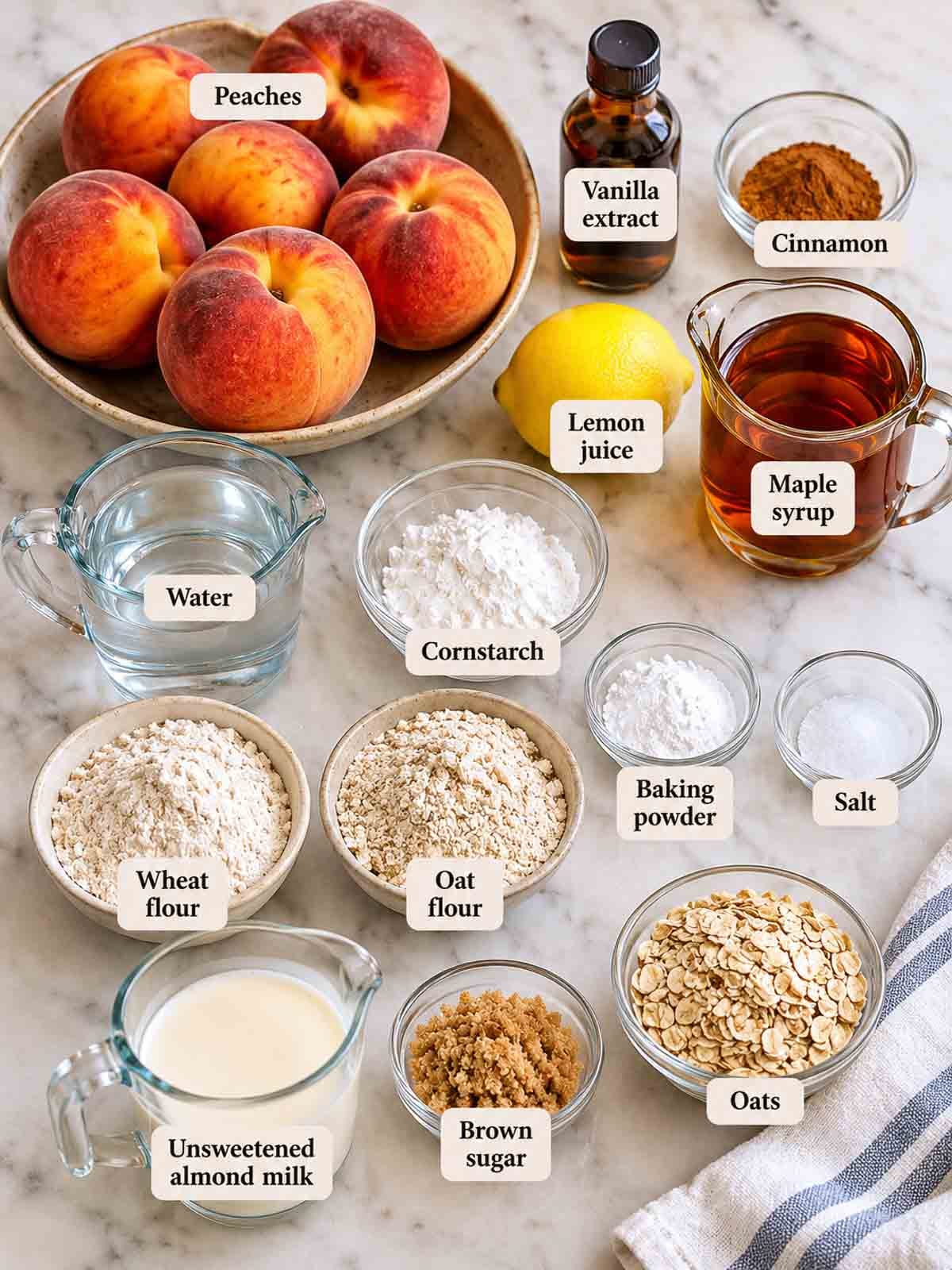
Fresh peaches are the star. Choose fruit that smells fragrant and gives slightly under a gentle squeeze, because ripe peaches soften as they bake and release the juice that becomes the filling. Maple syrup sweetens both the fruit and the batter. Whole wheat flour and oat flour make up the topping, and unsweetened almond milk, or another plant milk, keeps the batter moist. Cornstarch thickens the juices, lemon brightens the fruit, and vanilla and cinnamon round out the flavor. Peeling is optional, since the skins soften in the oven, though peeled peaches give a smoother filling.
The complete recipe card, with exact measurements, numbered instructions and notes, follows the article.
How to Make It
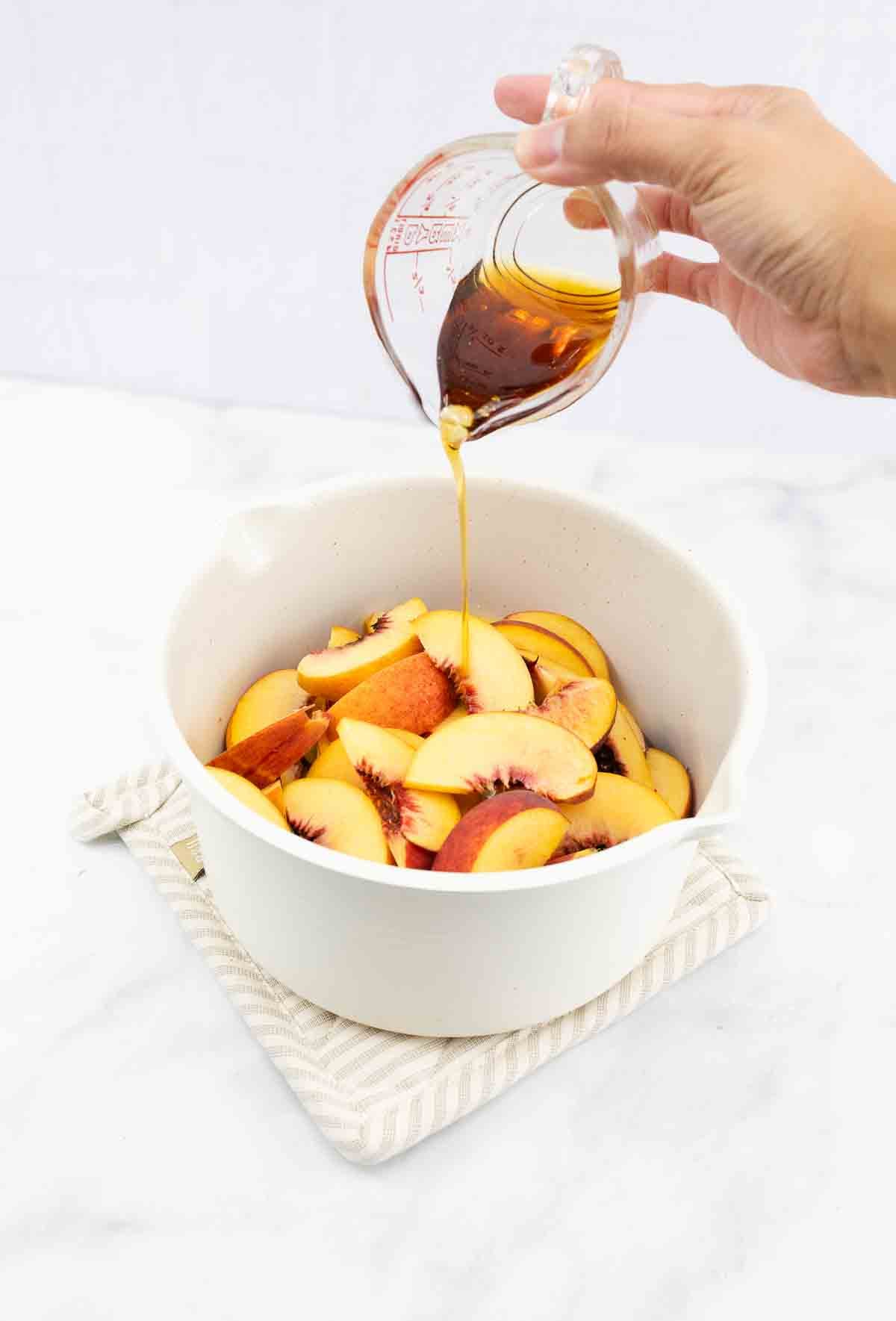
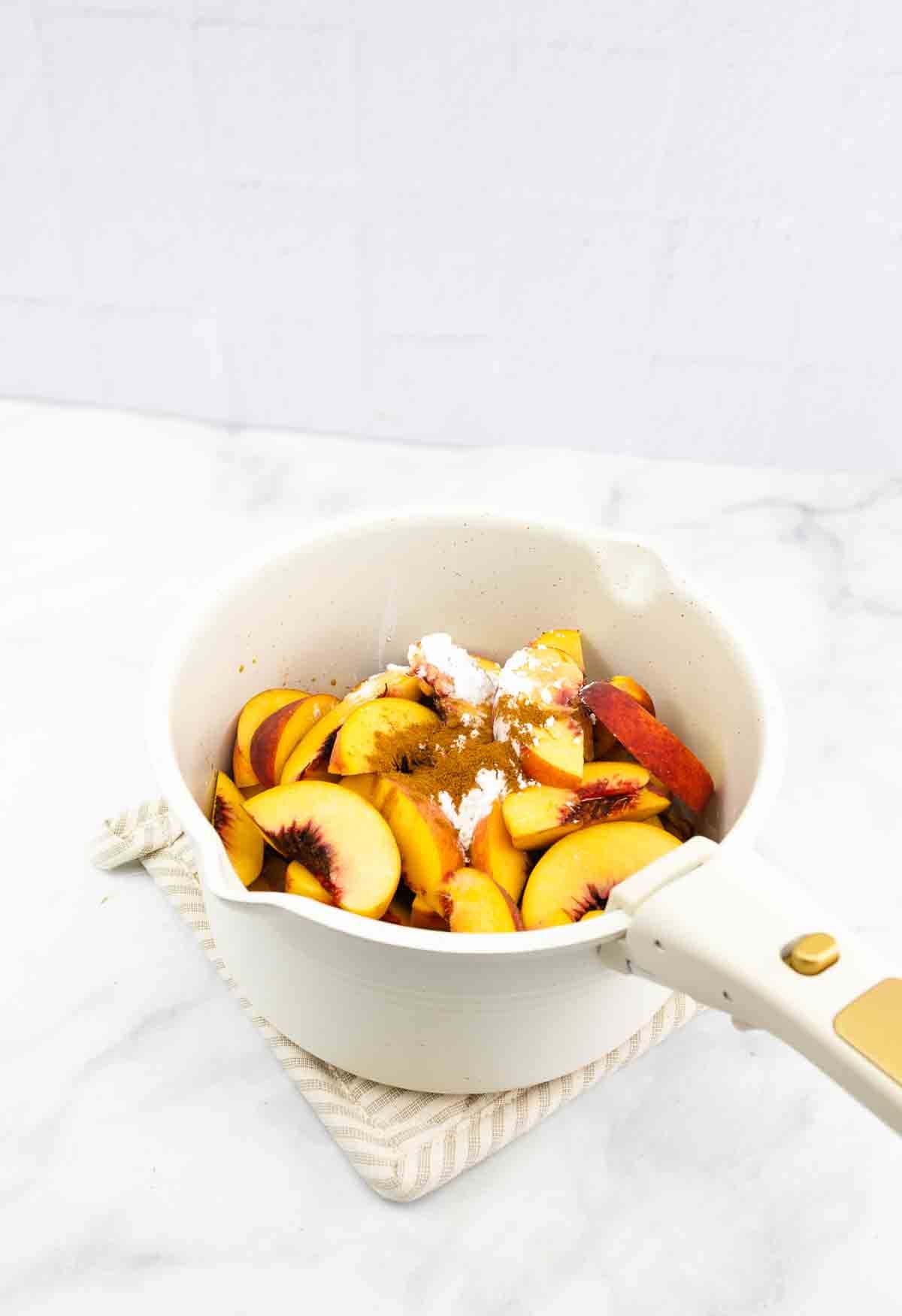
Begin with the filling. Slice the peaches and put them in a nonstick, oven safe skillet or pot with the vanilla, cinnamon, maple syrup, lemon juice, water and cornstarch, then stir. Cook over medium heat for about 25 minutes, stirring now and then, until the fruit is soft and tender but not mushy. Ripeness changes the timing, so judge by texture, not the clock.
While the fruit cooks, make the batter in a mixing bowl. Combine the whole wheat flour, oat flour, baking powder, salt, almond milk, vanilla, cinnamon and maple syrup, and stir only until the mixture is smooth. Stop there. Overmixing develops the gluten in the whole wheat flour and turns a tender topping tough.
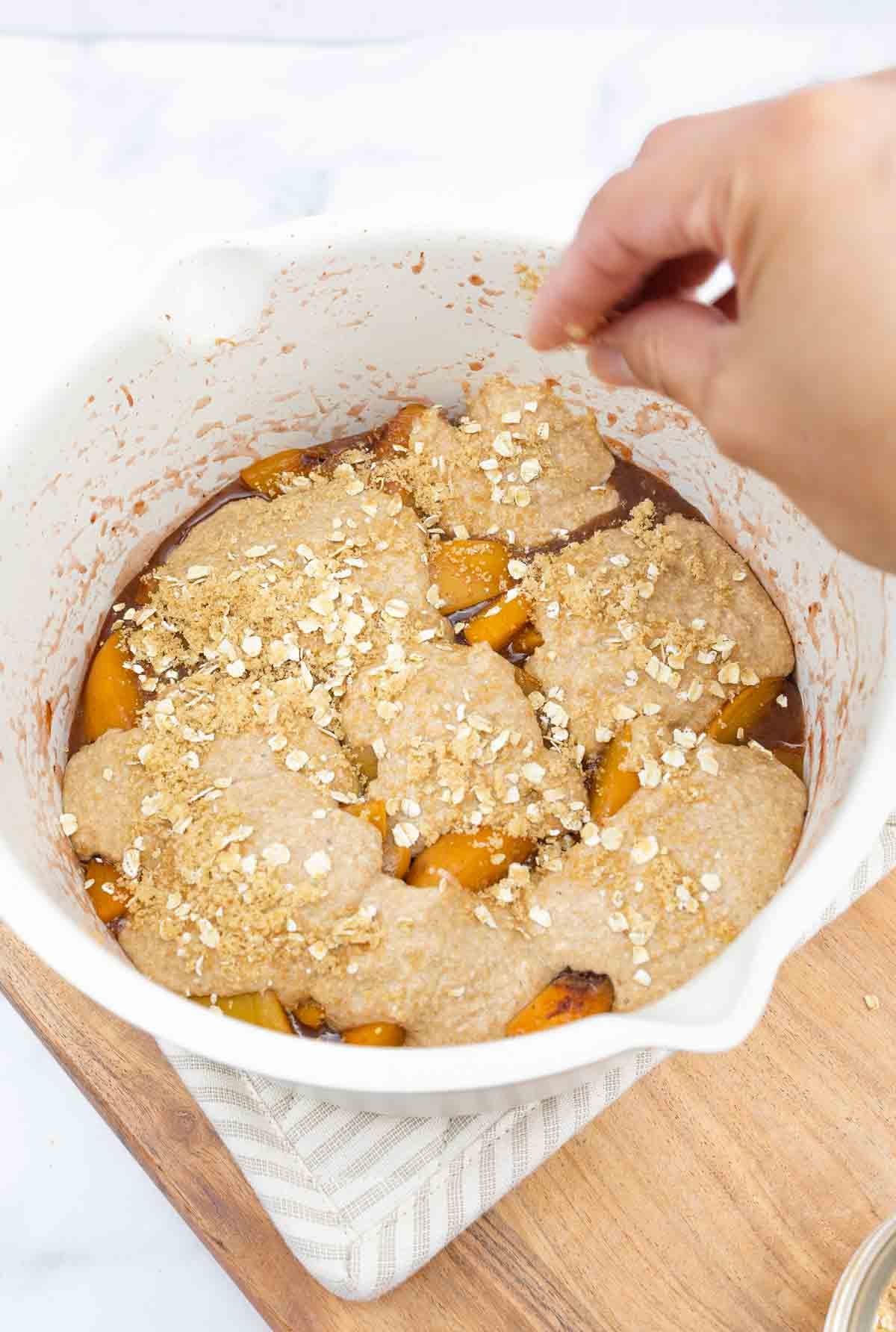
Heat the oven to 400°F. When the peaches are ready, the filling should look thick and syrupy but still a little loose, since it will tighten as it bakes. If it seems too thick, stir in up to ¼ cup of extra water. Drop spoonfuls of batter over the warm fruit with a spoon or an ice cream scoop, leaving a few gaps for the rustic look a cobbler is supposed to have. Scatter the brown sugar and rolled oats on top.
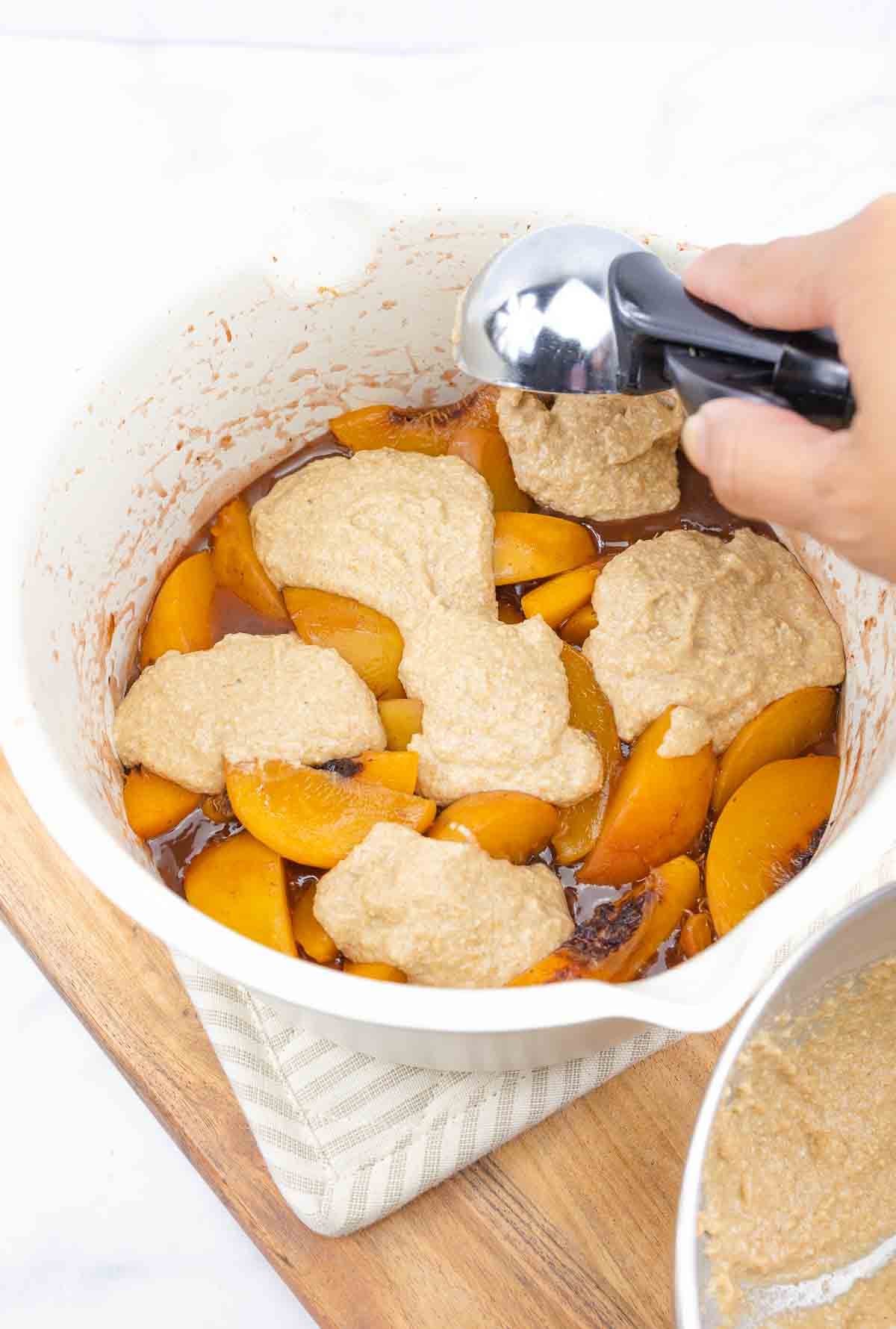
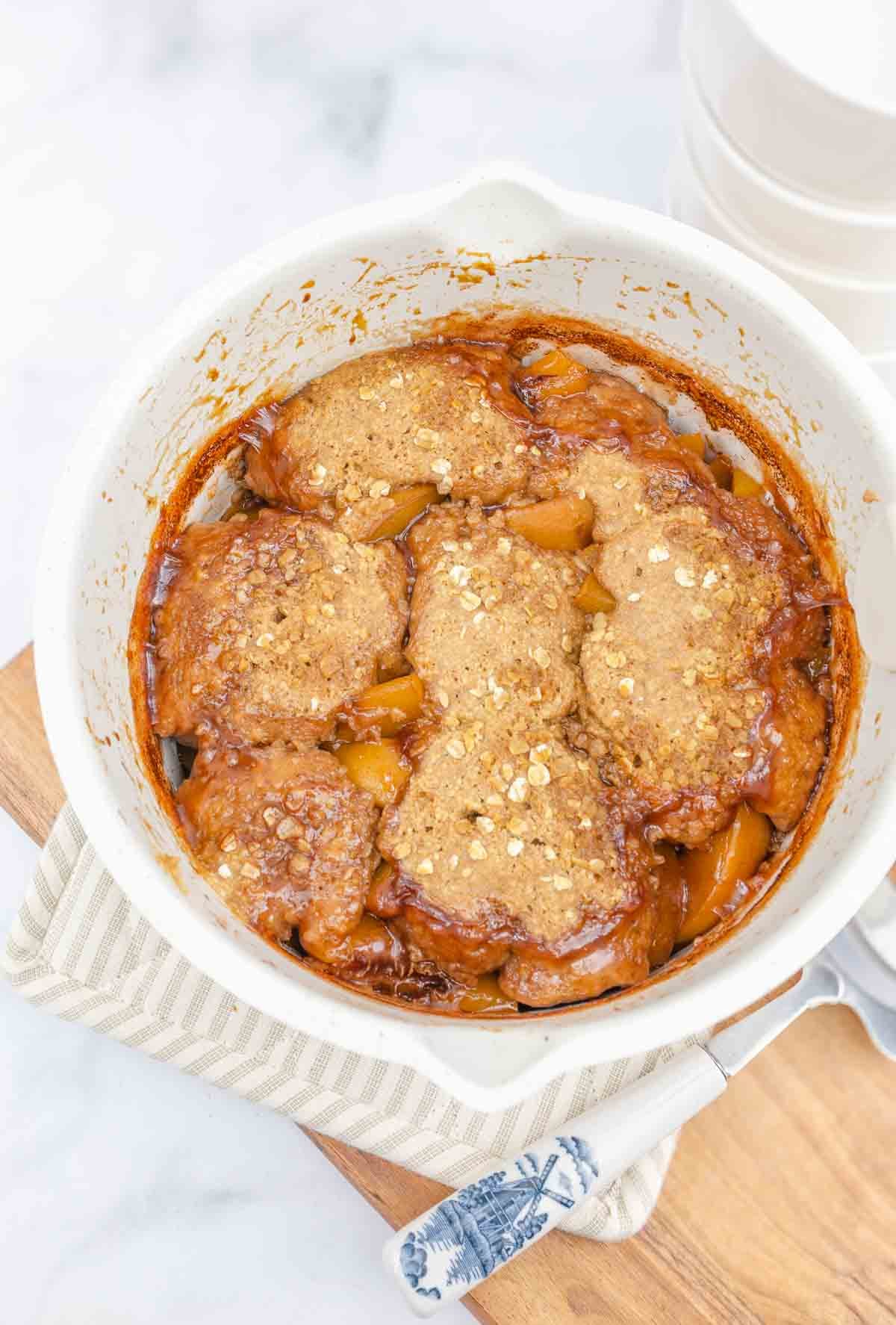
Bake at 400°F for 10 minutes, then lower the oven to 350°F and bake for another 5 to 10 minutes, until the topping is cooked through and lightly golden. A toothpick pushed into the batter should come out clean, with no wet crumbs. Then wait. Resting the cobbler for 15 to 20 minutes lets the filling thicken, and that pause is the difference between a spoonable dessert and a puddle.
- Step 1, 25 minutesSimmer the peaches with vanilla, cinnamon, maple syrup, lemon, water and cornstarch.
- Step 2, while the fruit cooksStir the batter just until smooth.
- Step 3, 400°FPreheat, check the filling, and add water if it is too thick.
- Step 4Spoon the batter over the fruit and sprinkle on the brown sugar and oats.
- Step 5, 10 minutes at 400°F, then 5 to 10 at 350°FBake until a toothpick comes out clean.
- Step 6, 15 to 20 minutesRest, then serve warm.
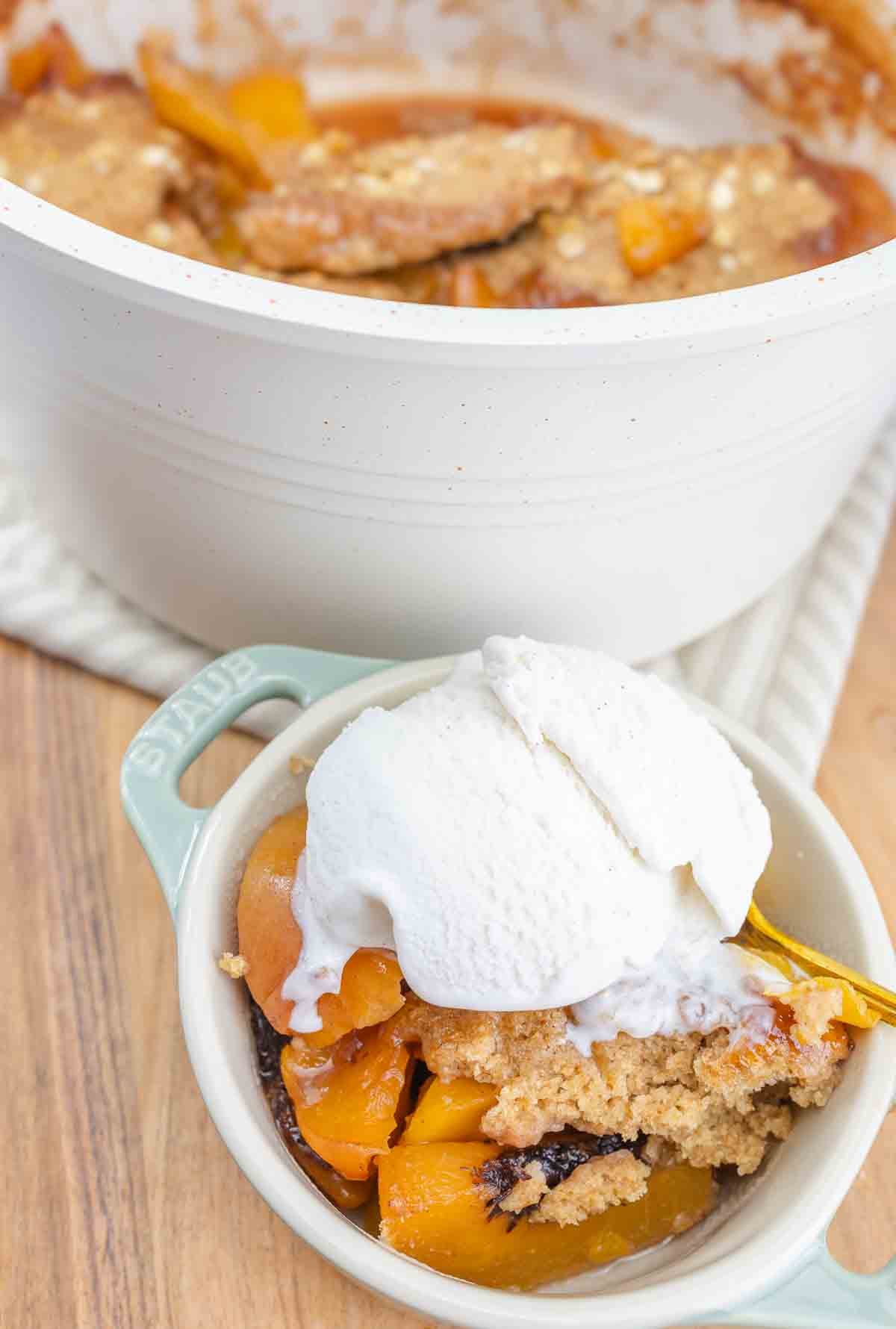
Warm peaches under a soft golden topping, with a cold scoop of dairy free vanilla ice cream melting on top.
Why Two Flours
The topping leans on a pairing. Whole wheat flour gives the batter body and a mild nutty flavor, helping it hold together in the oven. Oat flour has a naturally gentle sweetness and keeps the crumb soft. Together they land between dense and crumbly. You can use one flour alone, but the results change. All whole wheat makes a heavier topping, and all oat flour makes a more delicate, crumbly one. If you only have all purpose flour, it can replace the whole wheat in equal amounts, and the topping will come out lighter. Keep the oat flour either way.
Oat flour is easy to make at home. Blend about ¾ cup of old fashioned rolled oats for 30 to 60 seconds, until the oats are fine and powdery, scraping the sides if needed, then measure out the ½ cup the recipe calls for. Store any extra in an airtight container. For a gluten free version, start with certified gluten free oats. The recipe’s author has not tested a fully gluten free cobbler, but suggests a 1 to 1 gluten free baking blend that contains xanthan gum, together with certified gluten free oat flour. Expect the texture to differ.
Tips for a Better Cobbler
Buy ripe fruit, since peach flavor is the whole point. Do not skip the cornstarch, which turns the juices that peaches release into a syrupy filling and prevents a watery dish. Mix the batter gently. If you use frozen peaches, use them without thawing, cut the water to half a cup, and expect more liquid and a few extra minutes in the oven. Serve it warm, because the filling and topping taste best that way, and consider a scoop of dairy free vanilla ice cream or nice cream. The warm and cold contrast is hard to beat.
Make Ahead and Storage
You can bake the cobbler a day ahead and refrigerate it, then reheat the whole dish at 350°F until warmed through, or microwave single servings. Leftovers keep, covered in the refrigerator, for up to 4 days. You can also cook the filling in advance and mix the batter just before baking.
The Numbers
According to the original recipe, a serving provides about 225 calories, with 49 grams of carbohydrates, 4.3 grams of fiber, 21 grams of sugar, 3.2 grams of protein, 1.5 grams of fat and 330 milligrams of sodium. Those figures are estimates, and the listed serving size of one cup may not match the six serving yield, so use them as a rough guide and recalculate with your own ingredients if you track closely.
Peach cobbler works for summer gatherings, holiday tables and quiet evenings at home, and this one does it without butter, oil, eggs or dairy. Make it once with fresh fruit and once with frozen, and you will know it by heart.
Fresh Vegan Peach Cobbler
Recipe by Sarai Leos Matsui of EatPlant-Based
A healthier take on a classic comfort dessert. Juicy peaches under a soft whole grain topping, sweetened with maple syrup, with no oil and no dairy. Use fresh or frozen peaches and make it all year.
Peach filling
- 5 large peaches (or 5 cups frozen sliced peaches)
- 1 tablespoon vanilla extract
- ½ teaspoon cinnamon
- ¼ cup maple syrup
- 1 teaspoon lemon juice
- 1 cup water
- 1 tablespoon cornstarch
Batter
- ½ cup whole wheat flour
- ½ cup oat flour
- ½ tablespoon baking powder
- ½ teaspoon salt
- ½ cup unsweetened almond milk or other plant milk
- 1 teaspoon vanilla extract
- ¼ teaspoon cinnamon
- ½ cup maple syrup
Topping
- 1 tablespoon brown sugar
- 1 tablespoon rolled oats
Instructions
- Build the filling. Wash and slice the peaches and put them in a nonstick, oven safe skillet or pot. Add the vanilla, cinnamon, maple syrup, lemon juice, water and cornstarch, and stir well.
- Cook the peaches. Cook over medium heat for about 25 minutes, stirring occasionally, until soft and tender but not mushy. Ripeness changes the timing. If you use frozen peaches, add them without thawing, start with ½ cup of water, add more only if needed, and allow a little extra cooking time.
- Mix the batter. While the fruit cooks, stir the whole wheat flour, oat flour, baking powder, salt, almond milk, vanilla, cinnamon and maple syrup together in a bowl until just combined and smooth. Do not overmix.
- Heat the oven and check the filling. Preheat to 400°F. The cooked filling should be thick and syrupy but still a bit loose, since it keeps thickening in the oven. If it is too thick, stir in up to ¼ cup more water.
- Add the batter. Drop spoonfuls over the warm filling with a spoon or cookie scoop. Small gaps between dollops are fine and give the rustic look.
- Add the topping. Sprinkle the brown sugar and rolled oats evenly over the batter.
- Bake. Move the skillet or pot to the oven and bake at 400°F for 10 minutes. Lower the heat to 350°F and bake 5 to 10 minutes more, until the topping is cooked through and lightly golden. A toothpick in the center of the batter should come out clean.
- Rest and serve. Let the cobbler cool for 15 to 20 minutes so the filling thickens. Serve warm, on its own or with a scoop of dairy free vanilla ice cream.
Notes
- Fresh or frozen: Use 5 large fresh peaches, about 5 cups sliced, or 5 cups frozen slices. Frozen peaches may take longer and release more liquid.
- Homemade oat flour: Blend old fashioned rolled oats into a fine flour, then measure after blending.
- Flour swaps: All purpose flour can replace the whole wheat flour 1 to 1, for a slightly lighter topping. A gluten free version is untested, but a 1 to 1 gluten free baking flour with certified gluten free oat flour may work.
- Do not overmix: Stir only until combined to keep the topping soft and tender.
- Storage: Keep leftovers covered in the refrigerator for up to 4 days. Reheat single servings in the microwave, or warm the whole cobbler in a 350°F oven.
Nutrition, per serving as listed
Serving size 1 cup. 225 calories, 49 g carbohydrates, 3.2 g protein, 1.5 g fat, 330 mg sodium, 4.3 g fiber, 21 g sugar. Nutrition figures are estimates, so calculate them with your own ingredients for the most accurate numbers.