

Animal Protection · Year End Giving Guide
Tax Smart Giving in 2026: How New Charitable Deduction Rules Affect Donations to Animal Protection Groups Before December 31
For the first time, people who take the standard deduction can deduct some charitable gifts, while itemizers face a new floor and top earners a new cap. With five weeks left in the year, the details matter more than the headline.
Charitable giving rules changed for 2026, and December 31 is the date that counts.
Every year, a large share of charitable giving arrives in the last weeks of December, and this year the tax rules behind those gifts are different. Provisions of the One Big Beautiful Bill Act that took effect on January 1 rewrote how individual donors deduct contributions, creating a new benefit for people who do not itemize and adding limits for people who do. On November 20, the animal protection organization In Defense of Animals released a year end guide and video explaining those changes to its supporters. The group, founded in 1983 and headquartered in the San Francisco Bay Area, says its work includes rescue and sanctuary care, investigations, wildlife and habitat campaigns, legal and policy advocacy and public education. This article explains the rules on their own terms, for readers who support any animal protection cause and want to understand how the changes apply to them. It is general information, not tax advice.
A Deduction for People Who Do Not Itemize
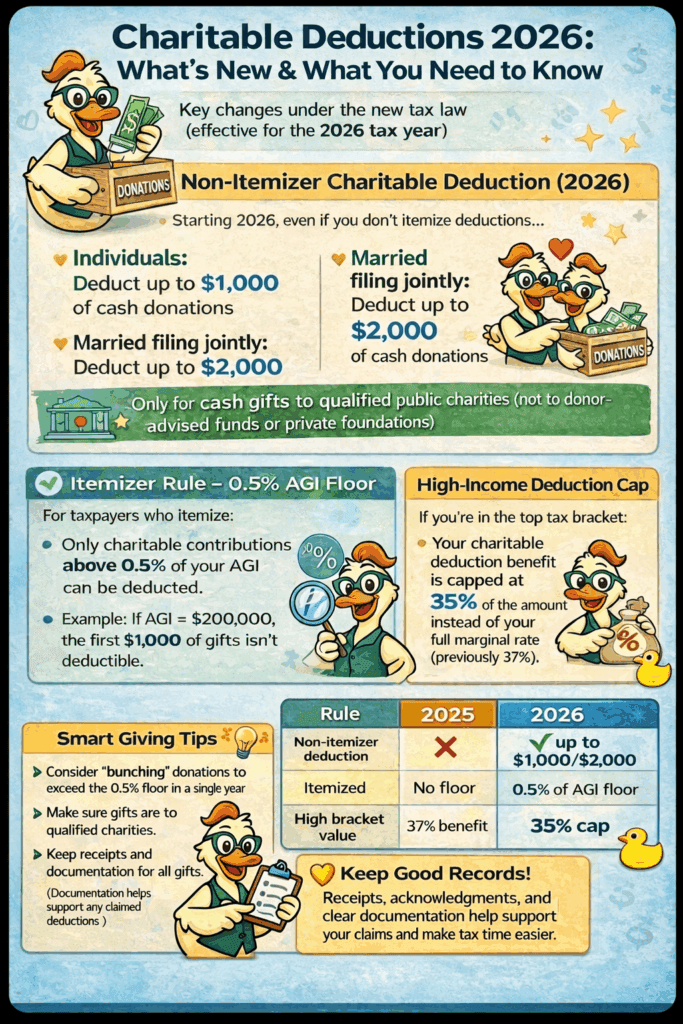
The most significant change helps the majority of taxpayers, who take the standard deduction and therefore have historically received no tax benefit from gifts to charity. Beginning with the 2026 tax year, a non-itemizer can deduct up to $1,000 in cash contributions to qualifying public charities, or up to $2,000 for married couples filing jointly. Several details limit who benefits. The gift must be in cash, so donated stock and other property do not count. It must go to a qualifying public charity, and contributions to donor advised funds and private foundations are excluded. The benefit is commonly described as an above the line deduction, although one tax publication notes that the IRS had not yet clarified whether it reduces adjusted gross income, so filers should watch for guidance and ask a preparer how it will appear on their return. For a single filer who gives $600 over the year to a sanctuary, the new rule means that $600 can reduce taxable income even without itemizing, which was not possible before.
New Limits for Itemizers and High Earners
Itemizers face two tighter rules. First, only charitable giving above 0.5 percent of adjusted gross income is deductible. As an illustration, a donor with an adjusted gross income of $200,000 has a floor of $1,000, so a $5,000 gift produces a $4,000 deduction. One tax guide notes that amounts disallowed by the floor generally cannot be carried forward unless total giving also exceeded the annual percentage limit. Second, for donors in the top 37 percent federal bracket, the tax value of itemized deductions is capped at 35 percent. A $1,000 gift that would have cut a top bracket donor’s tax bill by $370 in 2025 reduces it by $350 in 2026. C corporations face their own floor of 1 percent of taxable income.
Some familiar limits did not change. The cap on cash gifts to public charities remains 60 percent of adjusted gross income, and the new law made that limit permanent after it had been scheduled to fall to 50 percent. Gifts of appreciated assets held more than a year remain subject to a 30 percent limit, and donors who give such assets generally can deduct fair market value and avoid capital gains tax on the appreciation, which is why stock gifts remain popular at year end.
Because the floor applies to total giving, the rule rewards concentrating several years of gifts in one year.
Strategies Donors Are Weighing
Advisers and charities describe a few approaches that respond to the new rules. One is bunching, which means combining two or more years of planned giving into a single tax year so the total clears both the 0.5 percent floor and the standard deduction, then taking the standard deduction in the off years. A donor advised fund is a common way to do this, since the deduction is taken when money goes into the fund and grants to charities can be made later, though gifts made through such a fund do not qualify for the new non-itemizer deduction. Another is giving appreciated securities instead of cash, which can remove capital gains tax and supports the full market value deduction for itemizers. A third applies to people 70½ or older who own a traditional IRA. A qualified charitable distribution sends money directly from the IRA to a charity, up to $111,000 per person in 2026. The amount is excluded from taxable income instead of being deducted, it can count toward a required minimum distribution for those 73 and older, and it cannot be directed to a donor advised fund or private foundation. Workplace plans such as 401(k) accounts are not eligible unless the money is first rolled into an IRA.
Whether any of these makes sense depends on income, age, how much a person gives and whether they itemize. For many modest donors, the non-itemizer deduction is the main new feature and requires nothing more than making gifts in cash before the year ends. Others, especially those near the top bracket, may find the 35 percent cap changes the value of giving at the margin. Neither the rules nor the organizations explaining them can say which approach is best for a given household, and In Defense of Animals encourages donors to consult a tax advisor or CPA.
What the December 31 Deadline Means
For a gift to count in 2026, it must be completed by December 31. For cash and checks, that generally means the date a gift is made or mailed, and for card gifts the date of the charge. Transfers of stock and IRA distributions take longer, because brokers and IRA custodians must process them, and financial publications warn that custodians often cannot complete a last minute direct distribution by the deadline. Donors who want to give securities or use a qualified charitable distribution are generally advised to start by early or mid December. People should also keep the charity’s written acknowledgment, which the IRS requires for substantiating larger gifts, and confirm that a group is a registered public charity before giving.
Weighing Where the Money Goes
Tax treatment is only one factor in choosing where to give. In Defense of Animals describes its priorities as emergency rescue and lifelong sanctuary care, undercover and field investigations of mistreatment in laboratories, factory farms and entertainment, protection of wildlife and habitat, legal and policy work, and public education. Its own materials say it operates sanctuaries and rescue facilities in India, South Korea, California and rural Mississippi. Because these are the organization’s descriptions of its work, readers may want to compare them with its public financial filings and with the work of other groups before deciding. The animal welfare field is broad, and local shelters, wildlife rehabilitators and national advocacy groups serve different needs and are treated alike by the tax rules as long as they are qualifying public charities. Some donors prefer direct rescue, others policy change, and many divide their giving.
A Short Checklist Before You Give
Confirm whether you take the standard deduction or itemize. Give cash to a qualifying public charity if you want the new non-itemizer deduction. Ask whether bunching, stock or an IRA distribution fits your situation. Start transfers of securities and retirement funds early. Keep receipts. If you are unsure how the rules apply, ask a tax professional before the year ends.
The 2026 rules reward planning more than any recent change, but they also give millions of ordinary donors a reason to track their giving for the first time. Whether a gift goes to a sanctuary, a rescue or a campaign to change the law, the date and the type of gift now shape the tax result, and the weeks before New Year’s Eve are when most of those decisions are made.