

Death Penalty · Monthly Briefing
A Botched Execution, a Rare Commutation and a Livestream Reversal: The Death Penalty in America, October 2026
A woman survived a lethal injection. A Republican governor in Alabama spared a man on death row. A plan to broadcast a military execution collapsed in a week. And Florida kept going.
October was the month the machinery showed its seams.
Capital punishment in the United States usually advances out of sight, behind prison walls and closed curtains, in a procedure the public learns about through a handful of witnesses and a press release. In October 2026, the curtains opened and the machinery showed. Tennessee’s failed attempt to execute Christa Pike drew new, more troubling detail. Alabama’s governor did something she had done only twice before. The Pentagon’s plan to livestream a firing squad execution was announced and withdrawn within about a week. Through all of it, Florida kept executing people at a pace that has no precedent in the modern era.
What Happened Behind the Curtains in Tennessee
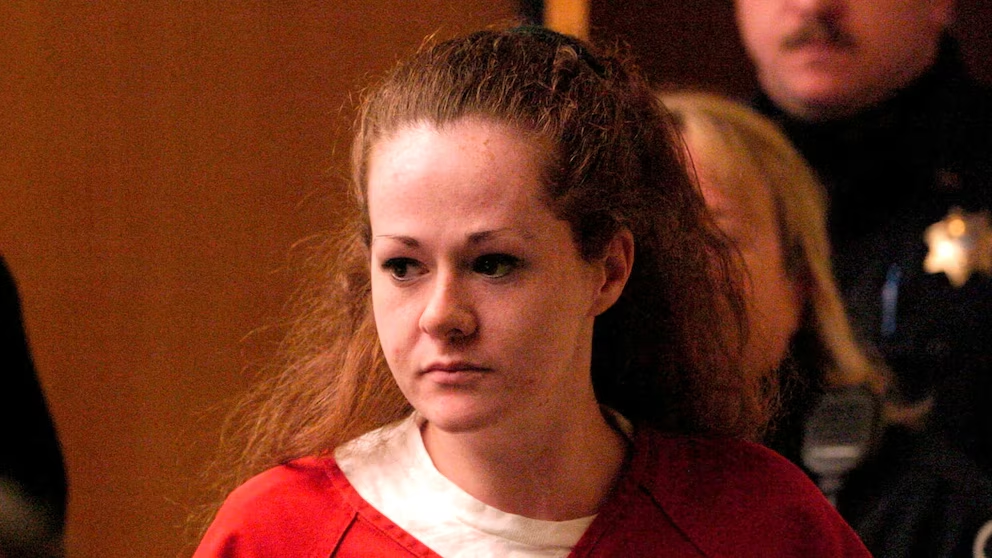
On September 30, Tennessee tried to execute Christa Pike, 50, the only woman on the state’s death row. She was convicted of the 1995 murder of Colleen Slemmer, a 19 year old classmate in Knoxville, a killing carried out when Pike was 18 and one that prosecutors described as brutal. Her execution was scheduled for 10 a.m., but the Sixth Circuit issued a temporary stay, and the U.S. Supreme Court lifted it around 6 p.m., with three justices dissenting. At 7:26 p.m., the curtains opened and witnesses saw Pike strapped to a gurney. She gave a final statement. The team began injecting. The curtains closed at 7:46, reopened three minutes later, and closed again at 8:05, for good. Witnesses were told to leave at 8:53. Emergency vehicles arrived during a press conference outside the prison, and Pike was taken to a hospital.
She was alive. According to witnesses, she kept breathing, snored audibly and at times lifted parts of her body off the gurney after the two doses of pentobarbital the state said it administered. She had been given doses meant to be lethal and survived them, which, according to the Death Penalty Information Center, makes her the first person in the modern era known to have lived through lethal injection drugs after they were administered. Seven earlier prisoners survived failed attempts, but those were called off over IV difficulties before any drugs were given. Her attorneys reported that she was intubated and on a ventilator in the days after, with badly burned arms, and later that she had pneumonia and a blood clot and could not swallow or move her arms and hands. They described her hands as looking like an inflated surgical glove, and provided no images.
“Talking about Christa Pike this month has meant talking about what we cannot see.”Monica Hesse, in The Washington Post
That was the problem Washington Post columnist Monica Hesse named: the public was left to imagine what happened behind the curtains. Then, in late October, a more detailed account arrived. A blow by blow description released by Pike’s lawyer, and reported by the Guardian, said four members of the IV team struggled for almost an hour to place a line in her arms, using about 10 needles and voicing concern that her veins might have blown. Her attorneys had warned before the execution about difficult vein access, degraded drugs and the lack of any emergency medical care if things went wrong. A court had heard those arguments over three days in August and upheld the protocol. The state said it followed its approved procedure.
Tennessee has now botched two executions in under five months. In May, the state called off the execution of Tony Carruthers after more than an hour of failed attempts to establish an IV, and testimony in that matter showed the physician responsible for IV access last placed a central line around 2013 and holds no current hospital privileges. The same physician is reported to have been involved in Pike’s attempt. Governor Bill Lee paused the remaining executions of 2026 and ordered a comprehensive third party review, led by former U.S. Attorney Ed Stanton, and Corrections Commissioner Frank Strada announced his resignation. A Davidson County chancery judge ordered the state to preserve the drugs, IV equipment, recordings and records from the attempt. Records obtained by The Tennessean showed the state had spent nearly $1.2 million on lethal injection drugs since January 2023.
Pike discharged from the hospital on October 10 and was returned to prison, and on October 30, exactly a month after the attempt, she released her first public statement. She said she was prepared to die when she entered the chamber, that she is in constant pain in her arms, hands and throat, and that she does not know why she survived. Governor Lee said he suspects her sentence will be the same unless the courts decide otherwise. A Reuters/Ipsos poll found about one third of Americans support a second attempt. Slemmer’s mother has said Pike should pay for her crime. Both realities sit side by side, a family that has waited three decades for the sentence to be carried out, and a state that could not carry it out without a failure few thought possible.
A Pattern, Not a One Off
Lethal injection has been the dominant method for decades, and failures are not new. An estimated 75 botched injections occurred between 1890 and 2010, about 7 percent, and the count has continued to rise. What distinguishes the Tennessee cases is their repetition inside a single year, and the state’s own admission that its protocol allows no additional procedures when a line cannot be placed.
Alabama’s Governor Uses Her Clemency Power
On October 20, Alabama Governor Kay Ivey commuted the death sentence of Toforest Johnson, 53, to life in prison without parole. It was a notable decision from a Republican who has overseen 27 executions in her time in office, and it was only her third commutation of a death sentence. Johnson was convicted in 1998 of the 1995 murder of Jefferson County Deputy Sheriff William Hardy, who was shot twice in the head while working an off duty security assignment at a hotel. Johnson has always maintained his innocence.
Ivey was careful about what she was saying. She said she had concerns that there was not enough direct evidence to carry out the most serious punishment, and she stressed that her decision was not a determination of innocence. She said Johnson will serve the rest of his life in prison and offered her prayers for Deputy Hardy’s loved ones. The doubts she cited had been raised by people with credentials to raise them. Jefferson County District Attorney Danny Carr argued in a 2024 filing that the evidence had deteriorated under scrutiny and pointed to alibi witnesses who placed Johnson elsewhere. Former Attorney General Bill Baxley led a 2025 request for a new trial along with former state and federal prosecutors. A central dispute involved a witness who said she overheard a man she believed was Johnson confess by phone, and Johnson’s lawyers say prosecutors did not disclose that she received $5,000 in 2001.
Those urging relief
The county’s own district attorney supported reopening the case.
Former judges and prosecutors joined calls for a new trial.
A key witness’s payment was allegedly never disclosed.
Those opposed
Attorney General Steve Marshall urged Ivey to reject clemency, citing the jury verdict and later court rulings.
Deputy Hardy’s family and law enforcement community still grieve.
The commutation does not overturn the conviction.
The commutation takes execution off the table but does not erase the conviction. Johnson’s attorney, Ty Alper, thanked the governor and said the fight for a new trial will continue in the courts.
The Count Keeps Rising
With two months left in the year, 32 people have been executed in the United States in 2026, according to the Death Penalty Information Center, with eight more executions scheduled. Florida leads by a wide margin, with 18 executions so far and two more scheduled for November, which would take it past its own record of 19 set in 2025. Texas has carried out seven, with two more scheduled. The 2025 national total was 47. In Florida, the executions have included men with significant service histories. William Reaves Jr., a Vietnam veteran whose jury never heard evidence of his combat related PTSD, was executed on October 20, and the state has sentenced at least 117 veterans to death, about 15 percent of the national total. There was one reversal. Governor Ron DeSantis withdrew the October 13 warrant for William Thompson over competency concerns, the first such withdrawal in his eight years in office.
The nationwide map has also shifted. Twenty-three states have no death penalty, 27 retain it, and four of those have paused executions by executive action. A federal court blocked Alabama from using nitrogen gas on Jeffery Lee, and the U.S. Supreme Court declined to lift the block in June. Idaho remains the only state where the firing squad is the primary method, and an autopsy after the 2025 execution of Mikal Mahdi in South Carolina found the bullets missed his heart. Governors in California, Ohio, Kansas and Alabama hold clemency power that could affect nearly a third of the people on death row nationwide.
A Livestream Announced, Then Withdrawn
Defense Secretary Pete Hegseth announced in mid October that the military would livestream the firing squad execution of Nidal Malik Hasan, the former Army psychiatrist convicted of killing 13 people and wounding 32 in the 2009 shooting at Fort Hood. Speaking in an interview with Jack Posobiec aboard the USS Abraham Lincoln, Hegseth said people would be able to watch and that it would be public. President Trump said he had personally approved the plan. A military jury convicted Hasan on all 42 counts in 2013, and his appeals ended when the Supreme Court denied review in March 2025. His execution is scheduled for 1 p.m. on December 3, which would be the first military execution since Army Private John Bennett was hanged on April 13, 1961.
The reaction was swift and unusually bipartisan. Senator Thom Tillis called the plan beyond disgusting and said public executions are what oppressive dictatorships do. Senator John Curtis warned of an appetite for executions as entertainment and wrote that broadcasting a death diminishes us and is not an effective deterrent. Senator Lisa Murkowski wrote that how we carry out justice matters just as much as the justice itself. Representative Austin Scott, who supports the sentence, said livestreaming executions is what jihadists do, and former U.N. ambassador Nikki Haley noted that Iran and North Korea still hold public executions and that it was not company the United States wants to keep. About a week later, on October 15, Trump said the government would not livestream the execution. It is reasonable to assume the backlash from both the left and the right had something to do with it. The execution itself remains on the calendar.
Elsewhere in the System
In Texas, where the state continues to carry out executions, a federal judge ruled on September 22 that the lack of air conditioning in its prisons violates the constitutional ban on cruel and unusual punishment. Judge Robert Pitman ordered the Texas Department of Criminal Justice to air condition all 104 facilities by the end of 2029, finding that at least nine inmates died of heat related causes between 2023 and 2025. The state estimates the cost at $1.5 billion, has appealed to the Fifth Circuit, and has asked for the order to be suspended, arguing that compliance would divert money from contraband detection, inmate health care and population growth. As of October 1, just over a third of the state’s prisons were fully climate controlled, and about 90,000 people were incarcerated without air conditioning.
In Idaho, prosecutors have given notice that they will seek the death penalty against Andrea Shaw, 23, who has pleaded not guilty to murder in the 2025 deaths of her 18 month old twins. Prosecutors say autopsy findings were consistent with smothering. Shaw has said the children became ill and died after vaccinations, and her attorney says the coroner and pathologists listed the causes of death as undetermined and calls the death penalty notice outrageous. The medical consensus is that the vaccines at issue are safe and effective. A trial is set for January, and she is presumed innocent until proven otherwise.
- September 22A federal judge orders air conditioning in all 104 Texas prisons by the end of 2029.
- September 30Tennessee’s attempt to execute Christa Pike fails. She survives and is hospitalized.
- Mid OctoberThe Pentagon announces plans to livestream the Hasan execution. Backlash follows.
- October 15President Trump cancels the livestream.
- October 20Governor Ivey commutes Toforest Johnson’s sentence. Florida executes William Reaves Jr.
- October 30Christa Pike releases her first public statement.
- December 3Nidal Hasan’s execution by firing squad is scheduled.
Taken together, the month tells a story that supporters and opponents of capital punishment read very differently. Supporters can point to a system that, in Alabama, still has a safety valve in a governor willing to use it, and to victims’ families who have waited decades for finality. Opponents see an apparatus that cannot reliably place an IV line, keeps executing at record speed, and only reconsiders when public revulsion makes continuing untenable. Both sides can agree on one thing. In October, more of the process than usual was visible, and what the public saw prompted questions that are unlikely to go away.