

Curtis Beasley was the 44th execution under DeSantis. The 13th veteran. The 14th senior citizen. The 27th person to die on a non-unanimous jury vote. And now Bill Thompson, gravely ill with sepsis and dementia, is scheduled for October 13. The names keep coming.
He Won the Perfect Attendance Award in 4th Grade. Florida Executed Him Anyway.
Curtis Beasley was the 44th execution under DeSantis. The 13th veteran. The 14th senior citizen. The 27th person to die on a non-unanimous jury vote. And now Bill Thompson, gravely ill with sepsis and dementia, is scheduled for October 13. The names keep coming.
| 44th Execution under DeSantis: Curtis Beasley | 27th Executed on a non-unanimous jury death vote | 120+ Healthcare providers opposing Bill Thompson’s execution | Oct. 13 Bill Thompson’s scheduled execution date |
Curtis Wilkie Beasley, Sr. was executed by the State of Florida on Tuesday evening, September 29. He was 77 years old. He used a wheelchair. He was in serious physical and cognitive decline and needed help caring for himself. Florida moved forward with his execution anyway, making him the 44th person executed under Governor Ron DeSantis, the 13th military veteran, the 14th senior citizen, and the 27th person condemned to die despite a non-unanimous jury vote for death. Before we finish accounting for Curtis, the administration has signed another warrant. William Thompson is scheduled for October 13. And now it is October, with more warrants behind it, and the names and the numbers keep rising at a pace Florida has never sustained before in its recorded history.
Statement on the Execution of Curtis Beasley
Florida Abolitionists for Death Penalty · September 29, 2026
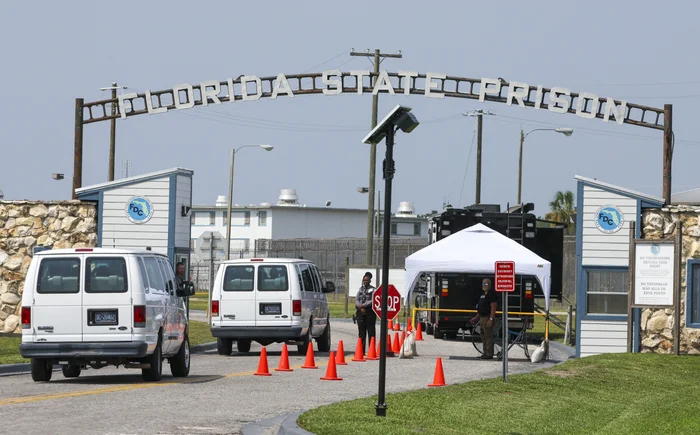
STARKE, Fla. — Tonight, We the People of the State of Florida executed Curtis Wilkie Beasley, Sr. for the 1995 murder of Carolyn Monfort. In this gubernatorial administration alone, that makes him the 44th execution, the 13th veteran, the 14th senior citizen, and the 27th person condemned to die despite a non-unanimous jury vote for death.
Carolyn Monfort was murdered in her own home by someone she knew and had welcomed there. She had a family, a life, and people who expected to see her again. Her life deserves our recognition in its own right, even as we oppose the way Florida chose to bring her story to its conclusion.
Some executions command the attention of our state and even our nation. Others happen quietly, while most people go about their Tuesday evening. Florida’s unprecedented and remarkable pace of executions over the past two years makes that possible. Before we have finished saying one person’s name, another death warrant is signed. The names blur and the numbers rise, and those who aren’t closely following along are none the wiser. This is part of the administration’s plan to overwhelm and desensitize. To let everyday Floridians forget that all of this killing is happening in their names.
Curtis’ case drew comparatively little of the attention that others have drawn. But the facts deserve to be heard nonetheless. Curtis’ case is a prime example of the arbitrariness of Florida’s death penalty. Over the past month, his lawyers have fought to bring this disparity to light. The courts continue to turn a blind eye.
Curtis was sentenced by a non-unanimous jury, a practice found almost exclusively in Florida. Florida requires a jury vote of 8 to 4 to sentence someone to death, while Alabama requires a supermajority of 10 of 12 votes. Every other death penalty state has rejected this practice.
The right to a jury trial is firmly rooted in our nation’s fabric. So is the history of denying some jurors a meaningful voice. Nonunanimous jury rules took hold in the Jim Crow era as a way to let Black people sit on juries while allowing other jurors to disregard their votes. In a 2020 landmark case called Ramos v. Louisiana, the U.S. Supreme Court confronted that history and held that a jury must be unanimous to convict someone of a serious crime.
This term, the Supreme Court will consider another part of that promise: whether the right to a jury trial requires twelve jurors, rather than the six Florida uses in most criminal cases. Florida asks a full jury of twelve to decide a capital case, but permits a death sentence even when one, two, three, or four of them believe life without parole is the appropriate sentence. The questions before the Court are different, yet they reach the same concern: whether the state can call people to serve on a jury and then diminish the force of their voices. That is exactly what happened to the two jurors who believed that Curtis Beasley should live.
Before drugs and alcohol carved a destructive path through his life and led to the violence that landed him on death row, Curtis lived a life that many of us would recognize. He played Little League baseball and went to Bible camp. He won the Perfect Attendance award in 4th grade. He had an after-school job at a T.V. repair shop, started a garage band with his friends, and listened to country music. He was president of his senior class. He volunteered to serve our country in the Army, and did so honorably, during a time of intense anti-military sentiment. He was a father, a son, and a brother. He was more than the 44th, 13th, 14th, or 27th — more than a statistic in this steady stream of violence.
We will keep telling these stories, including the ones that receive less attention as Florida continues to carry out executions at a pace unrivaled by any time period in the State’s recorded history. Tonight we remember Carolyn Monfort and the life taken from her. We remember Curtis Beasley as a whole person, too. Neither should disappear into the count.
Bill Thompson Has Sepsis, Heart Failure, Pneumonia, Dementia, and Blood Clots. Florida Has Set His Execution for October 13.
William Thompson is scheduled to be executed on October 13 at 6 p.m. He is gravely ill. His current documented medical conditions include sepsis, heart failure, pneumonia, blood clots, severe malnutrition, and other serious conditions. He has been diagnosed with dementia. He recently underwent major abdominal surgery. He has a Stage IV pressure wound. He was discharged from the hospital less than 24 hours before Governor DeSantis signed his death warrant. These are not circumstances that require legal argument to be understood as a problem. They are circumstances that would prompt any medical professional who encountered them in any other setting to provide intensive care, dignity, and the kind of end-of-life treatment that acknowledges what a human being’s final weeks and days require.
More than 120 doctors, nurses, mental health professionals, and other healthcare providers from Florida and across the country signed a letter this week opposing Bill Thompson’s execution. They do not all share the same position on the death penalty in principle. What they share is something more immediate: a professional and human judgment that a person this sick should be receiving appropriate medical care and basic dignity, not spending his remaining days in a death-watch cell preparing for execution. The letter could not have come at a more appropriate moment. This week, Thompson’s lawyers are in federal court arguing that the State of Florida has failed to provide him with the medical care his own doctors ordered when he was discharged from the hospital two weeks ago. The lawsuit does not ask for his execution to be halted. It asks the State to give him the treatment his discharge orders require.
There is a separate and equally troubling legal question now before the courts: whether Bill Thompson is mentally competent to be executed. Florida law requires that a condemned person understand that they are about to be executed and why. Thompson’s diagnosed dementia and documented cognitive decline raise a genuine question about whether that standard can currently be met. A formal competency evaluation is scheduled this week. What makes that process particularly difficult to regard as genuinely independent is its structure: the doctors conducting the evaluation are selected through a process controlled by the Governor, and the ultimate competency determination is also made by the Governor. No person under an active Florida death warrant has ever been found incompetent to be executed through Florida’s competency review process. That is not a record suggesting rigorous independent evaluation. It is a record suggesting a system designed to reach a predetermined conclusion.
October 13 · Take Action for Bill Thompson Before It’s Too Late
Send a letter to Governor DeSantis. Sign the petition. Share the story with your community. The healthcare providers have spoken. The courts are watching. The only question is whether enough people make enough noise before October 13.
Visit SAN Death Penalty Page for Action LinksTwo More Veterans Are Scheduled to Die. Their Juries Never Heard About Their Service. Veterans Can Help Change That.
Among the most specific and morally pointed advocacy campaigns underway right now involves two veterans facing execution in the coming weeks, both of whom were sentenced to death by juries that heard little or nothing about their military service. The Florida Abolitionists for Death Penalty, working in coordination with national abolition partners, has opened veterans’ signature letters for both William Reaves and James Pavatt, seeking signatures exclusively from U.S. Armed Forces veterans to create a document that asks governors to consider what their sentencing juries could not.
He Volunteered for Vietnam. His Jury Never Heard What That Did to Him.
William Reaves enlisted in the Army in 1969 and was initially assigned to a deployment in Panama. He asked to be sent to Vietnam instead, wanting to be of greater service to his country. He returned with combat-related PTSD. In 1986, during an episode bearing the hallmarks of that condition, he killed sheriff’s deputy Richard Raczkoski. He has expressed profound remorse and apologized in court. The judge did not allow his defense to argue diminished capacity from PTSD. The jury that sentenced him to death never heard how his military service affected his mental state on the night of the crime. If you are a U.S. Armed Forces veteran, your signature on the clemency letter asks Governor DeSantis to consider what his jury was not allowed to hear before his scheduled execution on October 20.
Nearly 22 Years of Service. An Air Force Commendation Medal. His Jury Didn’t Even Learn His Final Rank.
During nearly 22 years in the Air Force, Master Sergeant Jim Pavatt helped oversee the safety and readiness of as many as 5,000 service members and their families. He earned the Air Force Commendation Medal and the Meritorious Service Medal for his leadership. The jury that sentenced him to death heard essentially nothing about that service, not even his final rank. He is scheduled to be executed in Oklahoma on November 12, the day after Veterans Day. His clemency hearing is October 14, and veterans’ signatures on the letter ask Oklahoma’s decision makers to consider the service that his jury never had the chance to weigh before his life is taken.
If you have served in any branch of the U.S. Armed Forces, active duty or reserve, your signature on these letters matters. The clemency hearings are this week and next. Please sign and please forward to every veteran you know.
Veterans only please: these letters are open exclusively to those who have served in uniform. Visit the FADP website for direct links to both petitions.
Around the Country: Candidates, Courts, Prisons, and the Ongoing Tinkering With the Machinery of Death
California: Both Gubernatorial Candidates Oppose the Death Penalty, But They Don’t Agree on the Moratorium
California’s two 2026 gubernatorial candidates, Democrat Xavier Becerra and Republican Steve Hilton, have both publicly stated their opposition to the death penalty. The agreement ends there. Becerra has pledged to continue the moratorium on executions that Governor Gavin Newsom announced after his 2019 election. Hilton told the Los Angeles Times earlier this month that he would rescind it. California has the largest death row population in the United States, with more than 650 people under active death sentences, none of whom has been executed since 2006. The question of whether the next governor of California continues, cancels, or converts that moratorium into something more permanent is not an abstraction for those 650 people or their families. What both candidates’ stated opposition to the death penalty clarifies, and what Hilton’s willingness to end the moratorium immediately complicates, is that opposing the death penalty in principle and being willing to stop the executions are two positions that apparently can be held separately.
Separately, California added at least three new exonerations to its total in the past two months, with three men convicted of major felonies including homicide and other violent crimes cleared based on evidence of innocence. More than 200 people convicted of serious felonies in California have been proven innocent and cleared over the past several decades, according to the ACLU of Northern California. The number keeps growing, which is a fact that the death penalty conversation in California, and everywhere else, cannot be separated from.
Texas: The Court of Criminal Appeals Ruled Against Melissa Lucio Despite Her Own Prosecutor Conceding Misconduct
In a 5-to-4 decision issued late last week, the Texas Court of Criminal Appeals rejected a lower court’s finding that Melissa Lucio did not kill her two-year-old daughter, Mariah, in 2007. The majority ruled that Lucio is not entitled to relief from her conviction, and they reached that conclusion despite the fact that the district attorney in her case has conceded prosecutorial misconduct and despite the fact that the judge who oversaw her trial issued an innocence finding. Lucio’s attorney Vanessa Plotkin stated that the CCA ruled Lucio “is not entitled to relief from her wrongful conviction despite the District Attorney’s concession of prosecutorial misconduct and the innocence finding by the judge who oversaw her trial.” Four justices dissented. Five agreed to leave her conviction in place. This is where Texas leaves a woman it may have wrongly convicted of killing her own child.
In Brief: September 2026
| Texas | A federal judge ordered the Texas Department of Criminal Justice to fully air-condition its prisons, ruling that the current situation in a state where outdoor heat indexes can exceed 130 degrees constitutes a violation of the Eighth Amendment’s prohibition on cruel and unusual punishment. Hundreds of incarcerated people in Texas have died from heat-related causes over the years in facilities without adequate cooling. |
| Utah | The man accused of killing Turning Point USA founder Charlie Kirk last September could face the death penalty if found guilty. State officials and prosecutors are considering whether to seek a capital sentence, adding Utah to the list of states where capital charges are actively being sought in high-profile cases this fall. |
| Alabama | Earlier this month, Alabama executed Jeffery Lee despite the fact that the jury that heard his case had voted to spare his life. A trial judge overrode that verdict and imposed a death sentence. Lee was executed under that override, joining the list of people killed by states whose own juries believed they should live. |
| Florida | Florida continues to execute at a rate unrivaled in the state’s recorded history. Each execution is followed within days or weeks by a new signed warrant. The pace is designed to make it impossible to properly mourn, advocate, or even name everyone involved. We will keep naming them anyway. |
Three Pieces Worth Your Time This Month
Tread Substack — Lee Hedgepeth on Witnessing the Execution of Jeffery Lee
Lee Hedgepeth was present at Jeffery Lee’s execution in Alabama earlier this month and wrote about what he witnessed in his Substack publication Tread. It is a moving account of an execution that should not have happened: Lee’s jury voted to spare his life, but a trial judge overrode that verdict and imposed the death sentence that the state then carried out. Hedgepeth’s piece is the kind of first-person account that numbers and policy summaries cannot provide, and it deserves to be read by everyone following the execution pace in Alabama and across the South this fall.
Verdict / Justia — Professor Austin Sarat on Slowing Abolition Momentum
Amherst College Professor Austin Sarat, one of the country’s leading legal scholars on capital punishment, has published an op-ed in Verdict on Justia warning that momentum toward ending the death penalty in the United States may be slowing. Given the execution pace in Florida and the renewed willingness of some states and candidates to pursue or maintain capital punishment, Sarat’s caution is worth reading carefully. The abolition movement has won important victories over the past two decades, and the risk of treating those victories as permanent rather than as territory that requires continued defense is exactly what Sarat is warning against.
Indiana Law Journal — Gustavo Ribeiro on “Misinformation and the Jury”
In an Indiana Law Journal article titled “Misinformation and the Jury,” Gustavo Ribeiro examines how misinformation, a pervasive problem in democratic decision-making generally, specifically mirrors the difficulties jurors face in distinguishing reliable evidence from compelling but ultimately false information in criminal trials. In capital cases, where the consequences of a wrong decision are permanent and irreversible, the stakes of jury misinformation are as high as they get. This is an academic article, but its argument connects directly to cases like Curtis Beasley’s and Melissa Lucio’s and the dozens of others where the question of what jurors were told, and what they were not told, shapes who lives and who dies.
Sustainable Action Now: Death Penalty Coverage
Curtis Beasley is gone. Bill Thompson’s date is October 13. William Reaves is October 20. Jim Pavatt is November 12. The executions are not happening in silence. Neither is the work of the organizations fighting them. Follow that work through our partners at FADP, Death Penalty Focus, and CCATDP, and through the SAN Death Penalty page.
Visit SAN Death Penalty CoverageCurtis Beasley won the Perfect Attendance award in 4th grade. He started a garage band. He was president of his senior class. He served in the Army when it was not easy to do so. He was a father and a son and a brother. He was more than a number. We’ll keep saying his name, and the names after his, because the pace of executions in Florida is designed precisely to make saying those names harder than it should be. We will not let it work.