

A wave of startups founded by former SpaceX engineers wants to do for nuclear fuel what Elon Musk’s rocket company did for spaceflight: strip out decades of bloated cost and bureaucracy through sheer engineering speed. The industry they’re trying to disrupt has a much smaller margin for error.
Can the SpaceX Playbook Actually Work for Nuclear Power?
A wave of startups founded by former SpaceX engineers wants to do for nuclear fuel what Elon Musk’s rocket company did for spaceflight: strip out decades of bloated cost and bureaucracy through sheer engineering speed. The industry they’re trying to disrupt has a much smaller margin for error.
In the 1980s, the United States produced roughly 80 percent of the world’s enriched uranium. Today that figure sits at effectively zero, with the country importing nearly all of its supply, including a meaningful share historically sourced from Russia. Scott Nolan, employee number thirty at SpaceX before he became a partner at the venture capital firm Founders Fund, spent over a year looking for an American company positioned to fix that gap and building it himself instead. The result, a uranium enrichment startup called General Matter, has become the clearest test case yet of a question rippling through the energy world: can the fast, cost slashing engineering culture that let SpaceX out compete legacy aerospace giants actually work in an industry built around radioactive material and government oversight of weapons grade fuel.
General Matter is not alone in making that bet. Alongside reactor startups like Aalo Atomics and Radiant, and backed by Silicon Valley investors including Peter Thiel’s Founders Fund, a cluster of companies founded largely by SpaceX alumni is attempting to apply the same operating principles that turned reusable rockets from a punchline into an industry standard. The stakes have risen sharply as AI data centers drive electricity demand to levels the existing grid was never built to handle, giving nuclear power a political and commercial relevance it has not had in decades.
What the SpaceX Playbook Actually Means
The comparison to SpaceX is not just branding. Founders Fund and the engineers now working in nuclear startups have built their approach around four principles that trace directly back to how SpaceX broke into an aerospace industry dominated by entrenched contractors.
Target the Real Bottleneck
SpaceX identified reusability and cost, not the underlying physics of flight, as the actual constraint on space access. Nuclear startups are applying the same logic to domestic uranium enrichment and small modular reactors that can be manufactured quickly, rather than trying to out-build the multibillion dollar conventional plants of the past.
First Principles Engineering
Rather than adapting blueprints inherited from the 1970s, engineers start from the raw physical cost of materials and design components from scratch, stripping out cost layers that accumulated over decades of incremental, legacy design.
Manufacturability Over Complexity
Instead of a custom engineered facility built over ten to fifteen years, the goal is standardized components that can be mass assembled in a factory setting and shipped, closer to how a product is manufactured than how a nuclear plant has traditionally been built.
Agile, Cross-Disciplinary Teams
Veteran nuclear scientists are deliberately paired with software and mechanical engineers from outside the traditional nuclear world, a mix intended to prevent the kind of rigid, bureaucratic thinking that startups argue has slowed the industry for decades.
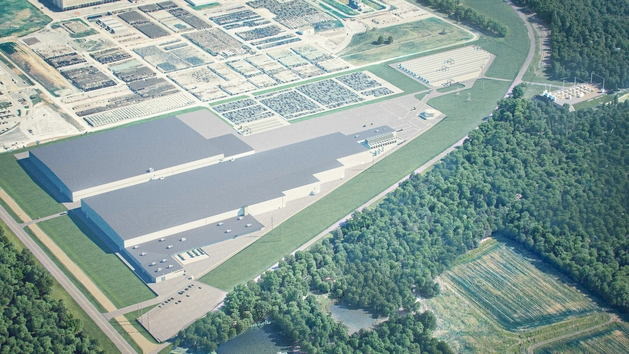
General Matter has already turned that philosophy into real infrastructure commitments. The company signed a lease with the Department of Energy in 2025 to build a $1.5 billion uranium enrichment facility at the site of the former Paducah Gaseous Diffusion Plant in Kentucky, a facility that shut down in 2013 after more than six decades of operation. General Matter says the new plant could save the country roughly $500 million a year currently spent on foreign enriched uranium imports, with a target of bringing the facility online by 2030.
The Money and the Politics Behind the Push
The federal government has put real money behind this bet. General Matter was one of four companies the Department of Energy selected in 2024 to help establish a domestic supply of high-assay low-enriched uranium, a more highly enriched fuel needed for the next generation of reactor designs, and in early 2026 the company received a $900 million DOE contract as part of a broader push to rebuild enrichment capacity ahead of a 2028 deadline when waivers allowing Russian uranium imports are set to expire. Nolan appeared alongside President Trump in the Oval Office in May 2025 as the administration signed a set of executive orders aimed at accelerating nuclear power development, a visible signal of how closely the administration has aligned itself with this new generation of nuclear entrants.
That level of political and financial backing has not entirely quieted skepticism from within the industry itself. General Matter has kept many technical details about its enrichment technology closely held, and its relationship with Centrus Energy, one of the few established American enrichment companies also receiving federal support, has reportedly grown tense as both companies compete for the same buildout timeline and the same federal dollars.
Why Critics Say the Comparison Breaks Down
The core objection to the SpaceX analogy is not about ambition. It is about what happens when something goes wrong. A prototype rocket that explodes on a test stand is, within SpaceX’s own culture and much of the aerospace world, treated as a valuable data point on the way to a working design. A critical failure or radiation release at a nuclear facility carries an entirely different order of consequence, capable of triggering a genuine public health emergency and, critics argue, permanently damaging public trust in nuclear power for a generation, exactly the outcome the industry’s supporters are trying to avoid after decades of stalled growth following incidents like Three Mile Island.
The Bullish Case
Standardized, factory built components and first principles engineering could cut costs and timelines that have made nuclear power uncompetitive for decades, backed by real federal contracts and a genuine domestic supply gap.
The Skeptical Case
Nuclear materials and radiation risk carry a margin for error that rocket prototypes simply do not, and the Nuclear Regulatory Commission’s safety requirements are structurally incompatible with a move fast, iterate later engineering culture.
The Nuclear Regulatory Commission remains the second major obstacle the SpaceX playbook has to contend with. While the federal government has streamlined some licensing pathways to encourage faster deployment of new reactor designs and enrichment facilities, the underlying safety framework governing weapons grade materials and nuclear waste handling was built specifically to resist the kind of rapid iteration that made SpaceX’s approach work. There is no equivalent, in nuclear regulation, to simply launching an early version, watching it fail, and trying again with the lessons learned.
Why the timeline actually matters: the federal waivers currently allowing continued imports of Russian enriched uranium are set to expire in January 2028, creating a hard deadline that has pushed the Department of Energy to press General Matter, Centrus, and other awardees to accelerate their buildout schedules. Whether the SpaceX inspired approach can deliver commercial scale enrichment on that timeline, rather than simply on an ambitious pitch deck, is likely to become clear well before the broader debate over its long term promise is settled.
Whether the SpaceX playbook ultimately succeeds in nuclear power may come down to a distinction its own advocates acknowledge only in passing: SpaceX earned the right to iterate quickly by operating in a domain where failure, while expensive and occasionally spectacular, rarely endangered the public beyond the immediate test site. Nuclear fuel production and reactor deployment do not offer that same margin. The companies now betting on Founders Fund style speed are, in effect, wagering that engineering discipline and manufacturability can substitute for decades of accumulated regulatory caution, without the public ever having to find out what happens if they are wrong.
Rebuilding America’s nuclear fuel supply chain is becoming one of the defining industrial projects of the AI power boom.
Follow more coverage in the Sustainable Action Now climate and energy section.