
Across the world, a growing movement is changing the way humanity views its responsibility toward animals that have suffered from captivity, neglect, and inadequate living conditions. The modern conservation conversation is no longer only about protecting endangered species in the wild. It is also about recognizing the individual lives of animals that have spent years confined in environments that fail to meet their natural needs.
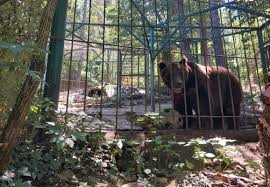
The story of Tim, a bear currently living at Zoo park Rožman in Slovenia, represents one of those critical moments where compassion, animal welfare, and international cooperation come together. For animal advocates, rescue organizations, and supporters of ethical wildlife care, Tim’s situation highlights a larger question: What responsibility do humans have when an animal’s current environment prevents it from living according to its natural instincts?
At Sustainable Action Now, the mission has always centered on understanding the connection between environmental responsibility, ethical choices, and the protection of living beings. The effort to provide Tim with a new beginning at BEAR SANCTUARY Arbesbach in Austria is part of a broader global conversation about the importance of rescue networks, specialized sanctuaries, and creating spaces where animals can recover physically and emotionally after years of hardship.
Tim’s potential relocation represents more than a change in location. It represents the possibility of a completely different life, one built around natural behaviors, appropriate space, enrichment, and professional care.
A Rescue Network Built Around Compassion and Action
Animal rescue is rarely a simple process. Behind every successful relocation is a network of veterinarians, sanctuary specialists, legal experts, caregivers, conservation organizations, and supporters who work together to protect animals in need.
Organizations dedicated to wildlife rescue understand that every animal has unique physical and psychological requirements. A bear is not simply an exhibit or an attraction. A bear is a highly intelligent animal with complex behaviors, including exploring, digging, foraging, climbing, searching for food, creating shelter, and establishing a sense of territory.
When those natural behaviors are restricted for long periods, the consequences can be significant. Limited space and inadequate environments can prevent animals from expressing essential instincts that contribute to their overall health and quality of life.
This is why specialized sanctuaries exist. They are not traditional zoos designed around public display. They are carefully created environments focused on rehabilitation, protection, and providing rescued animals with the opportunity to live as naturally as possible.
BEAR SANCTUARY Arbesbach in Austria represents this approach by offering rescued bears expansive outdoor habitats, natural terrain, enrichment opportunities, and expert care designed around the needs of bears rather than human convenience.
For Tim, supporters believe this sanctuary could provide the environment he has been missing: room to explore, places to dig, opportunities to hide, and the ability to express behaviors that are fundamental to what it means to be a bear.
Why Sanctuary Life Is So Important for Rescued Animals
The difference between captivity and sanctuary care is often measured by one important factor: whether the environment exists for the animal or whether the animal exists for the environment.
A true sanctuary begins with the needs of the animal. Space matters. Stimulation matters. Choice matters.
Bears are naturally curious and intelligent creatures. In the wild, they spend much of their time moving through landscapes, searching for food sources, investigating scents, and interacting with changing environments. A barren enclosure cannot replicate the complexity of nature.
Sanctuaries attempt to restore those missing elements by creating habitats that encourage natural behaviors.
A bear that can walk across large areas, dig into soil, explore different textures, and choose where to rest experiences a level of freedom and control that is impossible in a restrictive enclosure.
These improvements are not simply about comfort. They are connected to physical and psychological well being.
Animal welfare science increasingly recognizes that quality of life involves more than survival. Animals require opportunities to engage with their environment, make choices, and experience behaviors that are meaningful to their species.
Tim’s Story and the Global Responsibility to Protect Animals
The campaign surrounding Tim has drawn attention because it reflects a larger challenge facing animal welfare organizations around the world.
Many rescued animals remain in unsuitable conditions because relocation involves complicated decisions, including ownership issues, government regulations, transportation requirements, and cooperation between multiple parties.
Even when a sanctuary is prepared to accept an animal and has the resources necessary to provide lifelong care, moving that animal requires approval and coordination.
Supporters of Tim’s relocation argue that every additional day spent in an inadequate environment represents lost time that could have been spent recovering in a more appropriate habitat.
The rescue community often emphasizes that time matters. Animals experience their environments every day. The years they spend confined cannot be recovered.
This is why rescue campaigns frequently focus on creating awareness. Public attention can encourage conversations, increase accountability, and bring greater visibility to animals whose situations might otherwise remain unknown.
The Role of Sustainable Action in Animal Protection
Sustainability is often discussed through the lens of climate, energy, agriculture, and conservation. However, true sustainability also includes the way humans interact with other species.
A sustainable future is not only about preserving natural resources. It is about building a relationship with the planet that recognizes the value of all living creatures.
Protecting animals from unnecessary suffering reflects a broader understanding that ecosystems are interconnected. Every species plays a role in the balance of nature, and every individual animal represents a living part of the world we share.
Rescue networks and wildlife sanctuaries demonstrate what happens when compassion is combined with practical action. They transform concern into measurable results.
The effort to give Tim a new home is an example of that philosophy in practice: identifying a problem, creating a solution, and working toward a future where animals receive the care and respect they deserve.
(Continued in Part 2)