

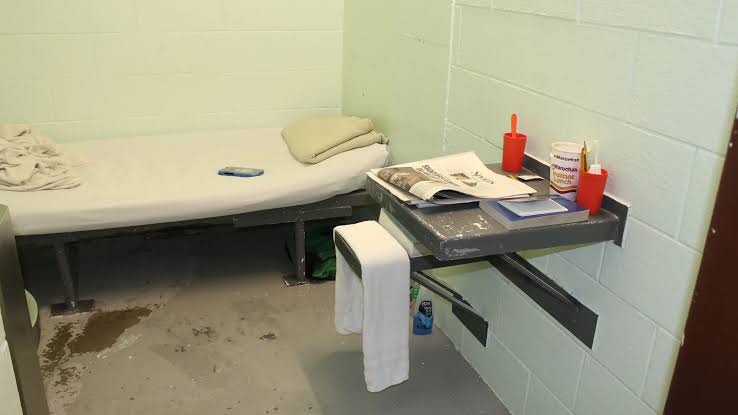
Because the requested format is a full investigative style feature, it is longer than one response can reliably contain. I’ll provide it in sections and continue until the complete article is finishedHow America’s Approach to Forced Hospitalization Raises New Questions About Justice, Rehabilitation, and Human Rights
The conversation surrounding incarceration in America has traditionally focused on prisons, jails, sentencing policies, and the growth of the private and public corrections systems. However, a growing debate is examining another area where the boundaries between healthcare, public safety, and punishment have become increasingly complicated: the use of involuntary commitment and forced hospitalization.
A new investigative analysis examining the expansion of involuntary commitment practices raises critical questions about how the United States responds to people experiencing mental health crises, substance use disorders, homelessness, and other serious challenges. The report argues that systems originally designed as medical interventions can, in practice, begin operating in ways that resemble traditional forms of confinement.
For Sustainable Action Now, this issue represents an important intersection between social responsibility, public policy, healthcare reform, and the broader discussion about how society treats its most vulnerable populations.
The central question is not simply whether emergency intervention is sometimes necessary. In many situations, immediate intervention can save lives and protect individuals experiencing severe crises. The larger question is how those interventions are structured, monitored, and implemented, and whether systems intended to provide care can unintentionally become extensions of the broader criminal legal system.
The distinction between treatment and punishment becomes increasingly complex when individuals are placed into restrictive environments, monitored under strict conditions, or returned to confinement for violating requirements that resemble probation or parole.
The Expanding Role of Forced Hospitalization in America’s Legal Landscape
Involuntary commitment refers to situations where individuals are hospitalized or confined without their consent because authorities or medical professionals determine that they may pose a danger to themselves, others, or are unable to safely care for themselves.
Historically, these systems were developed around the concept of providing emergency psychiatric care. The intention was to create a pathway for intervention when someone was experiencing a severe mental health crisis and could not voluntarily seek assistance.
However, critics argue that the modern system has increasingly blurred the line between healthcare and incarceration.
Rather than existing entirely within a medical framework, involuntary commitment often involves police officers, courts, judges, correctional facilities, and legal supervision systems. This creates a complicated network where individuals experiencing medical or behavioral health challenges may enter systems that closely resemble the structures used for criminal enforcement.
The result is a growing debate over whether the United States is addressing mental health challenges primarily through healthcare solutions or through mechanisms of confinement.
Two Different Pathways Into Forced Confinement
The current landscape of involuntary commitment generally operates through two major pathways: civil commitment and forensic commitment.
Civil commitment involves individuals who have not necessarily been accused of a crime but are placed into psychiatric care through legal procedures. These cases often begin when police, emergency responders, family members, or healthcare workers determine that intervention is necessary.
In many communities, law enforcement officers serve as the first point of contact during mental health emergencies. This creates a situation where a person experiencing a psychiatric crisis may enter the justice system before receiving specialized medical care.
Instead of a mental health professional being the first responder, police officers are often placed in the position of determining whether someone should be transported for evaluation, creating concerns about whether medical crises are being handled through the appropriate channels.
Forensic commitment involves individuals whose connection to the mental health system begins through the criminal courts.
This pathway includes situations such as individuals found unable to participate in their own legal defense, people involved in criminal proceedings who require competency restoration services, and cases involving findings such as not guilty by reason of insanity.
In some circumstances, individuals may remain under state supervision for extended periods because of legal classifications connected to their mental health status.
The result is a system where healthcare facilities and correctional institutions can become deeply connected.
When Medical Facilities Begin Resembling Correctional Systems
One of the most significant concerns raised in discussions surrounding involuntary commitment is the possibility that medical environments begin adopting characteristics traditionally associated with incarceration.
Critics point to practices such as strict behavioral requirements, mandatory supervision, and consequences for failing to comply with treatment conditions.
Programs described as conditional release or outpatient supervision may include requirements that resemble probation systems. Individuals may be required to follow specific rules, attend appointments, take medications, or maintain certain behaviors.
Supporters argue that these structures can help individuals remain stable and prevent future crises. Critics argue that when violations result in immediate confinement, the system begins functioning less like voluntary healthcare and more like a form of legal control.
This debate reflects a larger national challenge: how to provide effective mental healthcare while protecting individual rights and personal dignity.
The Crisis Behind the Crisis: Lack of Mental Health Infrastructure
One of the major challenges facing the United States is the shortage of accessible mental health resources.
Communities across the country have struggled with insufficient psychiatric beds, limited treatment programs, inadequate crisis response teams, and long waiting periods for specialized care.
When these resources are unavailable, people experiencing serious mental health challenges may end up in emergency rooms, shelters, or correctional facilities.
A particularly concerning consequence is the number of individuals who remain in county jails while waiting for psychiatric evaluation or treatment placement.
Jails were not designed to function as mental health facilities. Correctional officers are not substitutes for psychiatric professionals, and incarceration environments often lack the therapeutic resources needed to address complex behavioral health conditions.
The result is a cycle where individuals who require medical intervention may instead experience prolonged confinement in environments designed primarily for punishment and security.