

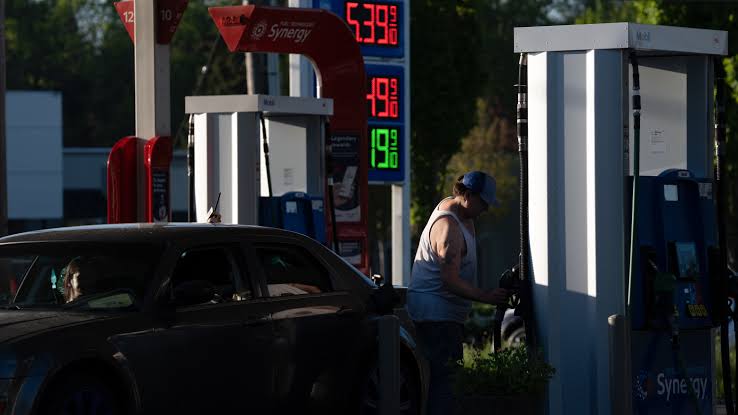
The Trump administration finalized a sweeping rollback of federal fuel economy standards on Monday, trading a Biden-era target of 50.4 miles per gallon for a far looser 34.9 mpg goal, and eliminating the electric vehicle credit system automakers had built years of planning around.
Washington Just Cut Fuel Economy Targets Nearly in Half, Right as Gas Prices Near $4.50
The Trump administration finalized a sweeping rollback of federal fuel economy standards on Monday, trading a Biden-era target of 50.4 miles per gallon for a far looser 34.9 mpg goal, and eliminating the electric vehicle credit system automakers had built years of planning around.
For the second time in less than a decade, a Trump administration has moved to unwind federal rules pushing automakers toward more fuel efficient vehicles. The Department of Transportation finalized new Corporate Average Fuel Economy standards on Monday, setting a fleetwide target of 34.9 miles per gallon for model year 2031, a steep drop from the 50.4 mpg goal finalized under President Biden. The rule effectively ends what the administration has spent years calling an illegal mandate forcing automakers into electric vehicle production, and it does so at a moment when drivers are already paying close to $4.50 a gallon at the pump, driven up by a Middle East conflict now in its seventh month.
Transportation Secretary Sean Duffy framed the change as long overdue relief for car buyers, arguing the previous administration’s targets amounted to a de facto requirement that manufacturers build expensive electric vehicles regardless of whether consumers actually wanted them. National Highway Traffic Safety Administration Administrator Jonathan Morrison described the new rule as restoring balance between vehicle affordability and energy conservation, while giving automakers more freedom to design vehicles people actually want to buy.
What Actually Changes Under the New Rule
The headline number, 34.9 mpg versus 50.4 mpg, tells only part of the story. Under the Biden-era standards, automakers were required to improve fleetwide efficiency by roughly 2 percent annually through model year 2031. The new rule cuts that pace to just 1 percent a year, effectively halving the rate of improvement the industry has to hit.
A second, more technical change may end up mattering just as much over time. Starting with model year 2028, NHTSA is eliminating the CAFE credit trading system entirely. That system had allowed traditional automakers building gas-heavy trucks and SUVs to purchase compliance credits from manufacturers like Tesla that sell primarily electric vehicles, letting both sides meet fleet targets without every individual model needing to hit the same efficiency bar. Without that trading system, each automaker’s own lineup has to carry its own weight.
The rule also closes a long-standing classification loophole. For years, automakers have designed compact SUVs specifically to qualify as light trucks rather than passenger cars, since light trucks face looser efficiency targets. Beginning in 2030, the Department of Transportation will enforce stricter classification criteria, a change regulators estimate will flip the new vehicle mix from roughly 70 percent light trucks back toward 70 percent passenger cars.
Cheaper Cars or Costlier Fill-Ups
The core economic argument between supporters and critics of the rule comes down to a simple trade-off: less money spent up front against more money spent at the pump over time, and the two sides disagree sharply on which number matters more.
The Department of Transportation estimates the rollback will lower the average new vehicle’s sticker price by roughly $1,300, and projects the change will save American consumers a combined $138 billion over the next five years by removing the engineering costs tied to meeting the stricter standards. Duffy has been blunt about the administration’s framing, saying the rule finally ended what he called an illegal mandate that forced automakers to produce more expensive electric vehicles that many American families did not actually want.
Critics counter that the upfront savings obscure a larger cost that shows up gradually rather than all at once. During the public comment period on the proposed version of this rule earlier in the year, NHTSA’s own analysis estimated that a less efficient fleet would force the average driver to pay roughly $1,400 more in fuel costs over a vehicle’s lifetime, an amount that groups including the Natural Resources Defense Council and Public Citizen argued would outweigh any savings on the initial purchase price. With national gas prices already elevated because of the ongoing conflict tied to Iran, that math looks considerably less favorable to consumers than it might have a year ago.
The Administration’s Case
Lower upfront vehicle prices, an estimated $138 billion in combined savings over five years, and more manufacturing freedom for automakers to build what consumers actually want.
The Critics’ Case
Higher lifetime fuel costs that outweigh upfront savings, increased emissions, and a rollback landing just as gas prices are already elevated by an active conflict overseas.
Industry Cheers, Advocates Brace for Court
The Alliance for Automotive Innovation, the trade group representing General Motors, Ford, Stellantis, and most other major automakers, welcomed the change. Alliance President and CEO John Bozzella said the previous 50.4 mpg target had been out of step with market realities and customer demand, and characterized the new rule as an appropriate course correction after years of regulatory uncertainty for the industry.
Worth remembering: this is not the first time a Trump administration has rolled back these standards. A similar rollback in 2020 drew immediate legal challenges from Sierra Club, Earthjustice, and a coalition of health and environmental groups, several of which have a long track record of successfully challenging CAFE rollbacks in federal court on procedural and scientific grounds. Advocacy groups have signaled they intend to pursue the same path against this version of the rule.
Environmental and consumer advocacy groups were far less enthusiastic. Dave Cooke, a senior vehicles analyst at the Union of Concerned Scientists, argued that the existing standards had already saved consumers more than $32 billion since the Iran war began driving gas prices higher, and warned that weakening them now means drivers will simply spend more at the pump while the country burns more fuel than it needs to. Longtime opponents of CAFE rollbacks, including the Sierra Club and the Center for Biological Diversity, have a documented history of taking earlier versions of this exact fight to federal court, and both organizations signaled this rollback will likely follow the same path.
What happens next will likely play out on two tracks simultaneously. Automakers will begin adjusting product plans built around the new, looser targets almost immediately, while advocacy groups prepare the kind of legal challenge that has previously slowed or reshaped CAFE rollbacks before they could take full effect. For drivers watching gas prices climb toward five dollars a gallon in some regions, the practical impact of that fight may not be felt for years, even as the political argument over who actually benefits from Monday’s rule is only just beginning.
Federal fuel economy policy will shape vehicle choices and fuel costs for New Jersey drivers for years to come.
Follow more coverage in the Explore New Jersey climate issues section.