

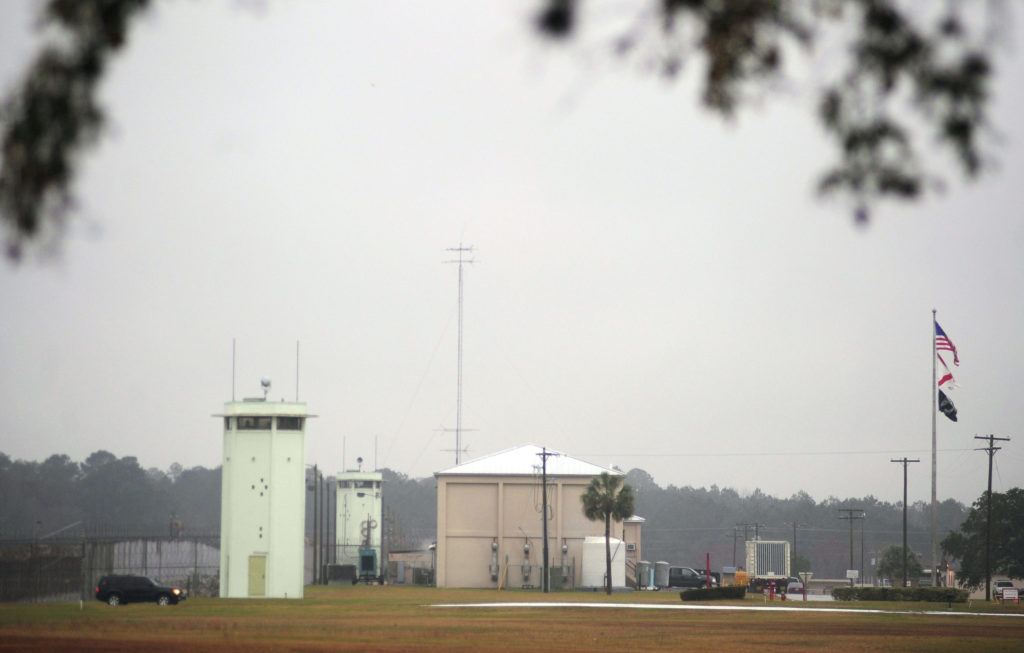
Florida is set to carry out its 16th execution of the year on Tuesday, with two more scheduled before Halloween and a fourth pending in Oklahoma before Veterans Day. Each case raises a different legal question, from jury unanimity to competency to actual innocence, and together they capture just how fast this year’s execution calendar has moved.
Four Death Row Cases, Four Decades of History: What’s Actually at Stake This Fall
Florida is set to carry out its 16th execution of the year on Tuesday, with two more scheduled before Halloween and a fourth pending in Oklahoma before Veterans Day. Each case raises a different legal question, from jury unanimity to competency to actual innocence, and together they capture just how fast this year’s execution calendar has moved.
Florida executed nineteen people in 2025, a modern record that shattered the state’s previous high of eight in a single year. That pace has not slowed in 2026. On Tuesday at 6 p.m., the state is scheduled to execute Curtis Wilkie Beasley Sr. for the 1995 murder of Carolyn Monfort in Polk County, its sixteenth execution of the year. Two more Florida executions follow within the month, and a fourth case in Oklahoma is scheduled for November. Each case has moved through the courts on its own legal track, and each raises a distinct question about how the death penalty is actually applied.
Curtis Beasley: A Divided Jury and a Compressed Timeline
Scheduled September 29, 6 p.m.
The case: Beasley, 77, is an Army veteran sentenced to death for the 1995 murder of Carolyn Monfort. His jury recommended death by a vote of 10 to 2 rather than unanimously, a sentencing method the U.S. Supreme Court found unconstitutional in a 2016 ruling that Florida’s high court has applied only to cases finalized after mid 2002, leaving Beasley’s earlier conviction outside that protection.
The legal fight: Governor Ron DeSantis signed Beasley’s warrant on August 26, giving his attorneys roughly five weeks to investigate his declining health and file challenges, a timeline his lawyers argued was too compressed given that they are private registry counsel without the resources of a dedicated capital defense office. The Florida Supreme Court rejected that claim, along with challenges based on his age and the state’s largely unexplained process for selecting which death row cases receive warrants. His attorneys have taken the nonunanimous jury question to the U.S. Supreme Court.
Florida is one of only two states that still allows a death sentence following a non-unanimous jury recommendation, a distinction Beasley’s attorneys have leaned on heavily in arguing that his case would have ended differently almost anywhere else in the country. The state’s position, upheld so far at every level of Florida’s court system, is that the constitutional protection simply does not reach back far enough to cover his 1996 conviction.
William Thompson: A Question of Competency
Scheduled October 13, 6 p.m.
The case: Thompson, 74, was convicted in the 1976 torture and murder of 23 year old Sally Ivester in a North Miami Beach motel room, a case that has stretched across nearly five decades and two prior death warrants under previous governors. His co-defendant, Rocco Surace, was convicted of second degree murder in a separate trial and received a life sentence before later dying in prison.
The legal fight: Thompson’s attorneys argue he now suffers from dementia severe enough that he cannot understand why he is being executed, a standard the Constitution requires a person to meet before a sentence can be carried out. His legal team separately filed an emergency petition demanding medical treatment for what they describe as multiple life threatening conditions, noting he was discharged from a hospital less than a day before his warrant was signed. DeSantis has not ignored the competency claim: he issued a temporary stay and appointed a three doctor commission to evaluate Thompson on October 1, with his execution proceeding only if that panel finds he understands the nature of his punishment.
Thompson’s original death sentence was overturned twice before being reinstated at a later resentencing, where the jury recommended death by a vote of 7 to 5, not unanimously. His case illustrates a distinction worth understanding: a competency claim is not an innocence claim or even a sentencing challenge. It is a narrower, constitutionally rooted question about whether a person can be executed at all if they can no longer comprehend why.
William Reaves: Military Service the Jury Never Heard
Scheduled October 20, 6 p.m.
The case: Reaves, now 77, was convicted of fatally shooting Indian River County Sheriff’s Deputy Richard Raczkoski four times outside a convenience store near Vero Beach in 1986, after the deputy discovered a gun in Reaves’s possession during a routine call. Reaves is a Vietnam veteran, having volunteered for combat duty after an initial posting to Panama.
The legal fight: His original conviction was overturned in 1991 after the Florida Supreme Court found a conflict of interest involving a prosecutor who had previously represented Reaves. He was convicted again on retrial and again sentenced to death. His current attorneys argue that combat related PTSD affected his mental state during the shooting, a defense the trial court did not allow his original defense to present, meaning no jury has ever weighed his military service against his culpability. Indian River County Sheriff Eric Flowers has publicly pushed for the state to move forward with the execution, calling Reaves’s case a priority.
Reaves’s case sits at the center of a genuine tension in how the legal system treats combat trauma. His supporters argue that a diminished capacity defense grounded in documented PTSD deserved a jury’s consideration and never received one. Law enforcement advocates counter that Reaves shot a deputy who was actively trying to retreat, and that the passage of four decades does not diminish the loss experienced by Raczkoski’s family and colleagues.
James Pavatt: A Claim of Innocence in Oklahoma
Scheduled November 12
The case: Pavatt, a 22 year Air Force veteran, was convicted in the 2001 murder of Oklahoma City advertising executive Rob Andrew, in what prosecutors described as a murder for hire plot connected to Pavatt’s affair with Andrew’s wife, Brenda Andrew, who was separately convicted and remains the only woman on Oklahoma’s death row.
The legal fight: Unlike the three Florida cases, Pavatt has consistently maintained his innocence of the actual shooting. His attorney, assistant federal defender Hunter Labovitz, has argued in court that no credible evidence establishes Pavatt fired the fatal shots, and that jurors in his trial were never told what prosecutors argued more directly at Brenda Andrew’s separate trial, that she was the shooter. A clemency hearing before the Oklahoma Pardon and Parole Board is scheduled for October 14, roughly a month before his execution date.
If the board recommends clemency, Governor Kevin Stitt would have the authority to commute Pavatt’s sentence to life without parole. That decision remains entirely discretionary, and Oklahoma’s board has no obligation to recommend mercy simply because a case involves disputed evidence about who fired the fatal shot rather than whether a murder occurred at all.
What these four cases actually have in common: each involves a legal claim that exists specifically because of how long these cases have taken to resolve, jury unanimity rules that changed after sentencing, competency that deteriorated over decades on death row, military service records that were never fully presented, and evidentiary questions that have had twenty five years to develop. None of the four claims argue that no crime occurred. Each argues that some part of the process meant to precede an execution did not function the way the Constitution requires.
Whatever the outcome of these four cases, they arrive at a moment when Florida’s execution pace under Governor DeSantis has become historically unprecedented, and when Oklahoma’s own schedule shows no sign of slowing either. For the families of Carolyn Monfort, Sally Ivester, Richard Raczkoski, and Rob Andrew, each case represents a resolution decades in the making. For the men scheduled to die, and the attorneys representing them, the coming weeks represent whatever legal options remain before that resolution becomes final.
Capital cases this old raise questions that outlive the original trial by decades.
Follow more coverage in the Sustainable Action Now death penalty section.