
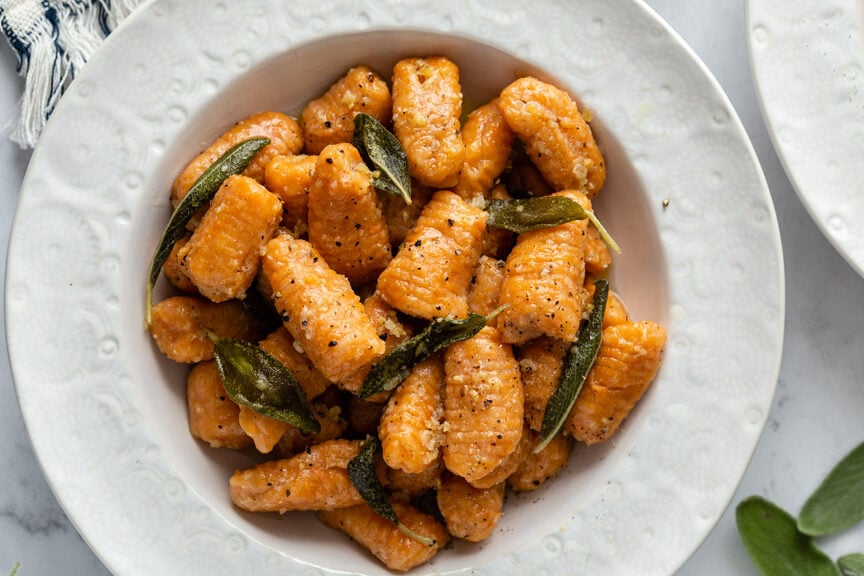
3-Ingredient Sweet Potato Gnocchi
Soft · Fluffy · Vegan · Freezer-Friendly
Three ingredients. One cozy dinner. No pasta machine, no experience required, and genuinely one of the most satisfying things you can make from scratch on a weeknight.
|
20 min
Prep
|
40 min
Cook
|
1 hour
Total
|
297
Cal / serving
|
4
Servings
|
Homemade gnocchi has a reputation for being fussy and time-consuming, and traditional gnocchi made with regular russet potatoes can test your patience if the dough gets even slightly wrong. Sweet potato gnocchi is different. The natural sugar and lower water content of roasted sweet potatoes give the dough a more forgiving structure, and the result, pillowy, slightly golden, melt-in-your-mouth pieces that carry any sauce you put on them, is one of those things that tastes like it took much longer and cost much more than it actually did. Three ingredients. Sixty minutes from start to table. And if you make a double batch, the freezer will thank you for weeks.
The key technical decision in this recipe is how you handle the sweet potato’s moisture. Sweet potatoes vary significantly in how much water they contain, and that variance is the primary variable between gnocchi that holds together beautifully in the pot and gnocchi that falls apart the moment it hits boiling water. Roasting the potatoes rather than boiling or steaming them reduces their moisture content substantially before you ever touch the dough, which is why this recipe specifies roasting rather than the faster microwave or boiling methods. The drier your potato, the more control you have over the flour ratio, and flour ratio is everything in gnocchi.
Sustainable Action Now note: Sweet potatoes are among the most nutritionally dense vegetables available at most grocery stores, providing 16,031 IU of Vitamin A per serving of this recipe, nearly three times the recommended daily intake, along with 10 grams of fiber and significant potassium. They are also a relatively low-carbon-footprint crop, and their natural sweetness means this recipe requires no added sugar. Sustainable eating doesn’t have to be complicated. Sometimes it is just a bowl of gnocchi.
Ingredients
| Ingredient | Amount | Notes |
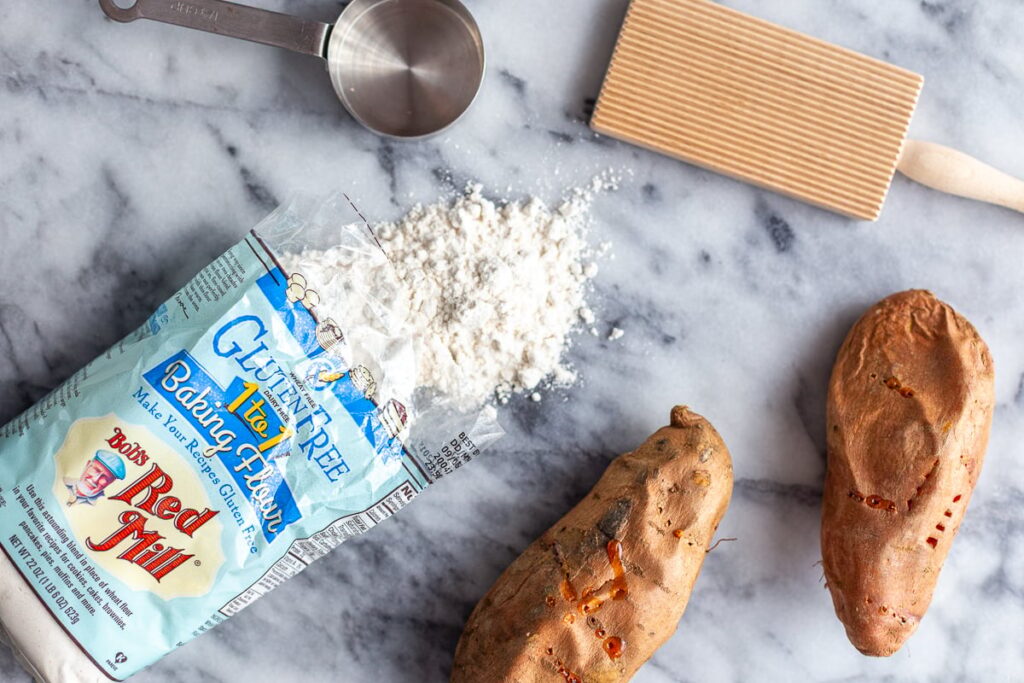
| 🍠 Sweet potatoes | 2 medium | Roasted until fork tender. Roasting (not boiling) is what controls moisture and keeps the dough workable. |
| 🌾 All-purpose flour | 2½ cups (divided) | Start with 2 cups and add the remaining half cup gradually as needed. Larger or wetter potatoes may need a bit more. Gluten-free 1:1 flour works as a substitution. |
| 🧂 Salt | 2 teaspoons | Mixed into the flour before combining with the potato. Also salt your cooking water generously. |
Equipment Note
A potato ricer produces the lightest, most evenly textured gnocchi because it breaks down the potato without overworking it. If you don’t have one, a fork and thorough mashing works fine. The goal is no lumps. Lumps in the potato mean weak spots in the finished gnocchi. A bench scraper makes cutting the dough into sections significantly easier and cleaner.
Instructions
Roast the sweet potatoes
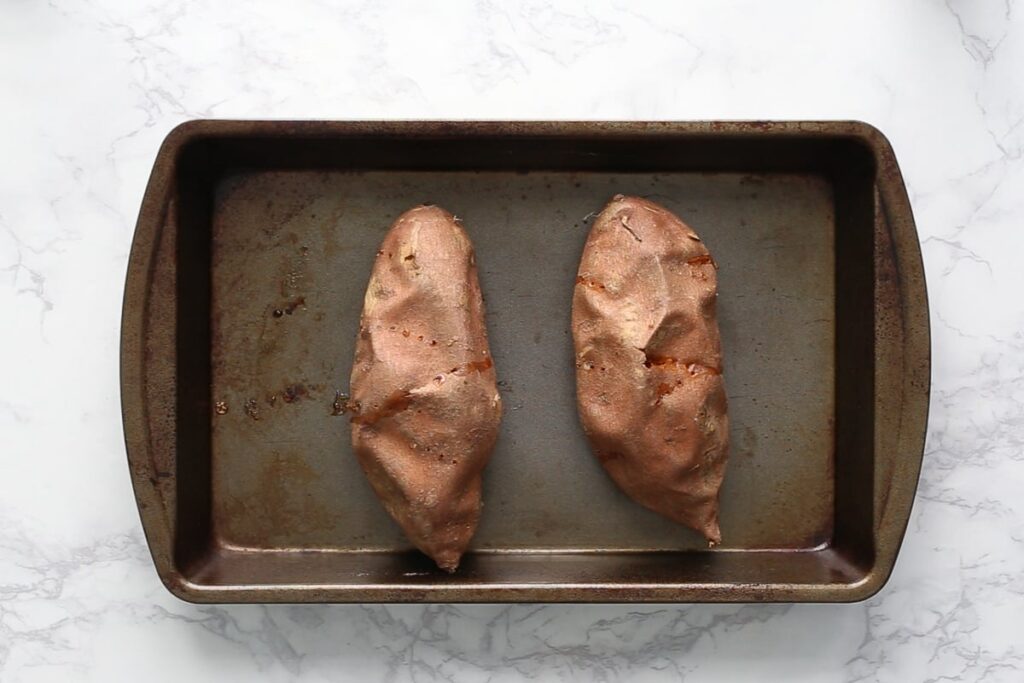
Preheat the oven to 400°F. Poke a few holes in each sweet potato with a fork to allow steam to escape while they roast. Place them directly on a baking sheet and roast for 40 to 50 minutes, or until a fork presses easily into the center of the thickest part without any resistance. Pull them out and set aside to cool until you can handle them comfortably without burning your hands. Roasting rather than boiling is important: the dry heat of the oven pulls moisture out of the potato rather than adding it, and drier potato means more control over your dough.
Set up your flour on the work surface
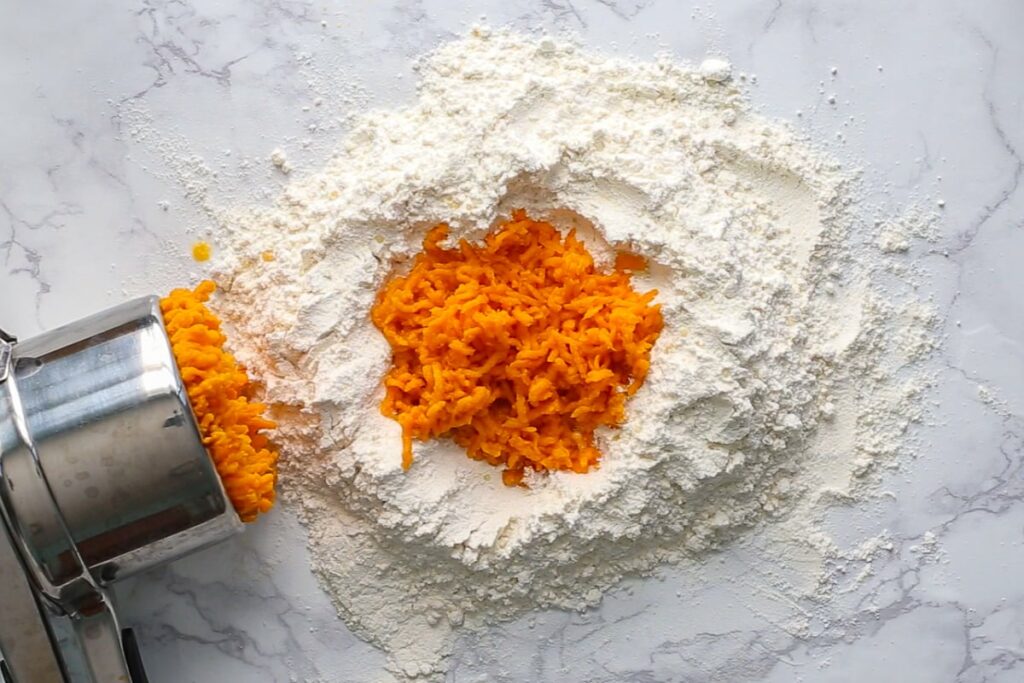
Combine the salt with 2 cups of the flour and pour the mixture onto a clean, well-floured work surface. Make a wide well in the center of the flour pile. This is where the sweet potato will go. Keep the remaining half cup of flour nearby because you will likely need to add some of it gradually depending on how much moisture your specific potatoes retained.
Rice or mash the potatoes into the flour
Remove the skin from the cooled sweet potatoes. If you have a potato ricer, pass the potato through it directly onto the center of the flour well. The riced potato will land in fine, light strands that incorporate into the flour smoothly and evenly. If you don’t have a ricer, mash the potato in a bowl with a fork until there are no lumps remaining, then add it to the flour well. Lumps are the enemy here: they create weak spots in the dough that cause gnocchi to break apart in the boiling water.
Work the dough together
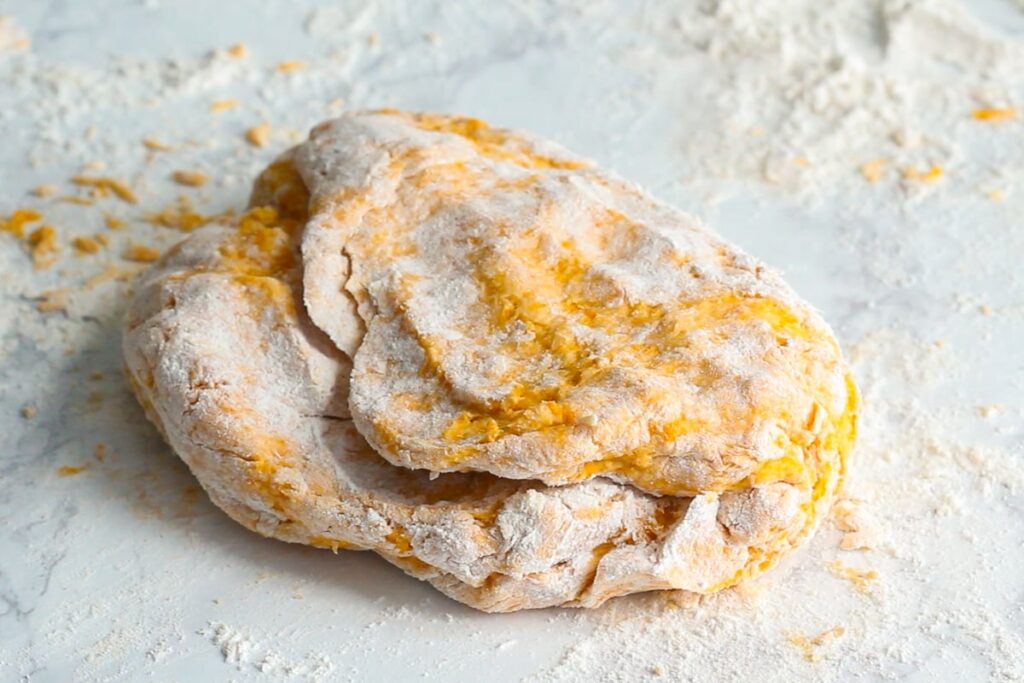
Flour your hands and begin working the sweet potato into the flour using your hands, pressing and folding until the mixture comes together into a cohesive dough. The dough should be soft and pliable but not sticky to the touch. If it sticks to your hands or the work surface, add more flour in small amounts, no more than a tablespoon or two at a time, until it reaches the right consistency. Do not overwork the dough. The more you handle it, the denser your finished gnocchi will be. Stop as soon as it comes together.
Shape the gnocchi
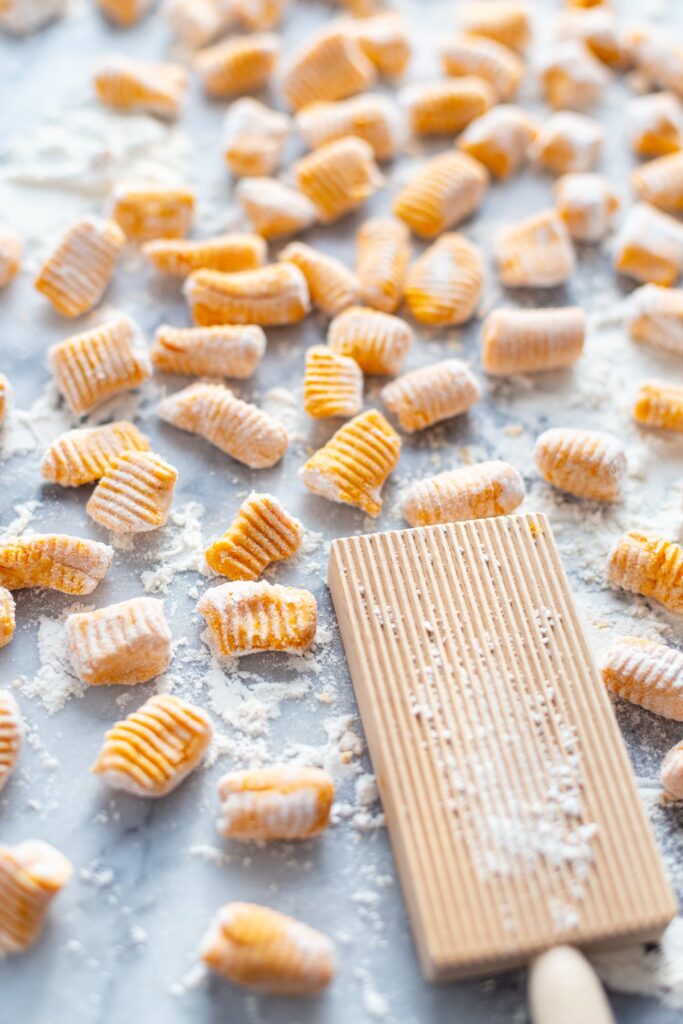
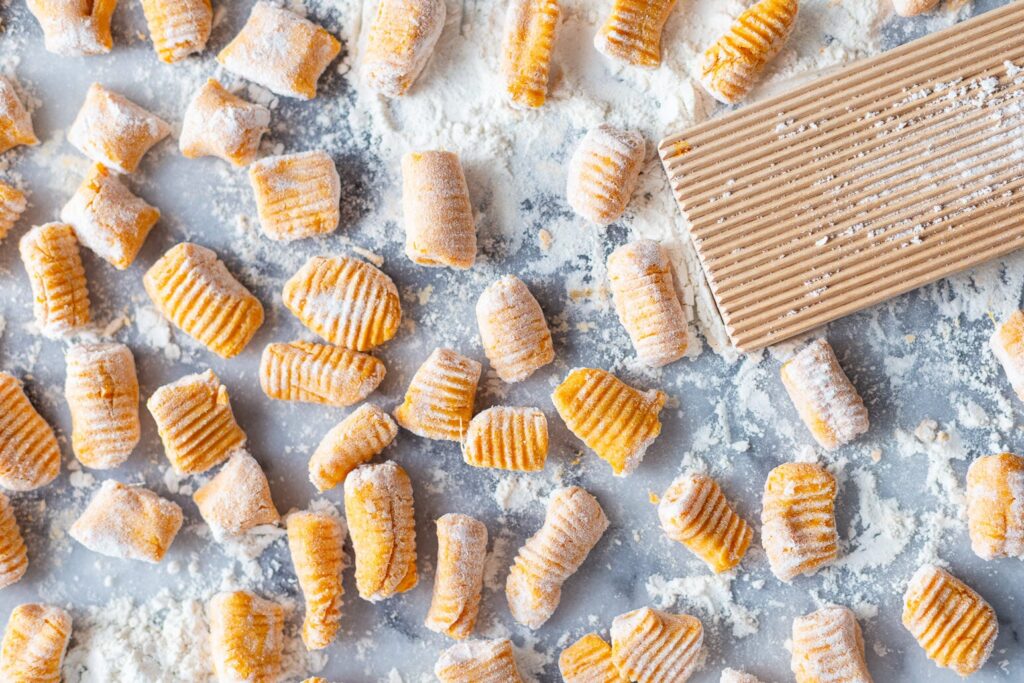
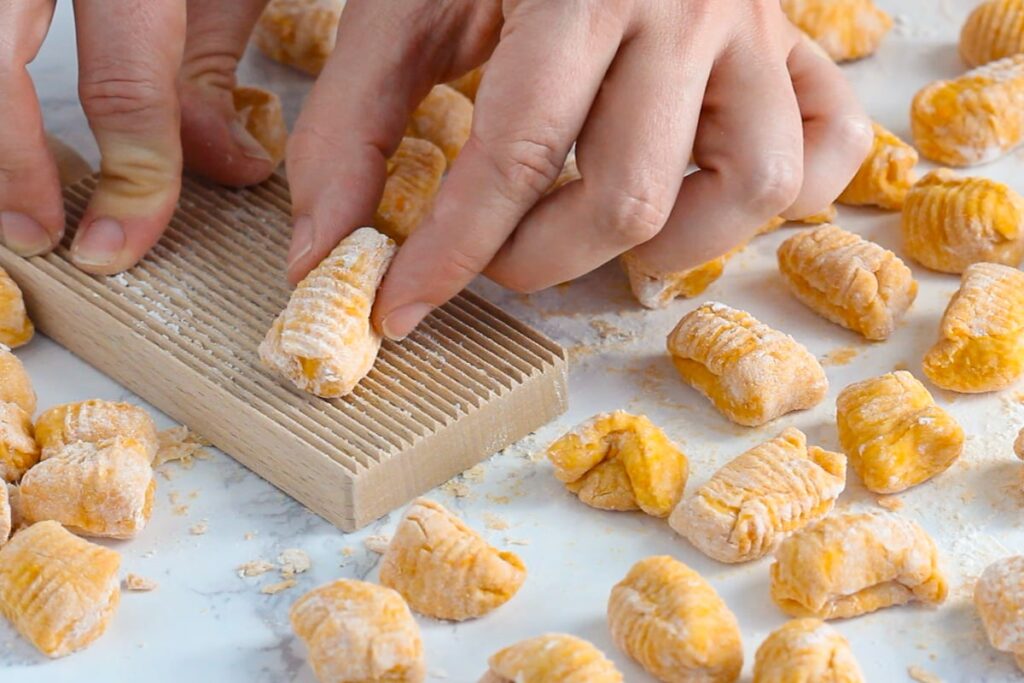
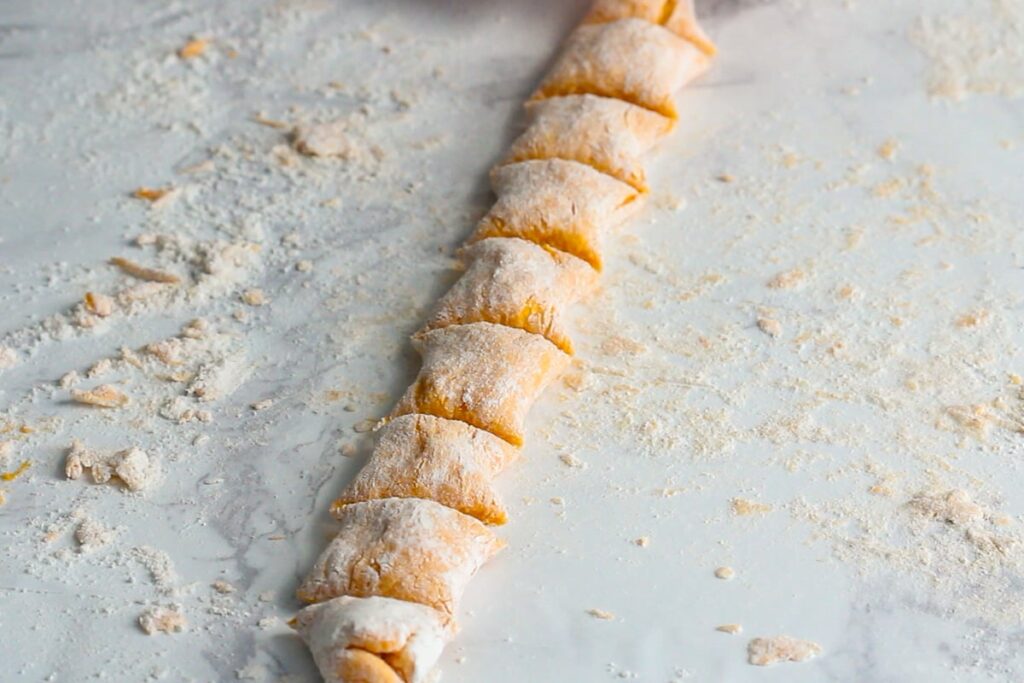
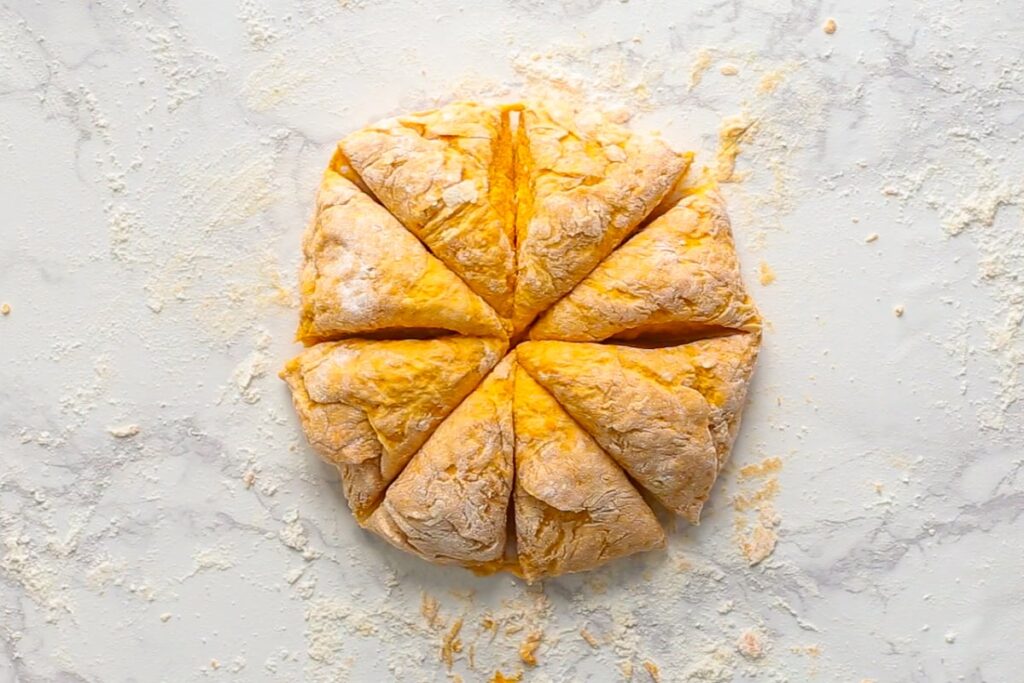
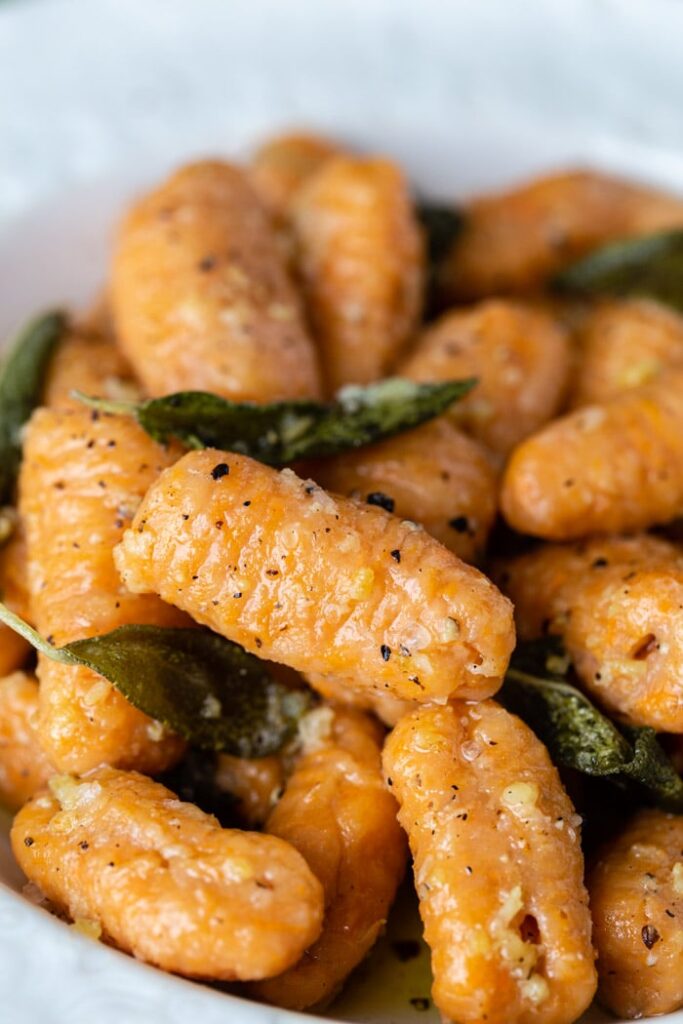
Roll the dough into a ball, then use a bench scraper or knife to cut it into 8 even sections. Working one section at a time, roll each section into a long log about half an inch thick on a lightly floured surface. Cut each log into 1-inch pieces. Toss each cut piece lightly in flour so that all edges are dry and not sticky. Optional but worthwhile: use a gnocchi board or the back of a fork to press ridges into each piece. The ridges create surface texture that helps sauces cling to the gnocchi rather than sliding off.
Cook, sauce, and serve
Bring a large pot of well-salted water to a boil. Before adding the full batch, test one piece first: if it floats to the surface and holds together, the dough is ready to cook. If it falls apart, work a little more flour into the remaining dough before proceeding. Drop the gnocchi in and cook for 2 to 3 minutes, watching for them to float to the surface. Once floating, let them boil for 30 more seconds, then remove with a slotted spoon. Toss immediately with your chosen sauce, a sprinkle of black pepper, and serve.
What to Serve With Sweet Potato Gnocchi
| 🧈 | Brown butter and sage — the simplest and most traditional pairing. The nutty butter and herbaceous sage complement the sweet potato without competing with it. |
| 🌿 | Olive oil and fresh herbs — the lightest option, letting the natural sweetness of the potato be the main event. Works beautifully with parsley, thyme, or rosemary. |
| 🍅 | Simple tomato sauce — a classic red sauce works surprisingly well with the slight sweetness of the sweet potato gnocchi, especially when finished with fresh basil. |
| 🥜 | Walnut and herb pesto — a dairy-free pesto made with walnuts, basil, lemon, and olive oil pairs extremely well and keeps the whole dish fully plant-based. |
| 🧀 | Pan-fried in butter after boiling — boil first, then toss in a skillet with a little butter or olive oil until the outside of each piece turns golden. This adds a slight crispness that changes the whole texture experience. |
Tips for Gnocchi That Actually Works
Add flour gradually. This is the single most important instruction in the recipe. Add it half a cup at a time. The amount your specific potatoes need will depend on how much moisture they retained during roasting, and adding too much flour all at once leads to dense, heavy gnocchi that nobody wants.
Do not overwork the dough. Gnocchi dough that has been handled excessively develops too much gluten and becomes chewy and dense rather than light and pillowy. Work it just enough to bring it together and stop.
Always test one piece first. Drop a single gnocchi into the boiling water before committing the whole batch. If it floats and holds together, proceed. If it falls apart, work a little more flour into the remaining dough before cooking. This two-second test saves the entire meal.
Rice or mash while still slightly warm. Completely cooled sweet potato becomes harder to break down evenly. Rice or mash it when it is still warm enough to be pliable but cool enough to handle without burning your hands.
Flour every cut surface. After cutting each log into 1-inch pieces, toss them in flour so that no sticky edge is exposed. Sticky edges cause gnocchi to clump together in the boiling water or fall apart at the seams.
Troubleshooting: When Things Go Wrong
| Gnocchi falls apart in the water | The dough needs more flour. Remove the uncooked batch from the water, pat dry, and work in more flour gradually until the dough is soft but not sticky. Test again before cooking the full batch. |
| Gnocchi is too dense and heavy | Usually caused by overworking the dough or adding too much flour at once. For the next batch: handle the dough as little as possible after it comes together, and add flour in small increments. |
| Dough is too sticky to work with | Your potatoes held more moisture than average. Add flour a tablespoon at a time until the dough stops sticking to your hands. This is normal with larger sweet potatoes or potatoes that were on the moister side to begin with. |
Storage and Make-Ahead Instructions
This recipe is one of the better ones for meal prep because the uncooked gnocchi stores well in both the refrigerator and the freezer, giving you a dinner that is genuinely fast to produce on nights when you don’t have time to start from scratch.
| Method | Duration | Instructions |
| Refrigerator | Up to 3 days | Store uncooked gnocchi in an airtight container with parchment paper between layers to prevent sticking. |
| Freezer | Several weeks | Freeze in a single layer on a baking sheet until solid, then transfer to a freezer bag. This prevents them from clumping into a solid mass. |
| From Frozen | No thawing needed | Drop frozen gnocchi directly into boiling water. They will take a minute or two longer to float than fresh, but no thawing is required. |
Nutrition Per Serving
| Calories | Carbs | Protein | Fat | Fiber | Vitamin A | Potassium |
| 297 kcal | 66g | 8g | 2g | 10g | 16,031 IU | 381mg |
More Plant-Forward Recipes on SAN
Three ingredients, ten grams of fiber, and nearly three times your daily Vitamin A in a single bowl of pasta. This is what sustainable eating actually looks like when it’s also what you feel like having for dinner.
More SAN Recipes