
She Went Into Surgery With a Really Bad Fracture. She Is Going to Be Just Fine.
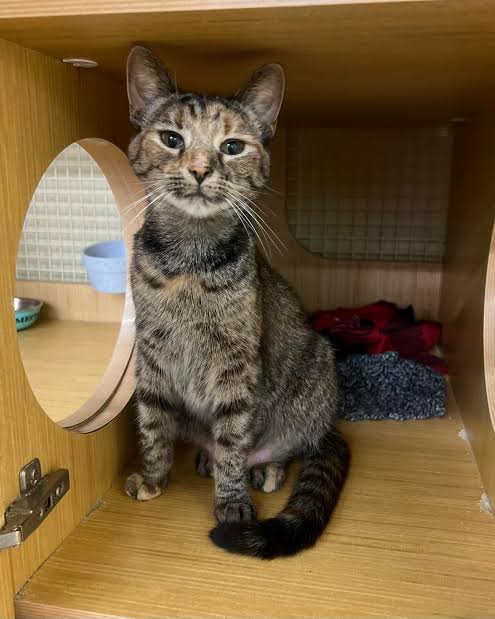
Lil’ Bit is a kitten. She came in with a severe leg fracture. And Eldad Hagar’s note about her, which he sent out before she went into surgery, is the kind of thing that tells you exactly what Hope For Paws is: not just a rescue operation, but the particular way one person holds space for an animal who is about to go through something hard.
“Even if she loses her leg, she will do great and will be a happy little kitten.”
Eldad Hagar, Hope For Paws
Lil’ Bit came into Hope For Paws with a fracture that Eldad described, with the characteristic directness that marks everything he writes, as really bad. She is a kitten. She didn’t have any context for what was happening to her, no understanding of the veterinary team around her, no way to know that the surgery she was heading into was the beginning of her getting better rather than another thing happening to her without her consent. What she had was the team at Hope For Paws, and the community behind them, and a note from Eldad asking people to send a heart her way before she went under. Watch her story below, and then keep reading for what makes this particular rescue worth understanding in full.
Lil’ Bit, heading into surgery with a really bad fracture. She is going to be just fine.
What It Actually Takes to Get a Kitten Like Lil’ Bit From the Street to the Surgery Table
A kitten with a badly fractured leg doesn’t just show up at a veterinary hospital. She arrives there because someone noticed her. Someone made a call. A rescue team responded. Someone caught her carefully enough not to make the injury worse. Someone transported her. Someone assessed her and decided the fracture was severe enough to require surgical intervention rather than conservative management. And all of that happened because Hope For Paws exists, because Eldad Hagar has built an organization over more than 18 years of street rescue work in Los Angeles that can respond to exactly this situation, and because a community of supporters has provided the financial foundation that makes that response possible without the rescue team having to calculate whether they can afford this particular animal this particular week.
Leg fractures in kittens are more common than most people realize and more survivable than the word “fracture” often suggests. Kittens are mobile, curious, and physically small in a world full of things much larger than they are. Falls from heights, vehicle impacts at low speeds, and encounters with other animals all produce the kind of traumatic injury that Lil’ Bit came in with. The surgical options for a fracture this severe range from internal fixation, using plates and pins to stabilize the bone and allow it to heal, to amputation in cases where the damage to the bone and surrounding tissue is too extensive for repair to be functionally viable. Eldad’s note addressed the amputation possibility directly and with the matter-of-fact warmth that makes his communication to the Hope For Paws community so effective: even if she loses her leg, she will do great. That is not consolation. It is an accurate statement about how well cats adapt to three-legged life, a reality that veterinary professionals who work with injured animals document consistently and that the broader public tends to underestimate.
Cats are not smaller dogs, and their relationship to physical disability reflects that difference clearly. A three-legged cat, what the rescue community calls a “tripod,” adapts to the change in its center of gravity and weight distribution with a speed that consistently surprises people encountering it for the first time. Within weeks of recovery from an amputation or significant orthopedic repair, most cats are running, jumping, and climbing with a competence that is genuinely impressive given what they have been through. The psychological resilience that allows a cat to move forward from a traumatic injury without the kind of extended emotional processing that the same injury might require in a human is one of the more remarkable qualities of the species, and it is part of why veterinary professionals who work with injured cats tend to have genuine confidence in outcomes that might seem daunting from the outside.
What “Tripod” Life Actually Looks Like for Cats
Cats who have lost a limb, whether through trauma, cancer treatment, or congenital condition, adapt with a speed and completeness that routinely surprises new adopters. Within the recovery period after surgery, most cats begin bearing weight on the remaining limbs and developing compensatory movement patterns that allow them to climb, jump, and run with only moderately reduced capability compared to four-legged cats. Veterinary rehabilitation specialists document that the quality of life for a well-cared-for three-legged cat is genuinely high, and adoption advocates consistently note that tripod cats make excellent, often exceptionally affectionate, companions. The “three legs” framing that makes some potential adopters hesitate is rarely reflected in the actual daily experience of the cats themselves.
Watch the Full Story
The full Lil’ Bit rescue story from the Hope For Paws channel. Watch and share widely.
Hope For Paws has been producing rescue documentation videos since Eldad Hagar began filming his rescues in Los Angeles in 2008, and the channel’s growth into one of the most-watched animal rescue platforms in the world reflects something specific about what the videos actually contain: not produced content designed to maximize emotional impact, but honest, uncut documentation of what rescue work looks like in practice. The lighting isn’t always right. The first approach doesn’t always work. Animals who are frightened and in pain don’t cooperate with being helped, and the videos show that rather than editing it out. The result is content that builds genuine trust with a global audience that has learned to tell the difference between rescue operations that produce footage and rescue operations that do the work.
Lil’ Bit’s story is one of the smaller ones in a catalog of thousands. She didn’t come in from a dramatic highway rescue or a flooding situation or a confined space that required special equipment. She came in injured, small, and in need of surgical intervention that her situation alone couldn’t provide. That is the category of animal that fills the vast majority of rescue organizations’ intakes: not the visually spectacular rescue that generates broad attention, but the ordinary injured or abandoned animal whose need is just as acute and whose outcome depends just as completely on whether a funded, capable rescue organization exists in the same city as they do.
Why Eldad’s Note Before Lil’ Bit’s Surgery Says Something Important About How Hope For Paws Actually Works
The note Eldad sent before Lil’ Bit went into surgery is short. It acknowledges the severity of her injury without dramatizing it. It offers the honest reassurance that three-legged cats do well, which is information rather than comfort-speak. It asks for a heart emoji. And it closes with “Thank you so much” and his name, which is how every single one of his communications closes, in the same understated warmth that has characterized his public presence with the Hope For Paws community for nearly two decades.
This style of communication is not an accident. It reflects something genuine about how Eldad thinks about the relationship between the rescue work and the community that funds it. He doesn’t perform distress to generate donations. He doesn’t use animals’ suffering as emotional leverage. He describes what is happening with accuracy and directness, offers the context that makes that information meaningful, and trusts the community to respond appropriately. The community has been responding that way for more than 18 years, which is why Hope For Paws has been able to operate continuously, rescue thousands of animals, and respond to calls like Lil’ Bit’s without calculating whether the surgery cost fits the week’s budget.
Hope For Paws operates in Los Angeles, one of the most resource-intensive cities in the world to run any kind of organization, and it funds its rescue and veterinary work entirely through donations from a global community of supporters who have learned to trust it precisely because it doesn’t ask them to trust it in dramatic terms. The math is simple: every recurring donor who commits a small monthly contribution creates the stable, predictable revenue base that allows the team to respond to the next injured kitten without first holding a fundraiser. Lil’ Bit’s surgery happened because that base exists. The next animal’s surgery will happen for the same reason.
Send Lil’ Bit a ❤️ and Support the Next Rescue
Watch the videos. Share them. If you’re not already a Hope For Paws donor, today is a good day to become one. Lil’ Bit made it to surgery because this community showed up. The next animal who needs surgery is already out there.
Donate to Hope For Paws Visit the SAN Rescue NetworkLil’ Bit went into surgery with a really bad fracture and came out the other side, one way or another, with people who are going to make sure she becomes the happy little kitten Eldad said she would be. That is not a small thing. It is the entire point of what Hope For Paws does, day after day, call after call, in a city that has no shortage of animals who need exactly what it provides. Send her a heart. Watch the video. And if you have room in your life for a kitten who might be missing a leg by the time you meet her, that kitten is going to be absolutely extraordinary company.
Sustainable Action Now Rescue Network
We follow Hope For Paws, Eldad Hagar, and the full network of rescue organizations doing this work every day. Lil’ Bit is one story. There are thousands of them.
Visit the SAN Rescue Network