
Rescue Network · Fox Rehabilitation
Orphaned Fox Cubs Ed and Eve Are Released Into the Wild After a 20 Hour Rescue
They lost their mother, spent a night underground and were dug out by hand. Months later, a door swung open and two grown foxes walked through it together.
The door opened. They didn’t look back.
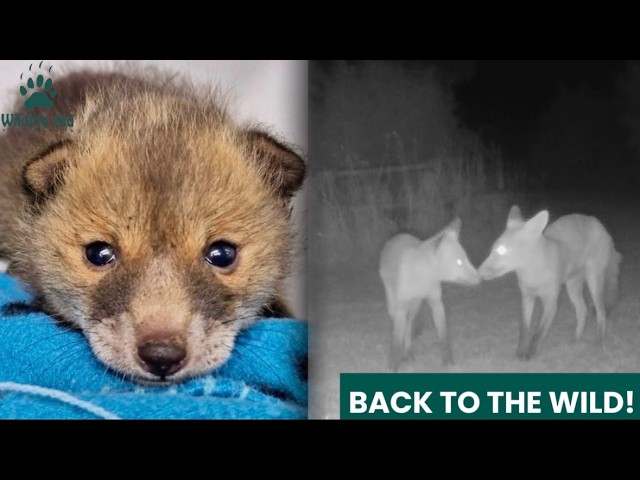
Ed and Eve are home, and home is the wild. The two fox cubs, orphaned earlier this year and rescued by the Wildlife Aid Foundation in a marathon effort that lasted roughly 20 hours, have left their soft release site and set off together. In the video shared by the charity, rescuer Louis opens the door, and the pair, now fully grown and healthy, step out into the countryside they were nearly lost to.
The release of Ed and Eve. Video courtesy of Wildlife Aid.
The Night That Almost Ended Their Story
It began with a dying mother. Rescuers Louis and Dan from Wildlife Aid, a wildlife hospital and rescue charity based in Surrey, England, found a mother fox in distress and realized she had cubs somewhere nearby. The mother died. Her cubs were still out there, hidden in a den, with no one to feed or protect them. A newborn fox that loses its mother at that age has little chance of surviving on its own, and the clock was already running.
The search turned into one of the charity’s longest rescues. According to Wildlife Aid’s account, the team spent about ten hours waiting and digging before Louis was able to reach the first cub, which they named Ed. The second, Eve, was still down there. Dan carried on the next morning and brought her out. By late morning, both cubs were back at the Wildlife Aid hospital and reunited after roughly a day apart. The charity has described the whole operation as a rescue from certain death, and the length of it, measured in hours of hand digging, explains why.
Two cubs. One long day of digging. A second chance.
From Hospital to Soft Release
Orphaned foxes need more than food. They need warmth, the right milk, vaccinations, veterinary care and, once they’re old enough, the chance to learn what foxes do. Wildlife Aid’s vets and animal care team looked after Ed and Eve through the early weeks, and as the cubs grew, they moved on to the next stage: a soft release site. That is a pen or enclosure in the area where the animals will eventually be let go, where they can get used to the sounds, smells and weather of the outdoors while still receiving help.
The method matters. A fox released too early, or dropped in a place it doesn’t know, can struggle to find food and shelter. A soft release gives cubs time to build the skills they need, with caretakers backing away as the animals become more independent. Staff later described the pair as grown, thriving and full of life, and by the time the door opened, they were ready to take on the wild together.
Why Foxes Are Released in Autumn
Red foxes are usually born in spring, and cubs become independent by the following autumn, when family groups break up and young foxes go looking for territories of their own. That is why many rehabilitated cubs are released in the fall: it matches the moment a wild fox would be setting out anyway.
The Final Moments, Caught on Camera
The release was filmed with the help of Browning Trail Cameras, whose equipment captured the last stretch of Ed and Eve’s story. The charity thanked the company for helping it document what happened after the door was opened. Trail cameras are useful here because they let the team watch animals without being present, which keeps the foxes wary of people, as they should be.
For the people who did the rescue, the footage carries weight. Louis and Dan spent a full day digging. The vets gave weeks of care. Seeing the pair living on their own, Wildlife Aid said, is a reminder of why the team does the work.
What It Takes to Save a Fox
Wildlife hospitals like Wildlife Aid depend on public donations, trained volunteers and a steady stream of calls about injured, orphaned and trapped animals. A rescue like this one costs staff hours, equipment and veterinary care, all for animals that most people will never see again after they leave. That is the goal. The best outcome of wildlife rehabilitation is an animal that returns to the wild and doesn’t need people anymore.
If you find a young fox on its own, experts generally advise watching from a distance before intervening, since a parent may be nearby, and calling a local wildlife rescue for advice if the animal looks injured, cold or in danger. Digging out a den is not something to attempt alone.
Ed and Eve’s Story, Start to Finish
- Early 2026Louis and Dan find a dying mother fox and begin searching for her cubs.
- The first dayAfter about ten hours of digging and waiting, Louis brings out Ed.
- The next morningDan rescues Eve. Both cubs reach the hospital and are reunited.
- Spring and summerVeterinary care, growth and a move to a soft release site.
- Autumn 2026Louis opens the door. Ed and Eve walk out into the wild together.