
Rescue Network · Birds of Prey
Hugh Jackman the Buzzard Arrived Weak and Flat With a Broken Wing: Could He Fly Again?
A raptor that can’t fly is a raptor in trouble. When this buzzard reached the Wildlife Aid hospital, the team’s first reaction was worry. Then came the X-rays.
He looked flat. That’s never good.
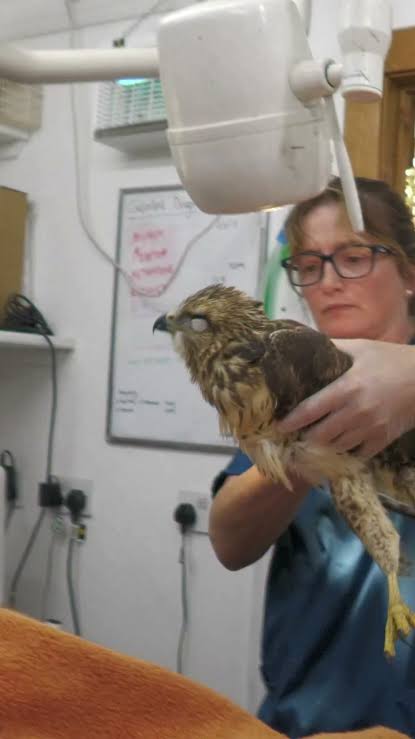
Buzzards are built to command the sky. Broad wings, a fanned tail and a habit of circling on rising warm air make them one of the most recognizable raptors in the British countryside. So when a buzzard arrived at the Wildlife Aid hospital looking weak and flattened, with none of the upright, watchful posture the species is known for, the team was extremely concerned. They named him Hugh Jackman, and they took him straight for X-rays.
What the X-Rays Showed
The pictures explained the weakness. Hugh Jackman had fractured his ulna, one of the two long bones in the bird’s forearm, the section of the wing that does much of the work in holding the flight feathers out into the air. It’s a serious injury for any animal that lives by flying, and for a bird of prey it can threaten survival, since a buzzard that can’t fly can’t hunt, can’t escape danger and can’t hold a territory.
But the diagnosis came with some hope. Wildlife Aid noted that this was a break that could be mended with time and expert care. That phrase matters. Not every wing injury in a wild bird can be fixed, and some fractures are so complicated that the kindest option is euthanasia. An ulna fracture sits in a more forgiving category, particularly when the neighboring bone, the radius, is intact and can help hold the wing steady while the break knits.
Time and expert care. For a wild bird with a broken wing, that’s the whole recipe.
What Recovery Asks of a Bird of Prey
Wing fractures in birds tend to follow a similar path in a wildlife hospital, though every case differs. The first priority is pain relief and stabilization, since a weak bird may also be dehydrated, underweight or in shock. The wing is then supported so the broken ends can heal in the right alignment, and the bird is kept confined and quiet, because movement is the enemy of a healing bone. Bone repair takes weeks, not days. After that comes the careful work of restoring movement in the joints, which can stiffen during immobilization, followed by time in progressively larger spaces to rebuild muscle and test the repaired wing.
The final test is the one that decides everything. A buzzard can only be released if it can fly strongly and fully, with the lift, control and stamina to hunt and avoid trouble in the wild. A bird that flies awkwardly, or tires quickly, is not ready, however good its spirits. Rehabilitators watch for this closely before they open a door, and some birds that don’t pass spend longer in care, or are placed where they can live safely.
Why Buzzards Turn Up Injured
Common buzzards are among the most numerous birds of prey in Britain, and their habits put them near people. They hunt along road verges and fields, and they feed on carrion, which can draw them to roadsides. Collisions with vehicles are a common cause of injury to raptors, along with fence strikes, entanglement and, in some cases, deliberate persecution. If you find a grounded or injured bird of prey, keep your distance, don’t try to handle it with bare hands because talons and beaks are powerful, and call a local wildlife rescue for advice.
The Hospital Behind the Rescue
Wildlife Aid treats thousands of injured and orphaned animals a year, including foxes, hedgehogs, swans and birds of prey, and it shares its work openly on its YouTube channel. The charity is funded largely by public support, and its videos show both the successes and the hard cases. In the buzzard’s case, the title of the video itself asks the question that the team couldn’t answer on the first day: could he fly again?
- ArrivalA buzzard named Hugh Jackman reaches the Wildlife Aid hospital, weak and flat.
- AssessmentThe team takes him for X-rays.
- DiagnosisThe images show an ulna fracture.
- OutlookThe break can be mended with time and expert care.
- The testStrong, sustained flight decides whether he can go back to the wild.
What happens next belongs to the people at the hospital, and to Hugh Jackman himself. The first stage of this story, the fear on arrival and the relief of a treatable diagnosis, is already told. The second stage will take weeks and will be measured in something simple: a buzzard, a clear sky and a wing that works.