Our Youth · Climate Litigation
La Rose v. His Majesty the King, Week One: Ten Young Plaintiffs Testify as Canada’s Youth Climate Trial Builds Its Record
After seven years of waiting, fifteen young Canadians spent their first week in court describing evacuations, smoke, heat and loss. Experts then laid out the science, the health toll and the case that a clean energy system is within reach.
The evidence is now on the record.
On Monday, October 26, the fifteen young Canadians behind La Rose v. His Majesty the King began the trial they had worked toward for seven years. By Friday, ten of the fifteen plaintiffs had taken the witness stand in a Vancouver courtroom, and an eleventh had submitted written testimony. The court also heard from a climate scientist, a clean energy expert, a pediatrician and child psychiatrist, and a veteran teacher. The first week turned a legal argument that has lived on paper since 2019 into a body of firsthand and expert evidence that the judge, and anyone watching online, can now weigh.
The Opening Statement
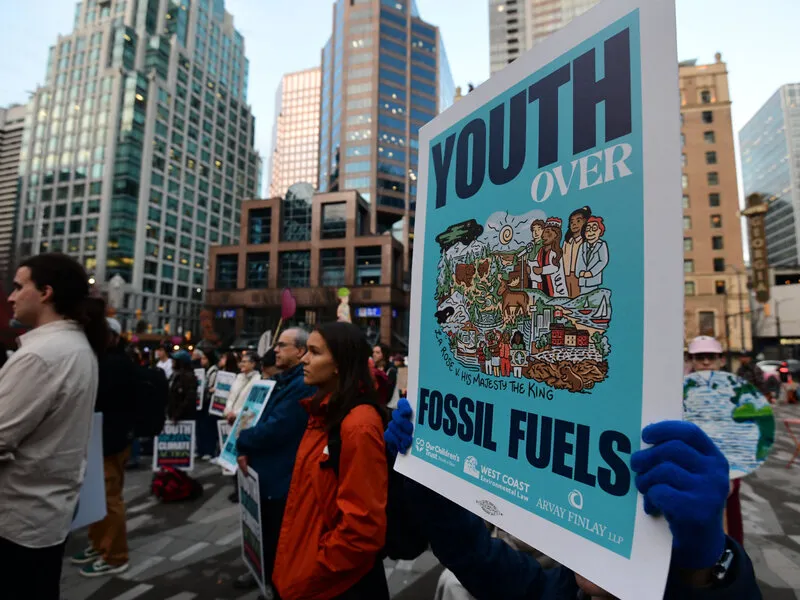
Catherine Boies Parker, lawyer for the plaintiffs, opened the trial by telling the court that the government has known about climate change for decades. The claim the young people are advancing is constitutional. They argue that federal laws and policies that contribute to greenhouse gas emissions violate their rights to life, liberty and security of the person under section 7 of the Canadian Charter of Rights and Freedoms. They are asking the Federal Court to declare that the government has violated those rights and to order a climate recovery plan. Our Children’s Trust and West Coast Environmental Law, which support the plaintiffs, put the stakes plainly: the case will decide whether the government is constitutionally required to stop making climate change worse.
What the Young Plaintiffs Told the Court
They spoke one at a time, facing the judge, and the accounts shared a pattern. They described fleeing their homes as wildfires approached. They described living through extreme heat and choking smoke, and watching floods and drought change their communities. And they described losing places and cultural practices that tie them to their histories, families and identities. Kira Young, who testified on the first day, recalled her family’s evacuation from their Yellowknife home during the 2023 wildfires, when she was 17, and said the experience left lasting trauma. Sophia Sidarous, a member of Metepenagiag First Nation in New Brunswick, spoke about how a warming climate affects her community’s access to salmon, traditional medicines and cultural practices.
On Wednesday, the court heard from six plaintiffs in a single day. Lauren Wright, 22, who grew up in Saskatchewan, lived through the 2015 wildfires that displaced thousands of people. She told the court that being outdoors gives her a profound sense of calm, but that heat related illness has limited her time outside and her work as a farmer. Albert Lalonde, from Montreal, said he stayed indoors more this summer because of what he called chokingly toxic air from wildfire smoke, and that he no longer expects anything from governments, a remark in which he referred to the prime minister’s decision to scrap the consumer carbon tax. Sáj Starcevich wept as she described doubts about becoming a parent, something she once dreamed of, and said it is a scary world and that she struggles to think about what the future holds.
“I don’t want to lose any more of my culture than I already have… I’ve already lost so much. And I deserve an opportunity and a world to continue living my life and my cultural life.”Leandrea Reeves, 22, Whitehorse, Yukon, and Taku River Tlingit First Nation
Reeves described the pain her family experienced from Canada’s residential school system before explaining what she stands to lose to climate change. Her testimony tied the case to a history of cultural loss that many of the plaintiffs from Indigenous communities share. These were not predictions about a distant future. They were accounts of what has already happened, delivered by people who have barely begun their adult lives.
The Experts Explain the Science, the Cost and the Health Toll
The week’s expert testimony supplied the framework around those stories. Dr. Kirsten Zickfeld, a climate scientist at Simon Fraser University, testified about Canada’s contribution to global warming, the size of the remaining global carbon budget, and why each additional degree of warming matters. Coverage of her evidence reported that the remaining budget for holding warming to the Paris targets is essentially exhausted.
Dr. Mark Jacobson of Stanford University presented evidence on the feasibility of moving Canada to a system powered entirely by clean, renewable energy by 2050. He explained that the obstacles to reaching zero emissions are neither technical nor economic. That testimony speaks directly to a core question in the case: whether the government’s chosen pace is a matter of necessity or a matter of choice.
Dr. Elizabeth Pinsky, a child and adolescent psychiatrist and pediatrician who is a professor of psychiatry at Harvard Medical School, described how climate change threatens children’s physical and mental health, affecting virtually every major body system. She testified that young people, including those touched by wildfires, have experienced depression, anxiety and post traumatic stress disorder, and she described what she called eco-anxiety as a category of psychological harm tied to anger and a sense of betrayal. She told the court that about 40 percent of young people are unsure whether they want to have children because of global warming. A 2022 report from Canada’s own health ministry, cited in coverage of the trial, found that climate change disproportionately and inequitably affects the mental health of groups including young people.
The week ended with the classroom. Sarah Newton, a teacher with thirty years of experience in British Columbia schools, described what climate change looks like for children at school: rooms too hot to learn in, and students who arrive after wildfires and floods have upended their lives. She called it gutting for teachers who care about their students’ wellbeing. Zoe Grames-Webb also testified on Friday, and Raine Robinson’s written testimony was submitted to the court.
What the plaintiffs argue
Federal laws and policies on emissions violate section 7 Charter rights.
Canada’s climate targets and support for fossil fuels worsen the harm.
The court should declare a violation and order a recovery plan.
What Canada argues
Climate change is a global problem.
Even a court ordered target would not shield Canadians from its effects.
The challenged measures are lawful and no Charter duty exists.
How Canada Has Responded So Far
The government’s lawyers have argued that climate change is a global problem and that even if a court ordered Ottawa to meet certain emissions targets, that would not protect Canadians from its effects. According to trial coverage, Canada asked few or no questions of most of the plaintiffs, a decision that left their accounts largely unchallenged. The government’s arguments are legal ones, and they focus on whether the Charter imposes the duty the plaintiffs claim and whether the harms can be traced to the specific laws under challenge. Environment and Climate Change Canada has said its commitment to net zero by 2050 has not wavered. The trial is before Justice Simon Fothergill, who will decide the case after closing arguments, which are expected the week of February 22, 2027.
What Comes Next
The evidence phase continues through November 20. This week the court is hearing evidence on the biophysical impacts of climate change, beginning with Dr. Simon Donner, along with the economic feasibility and lower costs of reaching zero emissions, Canada’s international legal obligations, and the policy tools available to cut emissions. It will also hear about Canada’s recent rollbacks of climate policies. Some press accounts describe a longer trial, up to eight weeks, while the organizers’ schedule has the evidence portion ending on November 20 and closing arguments after the new year.
How to Keep Following
The trial is open to the public by Zoom webinar for every day of testimony, and viewers can come and go as they please. Registration is required and must be approved by the court, so approval is not immediate. You can register to watch the trial online, and the registration link may be shared, though personal viewing links may not, and recording of any kind, including screenshots, is prohibited. Court sits from 9:30 a.m. to 4:30 p.m. Vancouver time. Since clocks changed in the United States on November 1 and Vancouver’s did not, U.S. Pacific viewers now see proceedings from 8:30 a.m. to 3:30 p.m. In person, the court is at the Federal Court in Vancouver’s Pacific Centre, 701 West Georgia Street.
- October 26Opening statements. Plaintiff Kira Young testifies.
- October 27Climate scientist Dr. Kirsten Zickfeld and plaintiff Sadie Vipond testify.
- October 28Six or more plaintiffs testify, including Sidarous, Reeves, Starcevich, La Rose, Lalonde and Wright.
- October 29Dr. Mark Jacobson and Dr. Elizabeth Pinsky testify. Raine Robinson’s affidavit is submitted.
- October 30Plaintiff Zoe Grames-Webb and teacher Sarah Newton testify.
- November 2Week two begins with Dr. Simon Donner on biophysical impacts.
- November 20Evidence phase scheduled to end.
- Week of February 22, 2027Closing arguments expected.
A trial like this does not turn on a single day. It is built, witness by witness, into a record that a judge can rely on, and the first week has laid the foundation: young people who say they have already lost something, scientists who say it will get worse, a doctor who says it is already harming children, and an engineer who says it does not have to. What the court makes of it is months away. What is already clear is that the people who started this case as teenagers are now in a courtroom, under oath, saying what they have seen.