
Rescue Network · Kitten Rescue
Poppy, a Street Born Kitten With a Degloved Foot, Heals in a Warm Incubator After a Hope For Paws Rescue
A short video from the Los Angeles rescue shows a tiny kitten with a bandaged foot resting in an incubator, with a plush pug keeping watch. Here is what is known about her rescue, what her injury means, and why warmth is the first line of care for kittens this small.
Born on the streets, now safe, warm and under a veterinary team’s care.
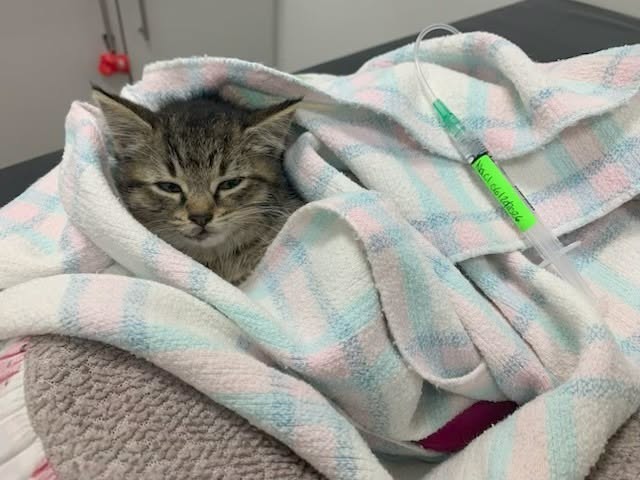
On November 18, 2026, the Los Angeles area rescue Hope For Paws introduced its newest patient in a short video posted to YouTube and Facebook. Her name is Poppy, and she is a kitten, a detail the clip makes clear in its narration, where the rescuer describes her as the team’s newest rescue kitten. According to the organization, she was born on the streets and was found with a severely injured foot, an injury the narrator describes as degloved. In the footage, Poppy has a small bandage on the foot and is resting in a heated medical incubator, and beside her sits a plush pug toy with a ring of keys around its neck, which the channel jokes is keeping an eye on her while she heals. The organization’s message to supporters was one of thanks for helping save the little baby, and her story joins many others collected in the Sustainable Action Now rescue network coverage.
What a Degloving Injury Means
Degloving is a term veterinarians use for a shearing injury in which skin is stripped away from the tissue beneath it. According to the Merck Veterinary Manual, it is a severe injury, often caused by being run over or caught in a machine, and it results in the loss of skin and a variable amount of deeper tissue. PetMD notes that degloving injuries on a cat’s limb or tail often need prompt veterinary attention and sometimes surgery, including skin grafts. Treatment generally begins with stabilizing the patient, cleaning the wound and removing damaged tissue, followed by repeated bandage changes while the wound heals. Some wounds are closed after the risk of infection has dropped, and others are covered with skin or muscle flaps or grafts when there is not enough skin to close the area. The course depends on the injury, the animal’s overall health and nutrition, and, for a kitten as small as Poppy, on how well she can stay warm and fed during the weeks of healing. Hope For Paws has not publicly said how her particular injury will be treated or how long recovery is expected to take.
Why the Incubator Matters
The warm enclosure in the video is not a prop. Veterinary guidance is consistent that very young kittens cannot manage their own body temperature, and that hypothermia is among the leading causes of death for orphaned kittens. The Kitten Coalition says kittens lack body fat and cannot regulate their temperature until roughly four weeks of age, and recommends a commercial incubator with controlled temperature and humidity as the ideal housing for at risk newborns. A veterinary review of orphaned kitten care says the same, adding that any warm, safe enclosure can serve in a pinch. Maddie’s Fund reports that mortality among orphaned kittens up to 12 weeks old is cited in the veterinary literature at 15 to 40 percent, driven by factors including trauma, infection and chilling. For a street born kitten with a painful wound, steady warmth supports digestion, healing and immune function, which is why it comes before nearly everything else. Hope For Paws has not shared Poppy’s age or weight, so how long she will need the incubator is unknown.
If You Find a Kitten Outdoors
Animal welfare groups advise keeping a found kitten warm before anything else, and not feeding one that feels cold, since a chilled kitten cannot digest milk. They recommend contacting a veterinarian or a local rescue or animal services promptly for a health check. Young kittens often need hands on care every few hours, so quick professional help improves their chances.
The Organization Behind the Rescue
Hope For Paws was founded in 2008 by Eldad Hagar and operates as a nonprofit rescue serving Los Angeles and beyond. The organization says its YouTube channel is the largest nonprofit channel on the platform, with more than five million subscribers, and its short videos have become a way for ordinary viewers to follow a single animal from rescue to recovery. Poppy’s clip is typical of that approach: it is brief, shows the animal in care and invites viewers to stay tuned for updates. The caption did not name the person who found her, where she was found, or how the rescue unfolded, and it did not describe any plans for adoption, so those details remain unknown. Followers who want to track her progress can watch the organization’s channel, and more stories about animals recovering after rescue are collected in the Sustainable Action Now rescue network section.