

Environment · Public Health
Court Clears Army to Detonate Degraded Lead Azide in Iowa: What the Ruling Says, What Residents Face and Why Critics Want More Answers
A federal appeals court declined to block a planned detonation of about 9,500 pounds of unstable explosives at the Iowa Army Ammunition Plant. The judges said the risks to the public are real, and that leaving the material alone carries a risk of its own.
The question in Iowa is no longer whether the explosives are dangerous. It is which danger is smaller.
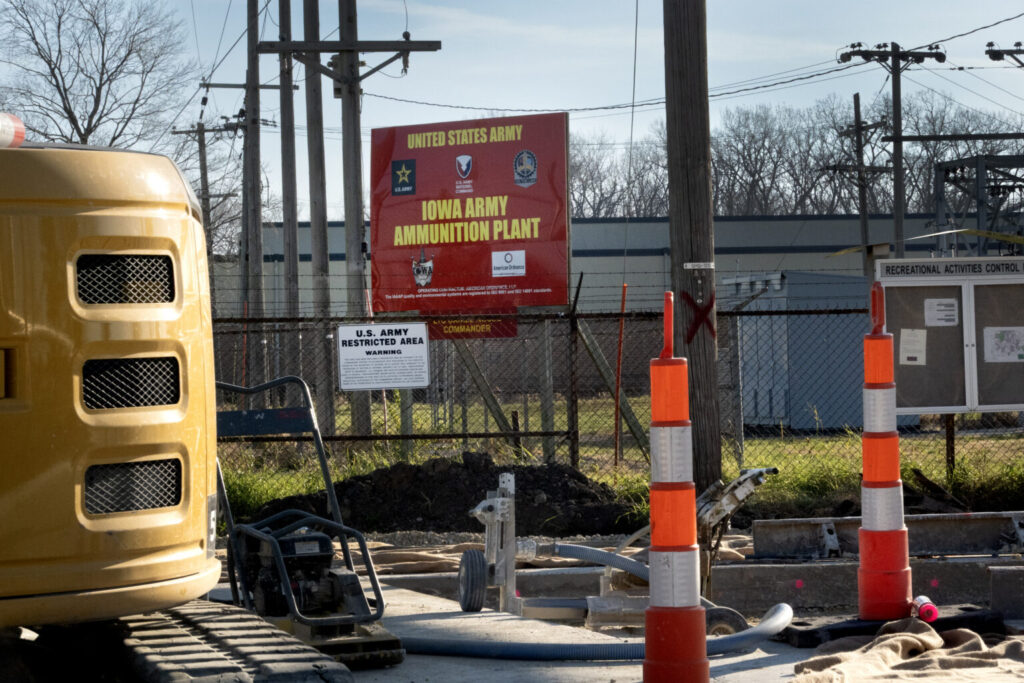
The U.S. Army is expected to detonate a stockpile of degraded lead azide at the Iowa Army Ammunition Plant in Middletown on Wednesday morning, November 25, after a federal appeals court on Monday night declined to halt the operation. A unanimous three judge panel of the Eighth Circuit Court of Appeals lifted a temporary pause on an emergency permit issued by the Environmental Protection Agency and rejected a request by two environmental groups for an emergency stay. The ruling closes a week of reversals in which the date of the blast moved several times, a president weighed in on social media, and officials in Iowa and Illinois asked what the Army knew and when it told them. The material is lead azide, a volatile explosive used to set off munitions, and the stockpile has deteriorated to the point that the Army says it cannot be safely moved. The detonation will send a plume of lead containing dust into the air, and that fact sits at the center of the dispute. Related coverage of environmental decisions and their consequences is collected in the Sustainable Action Now climate section.
What the Court Decided
The panel’s order was narrow, and it is important to say what it was not. The judges did not rule on the full merits of the challenge brought by the Iowa Environmental Council and the Sierra Club. They decided only that the groups had not shown they were likely to win, which is the standard for halting a permit while a case continues. The court found that the permit was issued in the proper context and that the EPA had adequately incorporated safeguards, including barriers and environmental monitoring, and that the Army had considered a range of alternatives. At the same time, the opinion did not minimize the hazards. It acknowledged very real risks, and said that the degraded explosives present a risk of an uncontrolled and unplanned explosion that would occur without the safety measures the permit requires. In effect, the court weighed a controlled release of lead against an uncontrolled one and found that the controlled option was the lesser harm.
That urgency also shaped the legal fight in another way. The Justice Department told the court that the Army was prepared to go ahead whether or not the permit survived, citing emergency powers that allow it to act against an immediate threat. In other words, a ruling against the permit would not necessarily have stopped the detonation, a point that bore directly on the groups’ request for a pause.
How a Storage Problem Became an Emergency
Lead azide has been stored at the plant, which sits on roughly 19,000 acres of southeastern Iowa farmland near Burlington, for decades, in earth covered structures. According to the Army, it found in March 2026, during a safety review that paused plant operations, that 68 barrels of the material had degraded and crystallized. Crystallized lead azide is sensitive to temperature changes, shock and friction, which is why the Army says it cannot be packaged or trucked elsewhere. The plant reopened after a plan to store the material in secure, earth covered magazines, and the EPA issued a series of emergency permits for continued storage, the most recent running to December 26.
The path to the current plan was not straight. Reports say the Army contracted a company in March to neutralize the material chemically, then ended the contract about two months later without giving a reason. The Army filed an environmental assessment in September seeking an emergency permit for detonation, held an open house for residents in October, and received the permit on November 13, with an expiration date of February 11, 2027. The first detonations were scheduled for Friday, November 20. A federal appeals court temporarily suspended the permit that Thursday night, the date moved to Monday because of falling temperatures, which make unstable explosives more dangerous, then to Wednesday, and President Trump posted on Monday that the Army would not proceed without court approval. The court ruling came that night.
Inaction is no longer an option.
That sentence came from Maj. Gen. Eric Shirley, who is commanding the operation, and it reflects the government’s position. Acting Army Secretary Adam Telle has said a controlled, mitigated detonation is far preferable to a spontaneous one, that the forecast is ideal for protecting public health and safety, and that the plan has been supported by agencies including the Navy, EPA, ATF, FBI, DARPA, the Energy Department, the CDC, HHS and FEMA. The Army says controlled detonation is the only disposal option. It says chemical neutralization would avoid the dust plume but would require more handling of the drums, raising the chance of a fatal explosion.
The Lead Plume and What Officials Advise
The health concern is lead. The detonation is expected to produce a dust plume that carries lead particles, along with noise, ground vibration and the possibility of broken windows. The Army’s own modeling predicts elevated airborne lead in an area up to 20 miles wide stretching from Burlington to well north of the Quad Cities, and lead settling on the ground in a strip up to 10 miles wide. Critics and some researchers say the plume could travel as far as 100 miles, depending on weather and wind, and that parts of Illinois are within the Army’s plume maps. Officials say the dust should linger for no more than an hour, and larger particles fall first while smaller ones travel farther. The Army plans to detonate the drums inside concrete structures covered with earth and surrounded by sand filled barriers, intended to limit how much lead escapes.
Lead is toxic, and the CDC says no level of exposure is known to be safe, with children and pregnant women at greatest risk. Iowa’s Department of Health and Human Services advises people who may be affected to stay indoors with windows and doors closed for 24 to 48 hours after the blast, and to clean windowsills, cars and playground equipment with soap and water. Some Middletown residents were asked to leave for several hours, flights in the area were restricted, and the governor activated the state emergency operations center on November 20. Researchers and the EPA plan to sample air, soil and water before and after the detonation. David Cwiertny of the University of Iowa has said the monitoring response was unclear at first and that officials cannot manage what they do not measure, while Andrew Whelton of Purdue has said that kind of planning should have happened ahead of time to prevent confusion.
The Objections
What the Army and EPA say
The material is too unstable to move, and controlled detonation with barriers and monitoring is safer than a spontaneous explosion. The permit has safeguards, the weather is favorable and a delay could raise the risk.
What critics say
Notice came too late, alternatives were not fully weighed, the permit lacks adequate protections, and open detonation is an outdated method. Residents in the plume’s path learned the details only days before.
The environmental groups argued that the EPA failed to require the Army to consider safer treatment alternatives, that the permit lacks conditions adequate to protect human health, and that the Army’s notice to the public came only about five days before the original date. They pointed to the extraordinarily rushed timeline and to what they described as a lack of information for residents beyond Middletown. Michael Schmidt, general counsel of the Iowa Environmental Council, noted that the EPA itself acknowledges there is no safe level of lead exposure. Sarah Green, the council’s executive director, has said the Army may have no other safe option, and has called for more time and better communication to protect communities and vulnerable groups. Attorney Wally Taylor of the Sierra Club’s Iowa chapter called for an environmental and health impact statement. Illinois officials said they were not notified in advance and have asked for more transparency about how the Army estimates the reach of the plume and plans to sample the air.
The politics have been unusual. Iowa’s incoming Democratic governor, Rob Sand, who takes office in January, has criticized what he called an unacceptable lack of communication and said the public deserves to know why other options were worse. Republican Gov. Kim Reynolds, according to the Army, supports going forward. Iowa and Illinois politicians from both parties have criticized the plan and urged officials to consider alternatives. Trump, who said he would hold the incoming governor responsible if removal fails, also blamed the Obama administration for storing the material improperly, while Iowa Public Radio reported that the Army began a project in 2004, under President George W. Bush, over concerns about the aging stockpile. The question of how the barrels were allowed to deteriorate remains unanswered in the public record reviewed here.
What Residents in the Area Should Know
Follow the instructions of local and state officials. If you are in the potential plume area, stay indoors with windows and doors closed for 24 to 48 hours after the detonation, keep children and pets inside, and wash outdoor surfaces and toys with soap and water afterward. Pregnant women and young children are most vulnerable to lead. Check the Army’s updates and your county health department for the latest times and monitoring results.
Timeline
- March 2026The Army finds degraded lead azide during a safety review and the plant pauses operations.
- SeptemberThe Army files an environmental assessment seeking an emergency permit.
- November 13The EPA issues the emergency permit, effective through February 11, 2027.
- November 19Environmental groups sue, and the Eighth Circuit pauses the permit that night.
- November 23The court lifts the pause and declines an emergency stay.
- November 25Detonation planned for 9 a.m. Central time.
The ruling gives the Army the legal clearance it wanted, but it does not settle the larger arguments. Whether the notice residents received was adequate, whether safer methods existed and how a stockpile held for decades was allowed to degrade are questions that will outlast the blast. What is clear is that the people nearest the plant will live with the result, and the monitoring data collected in the coming days will be the first measure of whether the safeguards worked as described.