
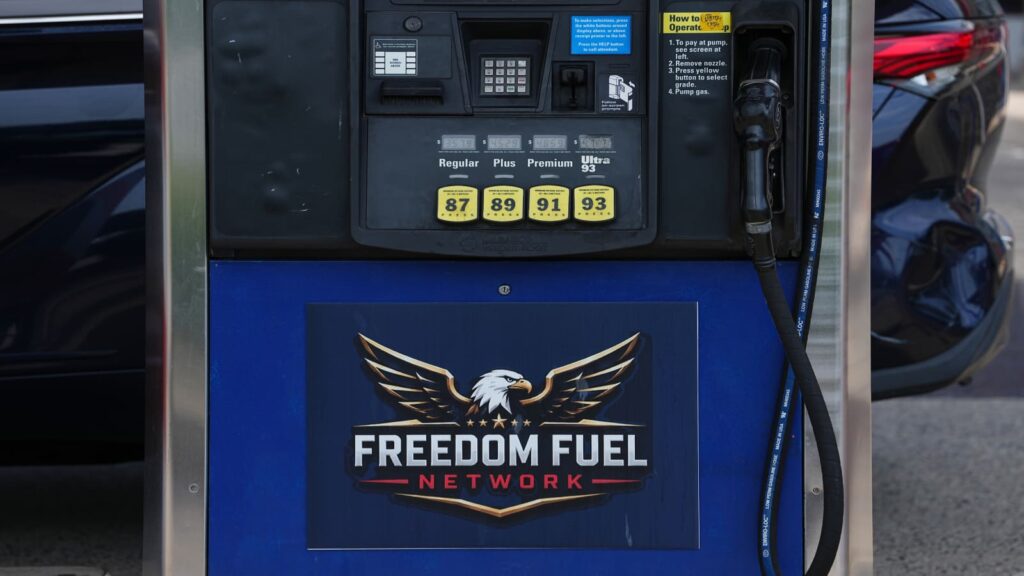
Freedom Fuel Network became a national talking point this summer for selling gasoline well below market price across Pennsylvania and South Jersey. A federal lawsuit filed against one of its fuel suppliers now raises a harder question: how a chain nobody could quite identify the owners of was able to undercut every competitor on the block.
Behind the Cheapest Gas in the Northeast: What the Freedom Fuel Lawsuit Actually Alleges
Freedom Fuel Network became a national talking point this summer for selling gasoline well below market price across Pennsylvania and South Jersey. A federal lawsuit filed against one of its fuel suppliers now raises a harder question: how a chain nobody could quite identify the owners of was able to undercut every competitor on the block.
Drivers across Pennsylvania and South Jersey started noticing something strange at a handful of gas stations in early July. The price on the sign read $3.47 a gallon, tens of cents cheaper than everywhere else nearby, at a moment when regional gas prices were climbing because of geopolitical tension tied to the war in Iran. The number was not an accident. It was a nod to Donald Trump’s status as the nation’s forty seventh president, and within days the president himself was promoting the stations on social media, praising the network for what he called stepping up for American drivers.
That network, calling itself Freedom Fuel Network, grew fast. It opened with roughly twenty five locations across the Philadelphia metro area and South Jersey and had expanded to twenty nine by late August. The White House pushed the brand hard, sharing a video of customers thanking the president by name as they filled their tanks, even as officials repeatedly insisted the company was entirely private and received no federal funding or subsidy. What nobody outside the company could easily answer, for weeks, was the simplest question of all: who actually owned it.
A Company Nobody Could Fully Untangle
Freedom Fuel Network LLC was incorporated in Delaware on June 23, just over a week before its prices started drawing national attention. The certificate of formation was signed by two men whose backgrounds had little obvious connection to the gas station business. One was Randy Brown, a special teams coach for the Baltimore Ravens who had previously served three terms as the Republican mayor of Evesham Township, a South Jersey suburb where one of the network’s stations sits. The other was Yoni Gontownik, a New Jersey based former investment director at the commodities trading firm Mercuria. Neither responded to reporters seeking comment on their role in the company.
The attorneys who filed Freedom Fuel’s trademark application the following week declined to name the company’s actual owners or principals, and public statements about how the business is structured have not lined up cleanly. The company’s own website describes a network of independently owned stations operating under one shared brand, which would mean no single party controls all twenty nine locations. Reporting from the Associated Press in July identified companies linked to two New Jersey brothers, Shamikh and Syed Kazmi, as controlling fourteen of the network’s original twenty five stations, a majority stake at the time. As the network grew through the summer, later reporting tied the brothers to a smaller share of the expanded footprint, underscoring just how difficult the ownership picture has been to pin down from public records alone.
The Lawsuit
That murkiness took on new weight on August 19, when Mansfield Oil Company, a fuel distributor based in Gainesville, Georgia, filed a federal lawsuit in the Eastern District of Pennsylvania. The suit does not name Freedom Fuel Network itself as a defendant, and it does not accuse the brand or its stations of wrongdoing. Instead, it targets KRSM Inc., a New Jersey based fuel distributor run by Syed Kazmi, one of the two brothers whose companies have been tied to a share of Freedom Fuel’s locations.
According to the complaint, KRSM drew more than 1.1 million gallons of fuel, worth close to four million dollars, from Mansfield’s account at a supply terminal in Delaware County, Pennsylvania, between late May and early July. Mansfield alleges that when it finally sent an invoice in mid July, KRSM refused to pay, and that the distributor’s bank later reported the company had declined a draft request for the funds. The lawsuit further alleges that KRSM sold a portion of that unpaid fuel to stations within the Freedom Fuel Network, which Mansfield’s attorneys argue helps explain how the chain was able to sustain prices so far below its competitors for as long as it did.
What Mansfield Alleges
KRSM obtained roughly 1.1 million gallons of fuel from its account without payment, then sold a portion of it to Freedom Fuel stations, helping sustain deep discounts.
What KRSM Says
The company’s attorney has characterized the dispute as a billing disagreement over invoices, not a case of unpaid or stolen fuel, and says it will not comment further during litigation.
KRSM has pushed back firmly. An attorney for the company, Mauro Tucci, has described the case as an accounting dispute over fuel invoices that Mansfield mispriced, rather than a failure to pay for goods it received. Mansfield’s own attorney, Urs Broderick Furrer, has rejected that framing directly, arguing that KRSM’s characterization of the dispute does not match the delivery and payment records the company has reviewed. None of the allegations in the lawsuit have been proven in court. On August 28, a federal judge partially granted Mansfield’s request for emergency relief, ordering the defendants to maintain a minimum bank balance of two million, seven hundred fifty thousand dollars while the case proceeds, an early signal that the court found at least some of Mansfield’s claims serious enough to warrant a financial safeguard.
The White House’s Distance
As scrutiny of the network has grown, the administration has moved to put daylight between itself and the company at the center of the lawsuit. A White House spokesperson said the administration has had no contact or dealings with either KRSM or Syed Kazmi, reiterating earlier statements that Freedom Fuel is a private operation that has received no government funding, even as officials have acknowledged that conversations took place with people involved in getting the network off the ground. That distinction, between publicly praising a brand and having any operational relationship with the specific distributor now facing a fraud style lawsuit, has become the central line the White House is drawing as the legal case develops.
What the lawsuit does and does not claim: Mansfield’s suit accuses KRSM and Syed Kazmi of failing to pay for fuel and then reselling a portion of it, which its attorneys argue amounts to selling gasoline the company never actually purchased. It does not name Freedom Fuel Network as a defendant, and it does not allege that the brand itself, or stations unconnected to KRSM, engaged in any wrongdoing. Separately, an unrelated Philadelphia Inquirer review found that six of the network’s New Jersey stations have accumulated state environmental violations dating back to 2023, a matter distinct from the fuel payment dispute now in federal court.
For drivers who lined up at Freedom Fuel pumps this summer, many of them simply grateful for a lower number on the sign, the legal fight unfolding behind the scenes may feel far removed from the transaction at the register. But the case now working through federal court in Philadelphia is likely to determine more than just a payment dispute between two fuel companies. It may ultimately answer the question that has followed Freedom Fuel Network since its first week in business: whether a brand that rose to national attention on the strength of patriotic branding and a presidential endorsement was able to offer those prices through smart business, or through fuel it never actually paid for.
Energy pricing, supply chains, and consumer protection all shape how sustainably our region powers itself.
Follow more coverage in the Sustainable Action Now climate and energy section.