

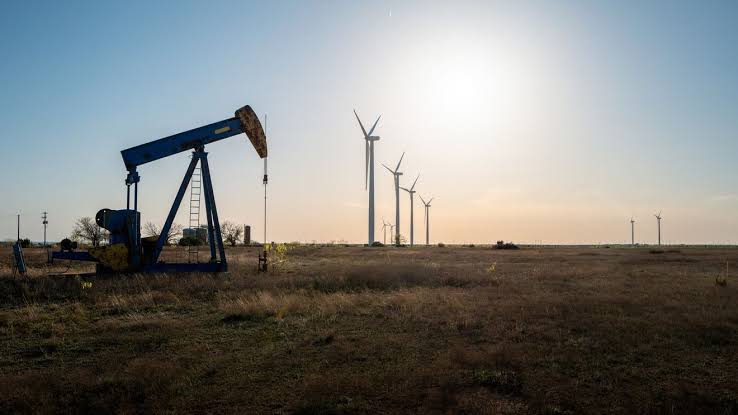
Oil, Coal, and Solar: The Three-Front Energy Mess Hitting Republicans Before the Midterms
Gas prices are climbing because of a war nobody can quickly end. A federal court just gutted the administration’s favorite tool for propping up coal. And in deep-red Georgia, of all places, solar jobs are turning Republican skeptics into believers. Three different fronts. One very bad month for the GOP’s energy story.
Oil just broke $100 again.
Wednesday. First time since July. Brent crude settled at $101.21 a barrel, WTI right behind it at $96.05, after the U.S. and Iran traded fresh strikes on tankers and oil infrastructure across the Gulf. Goldman Sachs is now floating $120 as the next stop if the shipping attacks keep escalating. That’s not a market blip. That’s a war showing up on every gas pump in the country.
And here’s the problem for the White House: there isn’t a lot they can actually do about it. Strategic reserves help at the margins. Diplomacy takes time the market won’t wait for. Domestic production doesn’t turn on a dime. One official put it to reporters about as bluntly as an official ever does, admitting there’s not too much they can do about it right now. That’s not spin. That’s just true.
The Politics of a Price Nobody Controls
Here’s what makes this particularly rough timing. Republicans have spent two years hammering the previous administration over gas prices. Now they’re the ones in office when the number on the sign starts climbing again, and this time the cause is a war, not a policy choice they can easily walk back. Voters rarely draw a clean line between geopolitics and the party in power. They just see the price go up on someone’s watch.
Six weeks out from the midterms. That’s the backdrop. And oil isn’t the only energy story working against the party right now.
Round Two: A Court Says No to the Coal Rescue
Friday brought a separate blow, this one self-inflicted rather than geopolitical. The U.S. Court of Appeals for the D.C. Circuit ruled against the Department of Energy’s emergency order forcing the J.H. Campbell coal plant in Michigan to keep running past its planned 2025 retirement. Three judges, all in agreement: there was no real emergency, and the department overstepped its authority using it as an excuse anyway.
The Case
A 64-year-old coal plant slated to retire in May 2025, kept open by an emergency order from Energy Secretary Chris Wright. Michigan, Illinois, and Minnesota sued. The D.C. Circuit sided with the states, ruling the department’s use of emergency powers unlawful.
This isn’t a one-off. Campbell is one of six coal plants, plus a Pennsylvania gas and oil facility, that the administration has ordered to keep running under the same emergency authority. Keeping Campbell open alone has already cost roughly two hundred fifty nine million dollars, a bill that lands on ratepayers, not the federal government. Multiply that across six plants and the number gets uncomfortable fast.
The administration isn’t backing down quietly. A Department of Energy spokesperson defended the orders as lifesavers, pointing to Winter Storm Fern last January, when Campbell reportedly ran above 650 megawatts for nearly two straight weeks during the worst of the cold. That’s a real argument, not a throwaway line. Keeping capacity online during an extreme weather event is a legitimate grid concern, and utilities do occasionally need emergency flexibility. The court’s answer wasn’t that emergencies never justify intervention. It was that this particular order failed to show one existed at the time it was issued, and that a long-planned, market-driven retirement isn’t the kind of crisis the statute was written to override.
Expect an appeal. The administration can ask for a full D.C. Circuit rehearing, or take it to the Supreme Court. But for now, the ruling puts a serious dent in the strategy of using emergency powers as a workaround for keeping coal alive past the point utilities themselves decided it made sense.
Meanwhile, In Cartersville, Solar Is Winning Anyway
Here’s the twist nobody saw coming three years ago. In Bartow County, Georgia, where three out of four voters backed Trump, local Republicans have become some of the loudest boosters of a nearly mile-long solar panel factory. Hanwha Qcells opened the plant in June. It employs close to two thousand people, and it’s the first facility in the country making every major component of a solar panel, ingots, wafers, cells, and modules, under one roof.
Trump has called solar “the scam of the century.” That line hasn’t traveled well to Cartersville. State Rep. Matthew Gambill, a Republican, has actively lobbied to keep federal solar subsidies and manufacturing bonuses in place, not because he’s had a change of heart on climate, but because those jobs are real, local, and popping up in his own district.
The Factory
Nearly 2,000 jobs. The only fully domestic solar panel supply chain in the country. Backed by tens of billions in announced investment nationally, and championed locally by Republican officials in one of the reddest counties in the state.
Tim Pawlenty, the former Republican governor of Minnesota now running the Solar Energy Industries Association, has been working conservative audiences hard on exactly this pitch: forget the climate framing, look at the paycheck. It’s working, at least locally. Nationally, the picture is messier. Tariffs have squeezed the polysilicon supply chain that these factories actually need, and Washington Republicans remain far cooler on solar than their counterparts running for reelection back home.
Why this contradiction matters: a party that’s simultaneously fighting to keep old coal plants online by court order and watching its own voters fall in love with solar jobs doesn’t have a coherent energy message. It has three different messages, aimed at three different audiences, that don’t obviously fit together. That’s a hard needle to thread six weeks before an election.
Three fronts. One party. No clean story.
Oil prices they can’t control, driven by a war they can’t quickly end. A legal strategy for coal that just took a direct hit in court. And a solar factory in the reddest county in Georgia making the administration’s own rhetoric look out of step with its own voters. None of these three stories is really about energy policy anymore. They’re about whether a party that built its identity on cheap gas and coal country loyalty can hold that identity together when the actual results on the ground keep pointing somewhere else.
Energy policy is shaping up to be one of the defining fault lines of this year’s midterms.
Follow more coverage in the Sustainable Action Now climate and energy section.