
From a Mayhew shelter in London to a Hope For Paws street rescue in Los Angeles to a FOUR PAWS sanctuary in the Netherlands, this week’s rescue roundup covers the full range of what it looks like when it goes right.
Second Chances, Forever Homes, and a Tiger Who Finally Made It
From a Mayhew shelter in London to a Hope For Paws street rescue in Los Angeles to a FOUR PAWS sanctuary in the Netherlands, this week’s rescue roundup covers the full range of what it looks like when it goes right.
Every week, the organizations that make up the Sustainable Action Now Rescue Network produce stories worth telling at full length. Not summaries, not captions, not the thirty-second version. The full version: who the animal was, where they came from, what they needed, and what happened. This week covers five stories across four organizations, on three continents, involving dogs, cats, a kitten named Calypso, and a tiger named Tajmir who lived through things that would have ended most lives. All of them, one way or another, made it.
Every Animal Deserves an Encore: PETA UK and Singer Sienna Spiro Visit Mayhew
PETA UK and singer Sienna Spiro visit Mayhew to meet dogs and cats waiting for their forever homes.
PETA UK and British singer Sienna Spiro visited Mayhew, one of London’s most respected and longest-running animal rescue and rehoming organizations, to spend time with the dogs and cats currently waiting for adoption and to encourage the public to consider giving a shelter animal the home they have been dreaming of. The visit produced exactly the kind of footage and personal testimony that moves the needle on adoption: not statistics, not policy arguments, but the specific animals. Named. Filmed. Waiting.
The framing that PETA UK brought to this visit, that every animal deserves an encore, is more than a catchphrase. It reflects something real about how shelter animals are often perceived: as animals with a complicated past, as animals that have been given up on, as animals whose story has already reached some kind of conclusion. None of that is accurate, and the visit to Mayhew was designed to demonstrate otherwise. Young animals, old animals, animals who came in anxious and are now completely relaxed in the company of the right person: every single one of them is in the middle of their story, not at the end of it. The right adopter is the next chapter.
Mayhew has been operating in London since 1886, making it one of the oldest continuously operating animal welfare organizations in the United Kingdom. Its rehoming program focuses on both dogs and cats, and its community outreach work extends to trap-neuter-return programs for feral cat colonies, veterinary support for animals owned by people experiencing financial hardship, and educational programs designed to improve the welfare of animals across the communities it serves. When PETA UK and Sienna Spiro walked through its doors for this visit, they were entering an institution that has been doing this work for nearly 140 years and that represents, in its daily operations, exactly the kind of sustained, community-rooted animal welfare infrastructure that keeps shelter populations moving rather than stagnating.
Is Your Next Best Friend Waiting at a Shelter?
Young or old, anxious or confident, every animal in a shelter has a story that isn’t finished yet. If you’re in the UK, Mayhew is the place to start. If you’re anywhere else, your local shelter has the same animals with the same potential waiting for exactly the same thing.
Visit Mayhew Explore the SAN Rescue NetworkThe Gentle Snare: How Hope For Paws Catches Animals Without Causing Fear
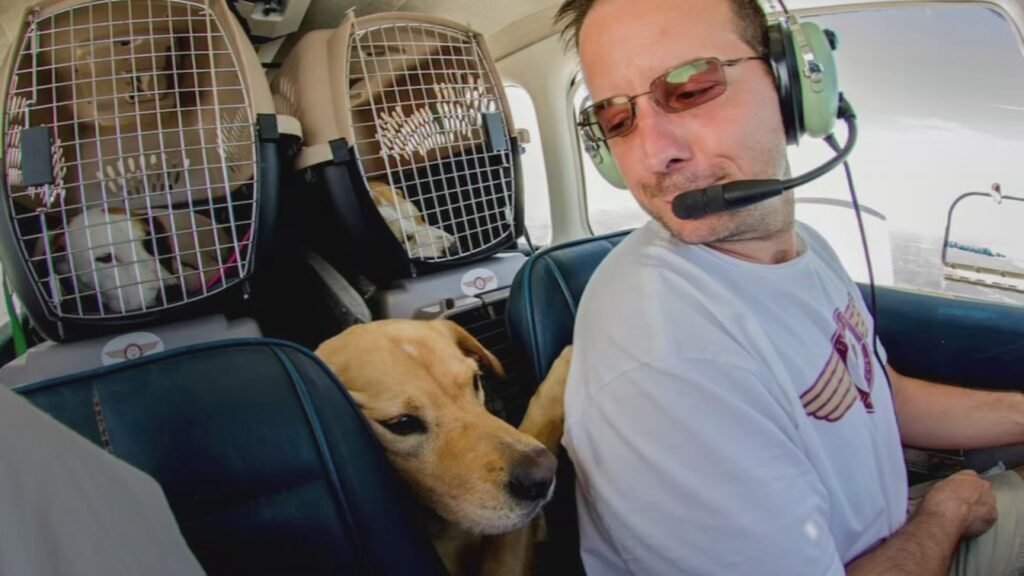
The Gentle Snare in action: soft when possible, fast when necessary, always ending in a forever home.
The Gentle Snare is one of the most important tools in the Hope For Paws field rescue kit, and the organization’s Part 2 video documenting its use is the kind of behind-the-scenes content that makes their channel genuinely educational rather than simply emotionally engaging. Most people who watch Hope For Paws rescue videos experience the outcome, the frightened dog who becomes calm, the cat who finally stops running, the animal who slowly learns that the person approaching them is not a threat. The Gentle Snare video shows the mechanism: how that transition happens, why it works, and what the person on the other end of it is actually doing and thinking in real time.
The snare is soft and lightweight, designed to loop around an animal’s neck with minimal pressure and maximum control, allowing a rescuer to secure an animal that cannot yet be touched directly without causing the kind of explosive panic response that traditional capture methods often trigger. The technique requires reading the animal’s body language continuously, adjusting pace and approach based on what the animal is communicating, and understanding when to slow down and when to move fast. Hope For Paws founder Eldad Hagar has refined this approach across more than 18 years of street rescues in Los Angeles, and the videos he produces documenting it have made it available as a resource to rescue workers around the world who are navigating the same situations with the same kinds of animals.
Why the Gentle Snare Matters for Animal Welfare
Animals rescued from the street often arrive with behavioral profiles shaped by experiences that made humans unpredictable and threatening. A rescue experience that adds to that trauma profile rather than beginning to address it makes the subsequent rehabilitation work harder and the path to adoption longer. The Gentle Snare technique prioritizes the animal’s psychological experience of the rescue as well as its physical safety, because the way an animal is caught is the first data point it collects about whether humans can be trusted, and that data point matters for everything that follows.
The temperatures across Los Angeles this week are high, and Hope For Paws has noted that the heat intensifies the urgency of getting street animals into care. Heat stress in dogs and cats can become life-threatening within hours, and animals on the street have no reliable access to shade, water, or the kind of monitoring that would identify early signs of heat-related distress before it becomes a medical emergency. Every rescue that happens this week, in elevated temperatures, with the Gentle Snare or any other tool, represents an intervention that the heat-related mortality statistics make genuinely time-sensitive.
Happy International Cat Day: Meet Calypso, 14 Weeks Old and Looking for Her Person
Calypso, 14 weeks old, making her Hope For Paws debut on International Cat Day.
International Cat Day arrived this week with a Hope For Paws introduction that is hard to watch without immediately wanting to know how to apply to adopt: Calypso, a 14-week-old kitten, made her debut on the organization’s social channels with a video that captures exactly what makes young kittens at the adoptable stage such extraordinary candidates for the right home. She is 14 weeks old, which places her at the beginning of the window when kittens who have received adequate early socialization are most ready to form lasting bonds with humans, and she is clearly a kitten who has been well cared for in her early weeks. The video is short. The need is real. And the application link is live.
International Cat Day falls on August 8 each year, established by the International Fund for Animal Welfare in 2002 as a day to recognize and celebrate the animals that share more human homes than any other pet species worldwide. In the United States alone, approximately 46 million households include at least one cat. Despite that scale of human-cat relationship, millions of cats and kittens move through the shelter system annually, and the gap between the number of cats available for adoption and the number of people actively seeking to adopt one is not closed by the cats’ popularity as pets in the abstract. It is closed by specific people making specific decisions about specific animals, ideally decisions made with a clear picture of what they are actually getting into and a genuine commitment to the lifetime of care that a cat’s 15 to 20 year potential lifespan requires.
Calypso Is Waiting for Her Forever Home
She is 14 weeks old, she is adorable, and the adoption application is open right now. If you are in the Los Angeles area and have been considering adding a cat to your life, today is an excellent day to look at this specific kitten.
Apply to Adopt CalypsoThis International Cat Day also carries a personal significance for Hope For Paws’ Eldad Hagar, who is marking the fourth anniversary of Cat Cafe Maui and Maui Cat Rescue. In January of 2022, he sat down with founder Moriah to think through what a sustainable cat welfare infrastructure in Hawaii might look like. Eight months later, she had built it. Hundreds of cats have been adopted through the organization since it opened. The Cat Cafe Maui model, which combines a social gathering space with a cat adoption center in ways that make the experience of meeting adoptable cats genuinely pleasant and low-pressure for potential adopters, is one of the more creative solutions to the challenge of increasing adoption rates for cats in particular, which tend to be adopted at lower rates than dogs despite representing a larger share of shelter populations.
International Homeless Animals Day: The Dogs Abandoned Every Single Day
International Homeless Animals Day: the dogs who wouldn’t have a chance without the community behind Hope For Paws.
International Homeless Animals Day, observed on the third Saturday of August each year, is not a soft awareness occasion. It was created by the International Society for Animal Rights in 1992 with a specific purpose: to use the visibility of a designated observance day to apply concrete pressure on the systems that produce animal homelessness in the first place, including the commercial breeding industry, the lack of mandatory spay and neuter programs in most jurisdictions, and the inadequacy of animal welfare funding in the municipalities most severely affected by homeless animal populations. Three decades later, the scale of the problem has not been resolved, though the tools available to address it have improved substantially.
Hope For Paws’ observation of this day focuses on the specific animals, the dogs who were abandoned and who would not have any realistic path to survival without the intervention of a rescue organization funded by a community of supporters. The video Eldad Hagar shared for this occasion does not soften that reality. These are dogs who were discarded. Not lost, not stray in the random sense of having wandered from a home that missed them. Discarded. Left on the street, in conditions that their biology and their early lives with humans left them entirely unprepared for. The Hope For Paws support community is what stands between those animals and the two-year average lifespan that street life produces.
If you are not yet a Hope For Paws member or recurring donor, International Homeless Animals Day is one of the most meaningful moments in the calendar to become one. The organization’s field rescue operations in Los Angeles run on the continuous support of a global community of small donors, and membership provides the predictable revenue base that allows Eldad and his team to respond to calls as they come in rather than rationing responses to the funding available at any given moment. The difference between a dog who gets rescued this week and a dog who doesn’t is often not the severity of the situation. It is the presence or absence of the organizational capacity to respond.
Then vs. Now: Tiger Tajmir Arrived at FELIDA. Watch What He’s Become.
Tajmir, then and now: from a victim of the wildlife trade in Czechia to a thriving resident of FELIDA Big Cat Sanctuary.
FOUR PAWS’s “Then vs. Now” video format is one of the most honest and effective things any animal welfare organization does in its communications work: it refuses to let the story end at the rescue, because the rescue is not the story. The recovery is the story. And in Tajmir’s case, the recovery is something worth watching in full because what the “then” and the “now” of this tiger reveal about what FELIDA Big Cat Sanctuary actually does for the animals in its care is genuinely remarkable.
Tajmir was rescued from harsh conditions in Czechia, where he had been a victim of the illegal wildlife trade that has made Central and Eastern Europe a significant transit and holding region for exotic animals bought, sold, and kept in conditions that bear no resemblance to the needs of the species being confined. He spent time in a Czech zoo receiving initial care while FOUR PAWS coordinated the long-distance logistics of his permanent placement, including transport across Europe in what the organization refers to as a Big Cat Ambulance, a specially equipped vehicle designed to make long-distance transport of large wild cats as low-stress as possible while maintaining safety for both the animal and the transport team.
A victim of the illegal wildlife trade in Czechia. Harsh conditions. No appropriate space. No species-appropriate enrichment. No future that reflected what a tiger’s life should be.
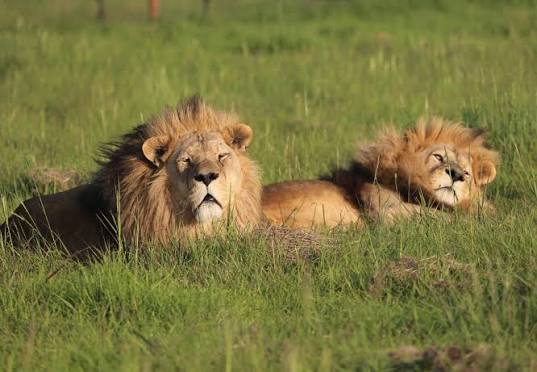
A permanent resident of FELIDA Big Cat Sanctuary in the Netherlands. Exploring. Playing. Thriving. Living the life that every big cat deserves and that the illegal wildlife trade would have permanently denied him.
FELIDA Big Cat Sanctuary in Nijeberkoop, in the Netherlands, is FOUR PAWS’s specialist intake and rehabilitation facility for big cats rescued from exploitation across Europe and beyond. It is designed specifically for the intensive, individualized care of traumatized animals, with enclosures and enrichment systems calibrated to the specific species and behavioral needs of each resident, and with a staff whose approach centers on building genuine trust with animals who have every reason not to extend it. Tajmir arrived at FELIDA carrying the full weight of what his early life had been. What the “Now” footage shows is an animal who has begun to set that weight down. He is exploring. He is playing. He is doing the things that tigers do when they feel safe enough to do them, and watching it happen in real time in the video is one of the clearest illustrations available of what good sanctuary care actually produces.
The Illegal Wildlife Trade and the Tiger Population Crisis
Tigers are among the most heavily trafficked wild animals on earth. The global captive tiger population, held in private homes, commercial facilities, roadside attractions, and breeding operations across multiple countries, is estimated to rival or exceed the number of tigers remaining in the wild. Central and Eastern Europe have been identified as significant regions for the private keeping and commercial trafficking of tigers and other big cats, partly because regulatory frameworks have historically been weaker than in Western Europe and partly because the underground market for exotic pets and wildlife products maintains active demand that those frameworks have been insufficient to eliminate. Tajmir is one animal who made it out of that system to a place designed around his actual needs. The system that produced his situation is still operating.