

Supreme Court · Climate Liability
If the Supreme Court Ties on Boulder, Here Is What Actually Happens to Big Oil’s Climate Cases
With Justice Samuel Alito sitting out, eight justices heard the most consequential climate liability argument in years. A 4-4 split is a real possibility, and it would do far less, and far more, than most headlines suggest.
Eight justices. One empty chair. A very large question.
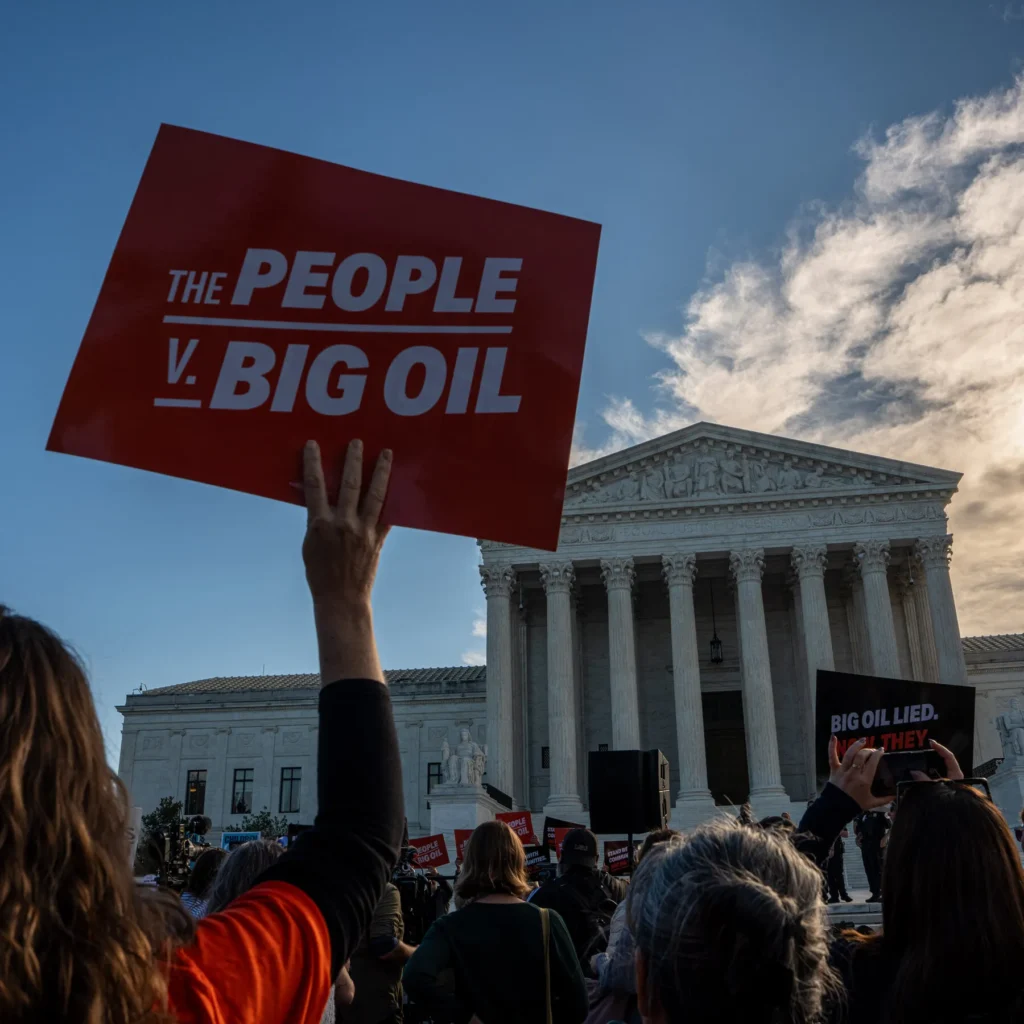
When the Supreme Court heard arguments on October 5 in Suncor Energy v. Boulder County, the bench was short one member. Justice Alito took no part, and the Court has not said why. That leaves the possibility, however modest, that the justices could divide evenly on a case that oil and gas producers and climate plaintiffs have been watching for years.
The case began in 2018, when Boulder County and the City of Boulder sued Suncor Energy and ExxonMobil in Colorado state court. They argued that the companies knew their products were warming the planet and that local governments are now paying for it. The claims rest on nuisance, trespass, unjust enrichment and civil conspiracy. The companies answered that climate change is a national and international matter that federal law, not a county courthouse, must govern. The Colorado Supreme Court sided with Boulder by a vote of 5 to 2, and the Justice Department has backed the companies at the nation’s highest court.
What a Tie Would Actually Do
An evenly divided Supreme Court does not split the baby. It affirms the judgment of the court below, and it does so without an opinion and without setting a national rule. In practical terms, a 4-4 result would leave the Colorado Supreme Court’s decision standing, and Boulder’s lawsuit would move back toward the trial court. It would not be a ruling that fossil fuel companies are liable. It would only mean the case is allowed to continue, still facing the usual procedural fights ahead.
Just as important is what a tie would not do. It would bind no other state and create no precedent. Courts in other places would be free to rule however they see fit, which is why industry lawyers have long wanted a definitive national answer and why many climate plaintiffs might quietly accept a split result as a partial win.
A tie settles who goes to trial. It settles nothing about who is right.
Why the Other Lawsuits Are Watching
Boulder is not alone. Cities, counties and states around the country have filed similar suits, and judges have reached conflicting conclusions about whether such claims belong in state court at all. In New Jersey, an appeal in the state’s own climate case was paused in March while the justices weighed Boulder. The outcome in Washington could therefore ripple through courtrooms far from Colorado, particularly if the Court writes a broad opinion on whether federal law pushes these claims out of state hands.
That is the central reason a tie would feel unsatisfying to both camps. The patchwork of state rulings would persist, and the question the industry most wants answered would stay open for another day and another case.
The Bench at Argument
Reading justices from oral argument is a risky business, and the arrangement below is a rough sketch drawn from press coverage of the session, not a vote count. Several justices asked pointed questions in both directions.
Illustrative only. Placement reflects reported tone at argument, not any announced position.
Questions on jurisdiction came early. Justice Thomas and Justice Sotomayor both probed whether the Court should be deciding the case at all at this stage, a thread that traces back to the question the justices added when they agreed to hear it in February. Justice Jackson suggested the whole exercise might be premature. Justice Kavanaugh spoke of a wall of precedent standing in Boulder’s way, while Justice Barrett and Justice Gorsuch turned to the kind of remedy a court could realistically order. Justice Kagan drew a comparison to tobacco litigation, then turned around and pressed Boulder on whether it was seeking regulation through the back door.
The honest reading is that the argument produced mixed signals. Plenty of observers expected a clear lean, and instead found a bench still working through what it is willing to decide.
Three Ways This Ends
A 4-4 tie
The Colorado ruling is affirmed without an opinion. Boulder heads toward trial, and no national rule is set.
Dismissal on jurisdiction
The Court concludes it should not have taken the case. The Colorado decision stands, and the larger question waits for another vehicle.
A ruling on the merits
A majority decides whether federal law blocks these state claims. That would settle the matter for lawsuits nationwide, in one direction or the other.
The Recusal Nobody Has Explained
A letter from the Court’s clerk, dated September 28, said Justice Alito would take no part but gave no reason. A watchdog group raised concerns about his financial holdings in May, and a Court spokeswoman had earlier addressed the issue. Reports have noted that ConocoPhillips and Phillips 66 are among the energy-related holdings in question, though neither company is a party to this case. The Court has not tied the recusal to any specific investment.
How We Got Here
- 2018Boulder County and the City of Boulder file suit against Suncor and ExxonMobil.
- May 2025The Colorado Supreme Court allows the case to proceed, 5 to 2.
- August 2025The companies petition the U.S. Supreme Court.
- February 23, 2026The Court grants review and adds a question about its own jurisdiction.
- September 28, 2026The clerk announces Justice Alito’s recusal.
- October 5, 2026Oral argument is held with eight justices.
A decision is expected by the end of the term, likely next spring or early summer. Until then, the lawyers on both sides will be doing the same thing the rest of us are, counting to four and trying to work out what it would mean.