

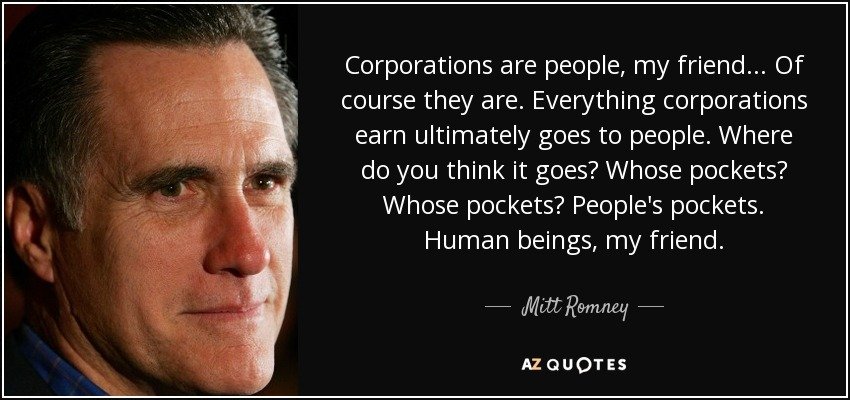
“Corporations are people,
my friend.”
A look at how corporate personhood was built — from the 14th Amendment to Citizens United — and the documentary that first put the whole system on trial.
The Corporation (2003)
Directed by Mark Achbar and Jennifer Abbott, based on Joel Bakan’s book The Corporation: The Pathological Pursuit of Profit and Power.
The film traces how corporate power grew into its modern form, drawing on interviews with executives, activists and scholars to examine what happens when profit motives outrun social responsibility. Its central argument runs through a single legal idea: corporate personhood, the doctrine that treats a corporation as a “person” entitled to many of the same legal rights as an individual.
Rather than treating that idea as neutral, the film traces its consequences — environmental harm, labor exploitation, and outsized political influence — and argues that voluntary corporate social responsibility can’t fix a structural problem. Its case for reform rests on real accountability and democratic oversight, not self-regulation.
The legal history of corporate personhood
Three moments, over more than a century, built the doctrine the documentary puts on trial.
U.S. Constitution
Life, Liberty, or Property (and Profits)
Ratified to guarantee due process and equal protection under the law, the 14th Amendment was written to address the injustices faced by formerly enslaved people and other marginalized groups. Its text never mentions corporations.

Southern Pacific Railroad
The turn toward corporate personhood
Corporate lawyers began arguing that corporations qualified as “persons” under the 14th Amendment. The Supreme Court’s ruling in Santa Clara County v. Southern Pacific Railroad Company held that corporations were entitled to equal protection under the law — the foundation everything since has built on.

Federal Election Commission
Unlimited political spending
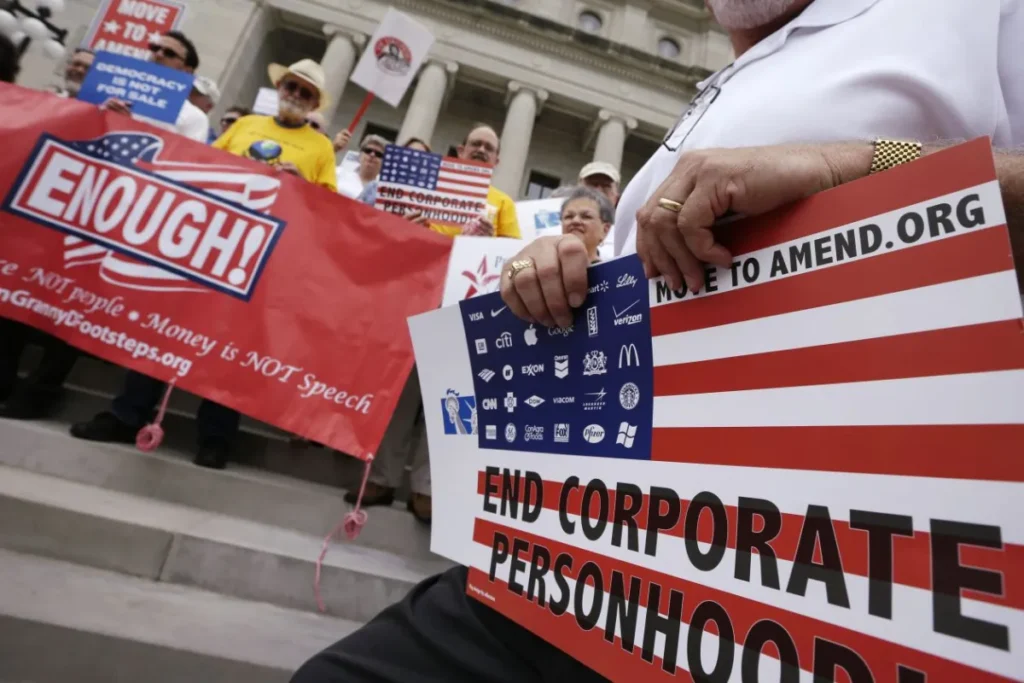
The Supreme Court held that corporations have a First Amendment right to engage in political speech, including unlimited spending on political campaigns. It’s the decision that most entrenched corporate personhood in modern politics — and the one most cited in debates over money’s influence on democracy.
What the 14th actually says
“…nor shall any State deprive any person of life, liberty, or property, without due process of law; nor deny to any person within its jurisdiction the equal protection of the laws.”
What critics and defenders argue
“Corporations are people, my friend.”Willard “Mitt” Romney, 2012 campaign
Let’s create together
Understanding how corporate power was built is the first step toward holding it accountable. Explore the rest of our causes to see where the work continues.
See all causes →