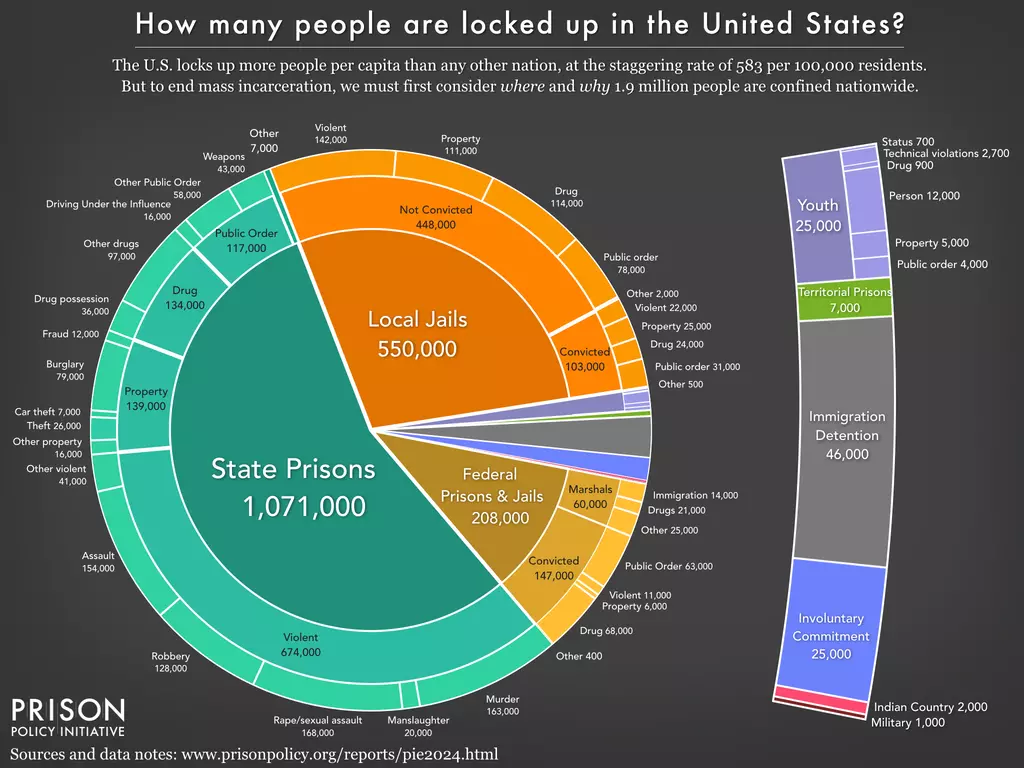

In the public imagination, jail is often associated with serious crimes, violent offenses, or lengthy trials. The reality of the American justice system is far more mundane—and far more troubling. A staggering number of people are jailed not because they have been convicted of a crime, but because they failed to show up for a court date. This administrative failure, commonly labeled “Failure to Appear,” has quietly become one of the most significant drivers of incarceration in the United States, adding millions of unnecessary jail nights every single year.
According to a January 2026 analysis by the Prison Policy Initiative, missed court appearances account for approximately 19 million additional nights in jail annually for people who are legally presumed innocent. These are not isolated cases of willful evasion. They are the predictable outcome of a system that criminalizes poverty, instability, and confusion—while profiting from human confinement.
To better understand how this crisis connects to incarceration policy and private detention systems, visit Sustainable Action Now’s in-depth coverage on private prisons.
Failure to Appear: A Paperwork Problem With Prison Consequences
Court appearances are routine for attorneys, prosecutors, witnesses, and judges. Schedules change. Conflicts arise. Delays are common. For people accused of crimes—especially those without legal representation—missing a court date is treated not as a logistical failure, but as a criminal act.
“Failure to Appear” (FTA) charges are often triggered by circumstances entirely unrelated to public safety, including:
- Lack of reliable transportation
- Inability to take time off work without losing wages or employment
- Childcare responsibilities
- Housing instability or homelessness
- Missed mail, incorrect addresses, or confusing court notices
- Language barriers or lack of legal guidance
Despite this, courts frequently respond by issuing arrest warrants. Once arrested, individuals may be held in jail for days or weeks—sometimes longer—before a new hearing is scheduled. The result is mass incarceration by default, not by conviction.
Nineteen Million Nights: The Scale of the Problem
The Prison Policy Initiative’s findings make clear that FTAs are not a marginal issue. They are a systemic one. An estimated 19 million jail nights every year are directly linked to missed court dates. This figure alone rivals the incarceration impact of many serious offenses combined.
Each night in jail carries cascading consequences:
- Lost income or permanent job loss
- Eviction or housing insecurity
- Family disruption, including loss of custody
- Deterioration of physical and mental health
- Increased likelihood of future incarceration
These outcomes disproportionately affect low-income individuals and communities of color, reinforcing cycles of poverty and criminalization that the justice system claims to address.
Who Benefits From Missed Court Dates?
While individuals and families absorb the cost of unnecessary detention, other entities benefit—most notably the incarceration industry itself. Every additional jail stay means more filled beds, more funding justification, and more contracts flowing to private prison operators and detention service providers.
Local governments often outsource jail operations or rely on private facilities to manage overcrowding. In these systems, high detention rates are not a failure—they are a revenue stream. Missed court dates become a quiet but reliable pipeline feeding jails with people who pose no threat to public safety.
This dynamic creates a perverse incentive structure: there is little institutional urgency to reduce FTAs when detention itself is profitable.
The Presumption of Innocence, Undermined
Perhaps the most alarming aspect of this issue is how thoroughly it erodes the presumption of innocence. People jailed for missing court dates have not been convicted. Many have not even had their cases heard. Yet they experience punishment—loss of freedom, income, and stability—before any determination of guilt.
In effect, the system treats administrative failure as moral failure. It replaces flexibility with force, and support with surveillance.
Simple, evidence-based alternatives exist. Court reminder systems, transportation assistance, flexible scheduling, and community-based support programs have all been shown to dramatically reduce missed court appearances. Yet these solutions remain underused because incarceration remains the default response.
A System Designed to Catch, Not to Help
The prevalence of jail stays tied to missed court dates exposes a deeper truth about the U.S. criminal legal system: it is designed to catch people when they fall, not to help them stand. Complexity, opacity, and rigid procedures ensure that failure is common—and punishment is swift.
When nearly 19 million jail nights stem from missed appointments, the issue is not individual irresponsibility. It is systemic dysfunction.
Reforming this aspect of the justice system would not require sweeping new laws or massive infrastructure investments. It would require a shift in priorities: from punishment to participation, from profit to fairness.
Why This Matters for Criminal Justice Reform
Reducing incarceration driven by missed court dates is one of the most immediate and achievable ways to shrink jail populations, cut public spending, and limit the reach of private prisons. It is also one of the clearest moral imperatives. No one should lose their freedom because they missed a piece of mail or could not afford a bus ride.
Sustainable Action Now will continue to examine how procedural traps like “Failure to Appear” quietly sustain mass incarceration and private detention systems. Addressing these issues is essential to building a justice system that is humane, rational, and genuinely focused on public safety.
For continued reporting and resources on incarceration policy and private prisons, visit https://sustainableactionnow.org/private-prisons/.
The question is no longer how many people miss court dates. The real question is why the system is designed to jail them when they do.