

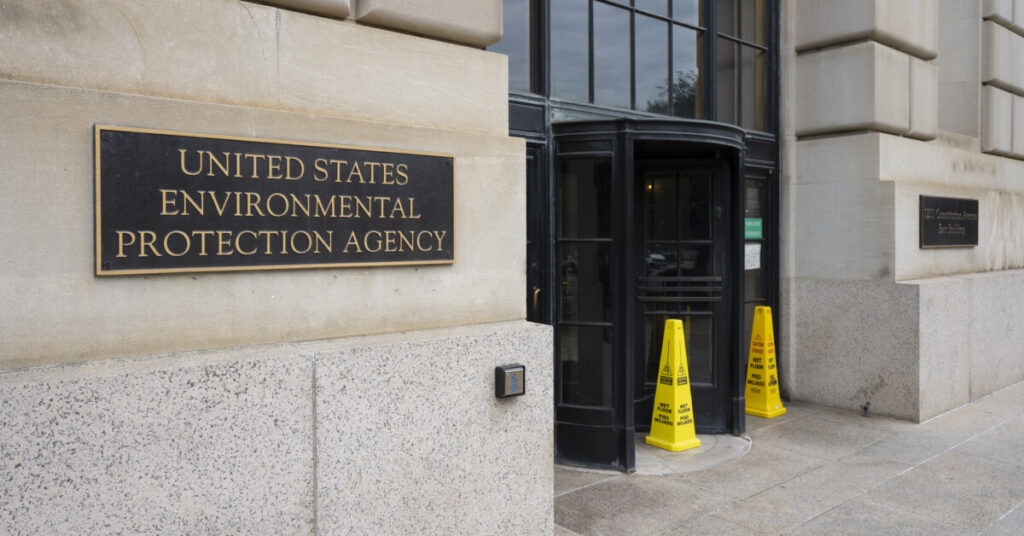
The early months of 2026 have seen dramatic shifts and intensifying controversy in United States climate and energy policy. From courts rebuking the Trump administration’s attempts to block offshore wind energy projects to sweeping executive actions withdrawing the U.S. from global climate frameworks, these developments underscore how climate strategy is being contested across legal, political, and economic arenas. This analysis dissects the most consequential actions, legislative movements, judicial rulings, and geopolitical energy maneuvers shaping national climate outcomes today.
For in‑depth resources on climate science, policy implications, and community action, visit Sustainable Action Now’s climate section: https://sustainableactionnow.org/category/climate/.
Offshore Wind: Judicial Pushback Against Federal Halts
President Trump’s administration has mounted an aggressive campaign against the deployment of large‑scale offshore wind projects on the East Coast, asserting national security concerns tied to radar interference and military readiness. In December 2025, the U.S. Department of the Interior suspended leases on five major offshore installations—including Empire Wind off New York, Revolution Wind off Rhode Island and Connecticut, Sunrise Wind, Vineyard Wind in Massachusetts, and the Coastal Virginia Offshore Wind project—on the basis of these concerns. However, the administration did not disclose specific evidence to substantiate the risk claims.
In response, multiple federal courts have delivered setbacks to the administration’s actions:
- Revolution Wind was granted a preliminary injunction allowing construction to resume after a federal judge ruled the stop‑work order was arbitrary, lacked clear justification, and threatened the financial and operational viability of the near‑completed project.
- Empire Wind received a similar ruling in mid‑January 2026, with U.S. District Judge Carl Nichols lifting a suspension order and permitting construction to proceed while litigation continues.
- The Coastal Virginia Offshore Wind project also won a court decision allowing work to move forward, marking the third such legal victory this week for offshore wind developers.
These judicial decisions collectively underscore that, despite the administration’s policy direction, federal courts have found insufficient administrative basis to block these renewable energy developments. They highlight an ongoing tension between executive climate policy and established legal standards for administrative action.
The broader implication of these rulings is significant. Offshore wind projects are poised to contribute gigawatts of clean power to regional grids in the Northeast and Mid‑Atlantic, supporting climate goals and energy diversification. Their continued development will influence local job creation, supply chain scaling, and grid resilience as fossil fuel dependence persists.
Legislative Activity: Energy Policy and National Security
In parallel with executive and judicial activity, Congress has been active on multiple fronts related to energy infrastructure and climate‑adjacent policy:
- The Commerce, Justice, Science; Energy and Water Development; and Interior and Environment Appropriations Act, 2026 (H.R. 6938) has passed the Senate, continuing funding for major federal agencies with implications for climate research, energy deployment, and environmental protection. The bill’s passage reflects ongoing legislative engagement with the federal budget priorities underlying energy and environmental governance.
- The Breaking the Gridlock Act (H.R. 1834) passed the House, signaling congressional intent to address structural constraints in energy markets. This measure aims to streamline permitting and siting processes that affect everything from renewable infrastructure to traditional power generation.
- In geopolitical‑linked legislation, S.J. Res. 98, a joint resolution directing the removal of U.S. Armed Forces from unauthorized hostilities in or against Venezuela, passed the Senate, illustrating how national security considerations intersect with energy diplomacy and foreign policy.
However, not all resolutions have succeeded. For example, S.J. Res. 86, seeking congressional disapproval of an EPA regional haze rule for South Dakota, failed in the Senate, indicating limits to legislative efforts to roll back certain environmental protections.
Congressional action continues to reflect a complex balance between competing priorities: energy affordability, national security, environmental stewardship, and market regulation.
International Climate Engagement: Withdrawal From UN Framework Convention
In one of the most consequential actions affecting global climate cooperation, President Trump’s administration has initiated the withdrawal of the United States from the United Nations Framework Convention on Climate Change (UNFCCC)—the foundational treaty underpinning nearly all international climate agreements, including the Paris Agreement. This move follows earlier withdrawals from the Paris Agreement itself and from various climate science and multilateral institutions that support emissions reporting and global coordination.
The UNFCCC, ratified by the U.S. Senate in 1992, established the framework for international dialogue, reporting, and policy coordination to curb greenhouse gas emissions and limit global warming. Its abandonment marks a dramatic departure from decades of bipartisan U.S. engagement in global climate governance.
Climate scientists, environmental advocates, and international partners have criticized the withdrawal as undermining collective efforts to address global warming, weakening the U.S. voice in shaping climate solutions, and potentially eroding domestic momentum for emissions reductions. Civil society groups have called the decision “short‑sighted” and a strategic error given the accelerating impacts of climate change.
This withdrawal also shifts the United States into a unique position globally. Once a leader in climate diplomacy, the U.S. is now isolated from mainstream climate negotiations and scientific forums essential to tracking, planning, and implementing evidence‑based climate policy.
Energy Markets and Electricity Prices: Federal Intervention
Beyond climate treaties and wind energy battles, the administration has taken steps aimed at addressing energy costs in the domestic electricity market. Recent policy moves include a federal bid to “tame electricity prices” in the Northeast—the region with some of the highest residential and commercial power costs in the United States. The initiative, coordinated with several state governors and federal agencies, seeks to catalyze increased electricity generation capacity and market reforms in part by engaging grid operators to hold long‑term auctions designed to spur new power plant development.
Critics of this approach note that such structural changes will require time to yield lower costs, particularly given the lead times for building generation assets and integrating them into complex regional grids.
Fossil Fuel Diplomacy and Geopolitical Energy Maneuvers
The administration’s stance on energy diplomacy has extended beyond domestic policy to global oil markets and geopolitical strategy. Senior energy industry executives have been courted with promises of expanded access to Venezuelan oil production should the regime fall, despite skepticism from major oil companies about committing the extensive capital required to rehabilitate Venezuela’s oil infrastructure. Many CEOs have expressed praise for certain Trump actions while refraining from concrete investment pledges.
Simultaneously, contradictions have emerged between political rhetoric and executive decisions. For example, President Trump reportedly expressed an inclination to keep ExxonMobil out of Venezuelan oil development contracts after an unsatisfactory response from the company’s leadership. This underscores the complex interplay of political signaling and market realities in energy geopolitics.
Analysis: Climate Policy, Innovation, and the Future
The current landscape of U.S. climate and energy policy illustrates a period of heightened conflict and realignment:
- Legal institutions are asserting checks on executive authority where actions appear inconsistent with statutory or procedural requirements, as seen in offshore wind litigation.
- Congress remains active in shaping energy and environmental finance, grid reform, and national security frameworks affecting climate outcomes.
- International engagement has diminished markedly, with withdrawal from longstanding climate institutions undermining U.S. leadership and potentially impairing global cooperation.
- Energy markets are at the nexus of policy goals that often compete—balancing prices, reliability, environmental impact, and technological transition.
These policy dynamics will resonate far beyond immediate elections or legislative sessions. They will influence investment decisions, clean energy deployment timelines, climate resilience planning, and the United States’ reputation as a partner in global climate solutions.
To stay informed on climate science, policy implications, and community responses to these shifts, refer to the Sustainable Action Now climate resources: https://sustainableactionnow.org/category/climate/.