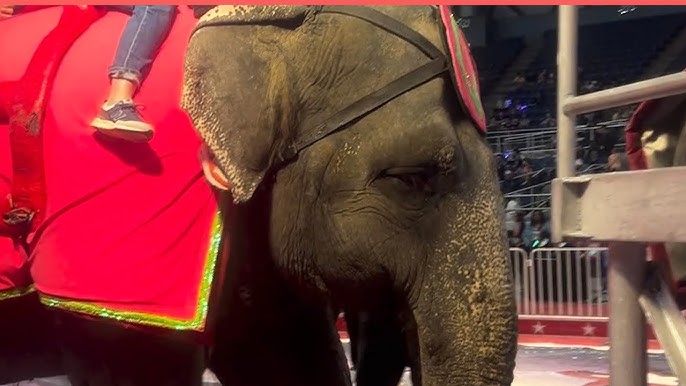
Seventeen years have passed, yet Betty the elephant continues to endure the same heartbreaking cycle of misery inside the Carden Circus. Witnesses report that she still sways compulsively—a repetitive, unnatural motion widely recognized by experts as a sign of deep psychological trauma. For an intelligent, social, emotionally complex animal like an elephant, this kind of stereotypic behavior is a silent scream, a physical echo of years spent in confinement, isolation, and control.
Elephants in traveling circuses are deprived of nearly everything that defines a natural life. Instead of roaming vast landscapes, forming family bonds, and engaging in behaviors essential to their mental health, they are confined to boxcars, small pens, and performance rings. Their lives are dictated by routines built around fear, punishment, and the relentless demands of entertainment. Betty’s swaying is not a quirk; it is a symptom—a living reminder of what captivity steals from wild animals.
Across the country, more people are learning the truth about circus treatment of elephants. Through investigations, whistleblower accounts, and eyewitness videos, the public can no longer ignore the toll that chains, bullhooks, forced travel, and dominance-based training take on these majestic beings. Organizations and advocates have been working tirelessly to expose these abuses and push for stronger protections. One essential resource in this movement is the ongoing documentation and reporting found in the Elephants section on Sustainable Action Now, where readers can track the latest updates, advocacy opportunities, and emerging legislation aimed at ending cruelty.
Betty’s situation is not unique—circus elephants across the nation endure many of the same hardships. But her story has become a rallying point, a powerful symbol of why wild animals should never be used as props for human amusement. Elephants experience family structures, grief, joy, memory, and emotional depth at levels similar to our own. To subject them to decades of confinement and coercion is not only scientifically indefensible—it is morally unconscionable.
Advocates, including major animal protection organizations such as PETA, continue to push for the retirement of elephants from circuses and the abolition of wild-animal acts altogether. Their mission is grounded in a simple principle: animals are not ours to exploit for entertainment, experimentation, food, fashion, or any other convenience. They deserve respect, compassion, and the freedom to live according to their nature—not a life of chains, transport crates, and performance schedules.
Supporters of elephant welfare are urging the public to take action, speak out, contact officials, and amplify Betty’s story. Even a single message or social-media post can contribute to the growing movement that has already led multiple states and countries to ban wild animal circus acts. When enough voices rise together, change happens—and Betty’s future, along with the futures of countless other elephants, depends on that collective outcry.
Circus cruelty does not belong in the modern world. As awareness grows and compassion strengthens, more people are standing firmly against the outdated idea that suffering can ever be considered entertainment. Betty has endured nearly two decades of hardship; she deserves a peaceful retirement in a sanctuary, not another season under the big top.
You can learn more about elephant protection efforts, global cases of abuse, and ongoing campaigns in the dedicated Elephants section of Sustainable Action Now. Use your voice, share the truth, demand humane legislation, and help ensure that Betty’s story becomes a catalyst for ending this injustice once and for all.