
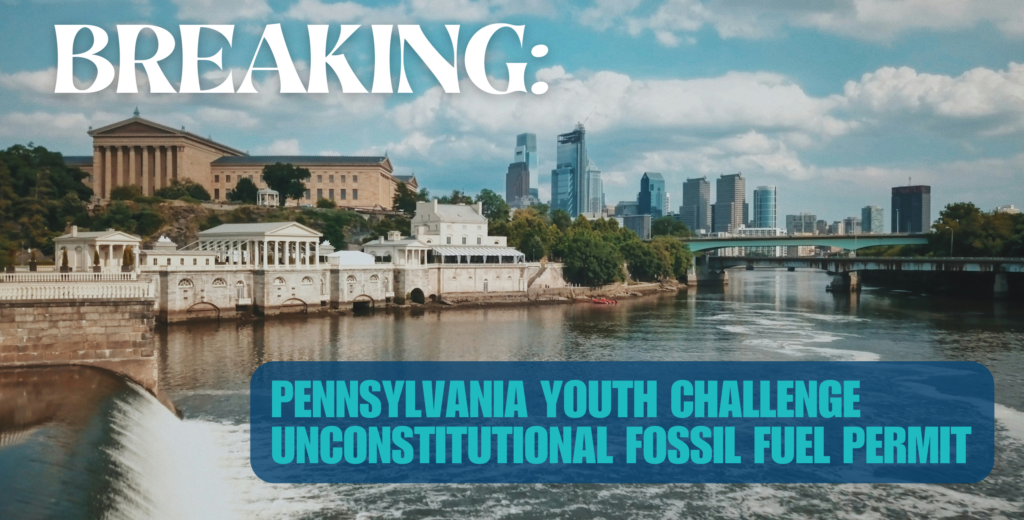
A group of thirteen young Pennsylvanians is stepping into the legal arena with a message that reaches far beyond their own communities. By filing a formal appeal against the Pennsylvania Department of Environmental Protection’s approval of the Homer City Redevelopment Project, these youth are asserting that their fundamental rights—to life, health, and safety—are being placed at risk by a decision that deepens the state’s reliance on fossil fuels at a moment when cleaner options are readily available.
The case, McIntosh v. Department of Environmental Protection, targets a permit that would transform the site of the former Homer City coal-fired power plant into what would become the largest gas-fired power facility in the United States. The proposed plant is designed not to meet broad public energy needs, but to supply power to a massive, roughly 3,200-acre data center complex. According to the youth appellants, this approval directly conflicts with Pennsylvania’s Environmental Rights Amendment, which enshrines the protection of public trust resources for present and future generations in the state constitution.
At the center of the challenge is the project’s projected climate impact. If constructed, the Homer City gas facility would emit more than 17.5 million tons of greenhouse gases every year. That level of pollution would exceed the annual emissions of some entire states and would drive a dramatic increase—more than 150 percent—in Pennsylvania’s commercial greenhouse gas output. For a single project, the scale is extraordinary, and for the young people bringing the appeal, it represents a decision that locks the Commonwealth into decades of avoidable climate harm.
The youth argue that the state’s approval reflects a troubling prioritization: advancing one large, fossil fuel–dependent development at the expense of public health, environmental stability, and the constitutional rights of its residents. They contend that this is not simply a policy disagreement, but a constitutional failure. Pennsylvania’s Environmental Rights Amendment establishes a duty for the government to conserve and maintain clean air, pure water, and natural resources as a public trust. Allowing a project of this magnitude to proceed, they say, undermines that obligation—particularly when the consequences will be borne most heavily by children and future generations.
Those consequences are not theoretical. Across Pennsylvania, young people are already living with the effects of a changing climate. Intensifying heatwaves, more frequent flooding, degraded air quality, and periods of drought are becoming increasingly common. Each additional ton of greenhouse gas pollution compounds these impacts. For children and teenagers who had no voice in the permitting decision, the result is a future shaped by risks they did not choose and cannot easily escape.
Through their appeal, the youth plaintiffs are asking the court to take two decisive actions: to vacate the Homer City permit and halt the project, and to reaffirm that Pennsylvania’s government must honor its constitutional responsibility to protect youth climate rights and safeguard public trust resources. Their position is that the state does not need to accept heightened pollution to meet its energy demands. Cleaner, more affordable alternatives exist, and choosing expanded fossil fuel infrastructure instead is a matter of policy preference—not necessity.
This legal challenge also reflects a broader movement of young people who are refusing to remain passive as decisions are made that will define the environmental conditions of their lives. By invoking constitutional protections, these Pennsylvanians are asserting that climate stability and environmental health are not optional considerations, but legal obligations owed to them by their state. Their action aligns with a growing recognition that youth voices are essential in shaping sustainable policy, particularly when long-term impacts are at stake.
The Homer City appeal stands as a reminder that the debate over energy development is no longer confined to economics or short-term growth. It is increasingly about rights, responsibility, and the moral imperative to protect those who will live longest with the outcomes of today’s choices. By taking this stand, these thirteen young people are insisting that Pennsylvania honor its duty to its children, its constitution, and its future.
Those who wish to support and learn more about young people advocating for climate justice and environmental protection can explore Sustainable Action Now’s work with our youth, which highlights how emerging leaders are shaping the fight for a safer, more sustainable world.