
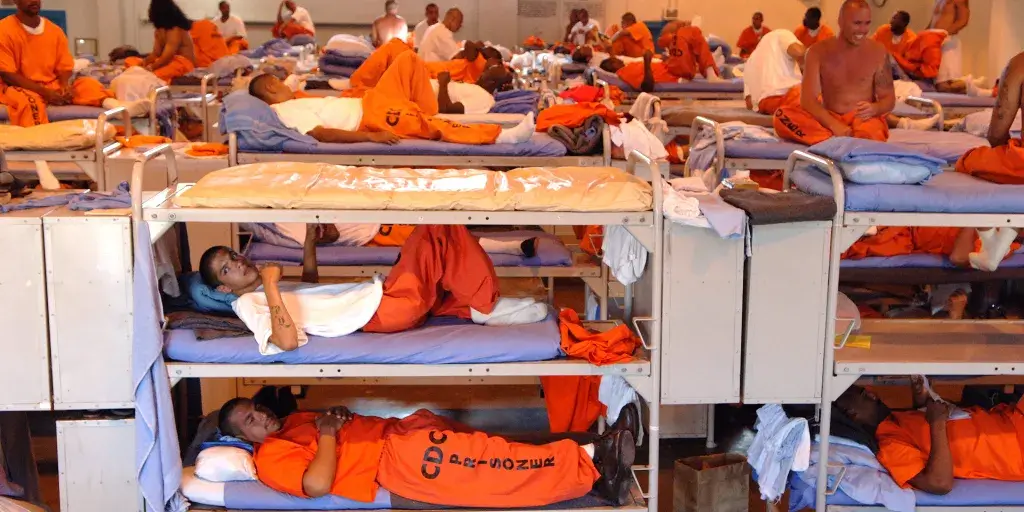
Across the United States, the conversation surrounding mass incarceration has evolved dramatically over the past decade. Policymakers, researchers, and advocacy organizations have increasingly examined the scale of incarceration in the country and the policies that drive it.
While many reforms have focused on reducing prison populations through changes to sentencing laws, bail reform, and diversion programs, a new development is reshaping the national picture.
Recent analysis of incarceration trends reveals that the overall number of people held in confinement across the United States has begun rising again—and much of that increase is tied to immigration enforcement and detention policies.
The findings have sparked renewed scrutiny of detention practices, the growth of immigration-related incarceration, and the expanding role of private prison operators within the immigration system.
For advocates working to reduce incarceration and reform the justice system, the data represents a critical moment to reassess how detention policies influence the broader landscape of imprisonment in America.
Understanding the Scale of Incarceration in the United States
The United States has long maintained one of the highest incarceration rates in the world.
For decades, criminal justice policies emphasizing lengthy sentences, strict drug laws, and mandatory minimum penalties contributed to the rapid expansion of prison populations.
By the early 2000s, millions of people were incarcerated in prisons, jails, immigration detention centers, and other correctional facilities across the country.
Over the past several years, reform initiatives began to slow that growth.
Changes to sentencing laws, expanded diversion programs, and broader public awareness about the costs of mass incarceration contributed to gradual declines in some prison populations.
However, the latest incarceration data suggests a new trend emerging within the system.
While some traditional prison populations have stabilized or declined, the number of individuals held in immigration detention facilities has increased significantly.
Immigration Enforcement and the Rising Detention Population
Immigration enforcement policies play a major role in determining how many individuals are held in detention centers while awaiting immigration hearings or deportation proceedings.
Recent enforcement initiatives have significantly expanded the use of detention as a tool within the immigration system.
As a result, detention facilities across the country have experienced increased populations.
The rise in immigration detention has had a measurable impact on the overall incarceration landscape.
In fact, recent data indicates that the growth in the number of people held in confinement over the past year is largely attributable to immigration enforcement operations.
This shift highlights a critical reality: when immigration detention increases, the national incarceration count rises with it—even if traditional prison populations remain steady.
For many policy experts, this dynamic raises important questions about how immigration enforcement intersects with broader criminal justice reform efforts.
The Overlap Between Immigration Detention and Private Prisons
One of the most controversial aspects of immigration detention involves the role of private prison companies.
Private prison operators manage a significant portion of the facilities used to detain immigrants in the United States.
These companies contract with government agencies to house individuals awaiting immigration proceedings.
Critics argue that this arrangement creates a troubling incentive structure.
Because private prison companies are paid based on the number of people held in their facilities, higher detention numbers can translate directly into increased revenue.
Advocacy groups have long questioned whether incarceration should ever function as a profit-generating enterprise.
They argue that public policy decisions affecting detention should be driven by fairness, safety, and legal necessity—not financial incentives.
The expansion of immigration detention has therefore become closely tied to the broader debate over private prisons.
What the Data Reveals About “New Mass Incarceration”
Recent research analyzing incarceration trends has introduced the concept of what some observers describe as “new mass incarceration.”
The term reflects a shift in the composition of incarceration rather than simply the total number of people imprisoned.
While traditional prison populations tied to criminal sentencing may be stabilizing or declining in some areas, immigration detention has become a growing driver of confinement.
This shift can significantly affect national incarceration totals.
When immigration enforcement expands, detention facilities quickly fill with individuals awaiting hearings or deportation decisions.
Unlike criminal sentencing, immigration detention is technically considered a civil process rather than a criminal punishment.
Yet the conditions of confinement can closely resemble those of prisons or jails.
Detainees may spend months or longer in secured facilities while their cases move through immigration courts.
The Human Impact of Detention Policies
Behind every statistic lies a human story.
Immigration detention centers house individuals from a wide range of backgrounds—people seeking asylum, long-term residents facing deportation proceedings, and individuals accused of violating immigration laws.
Many detainees have families, jobs, and community ties within the United States.
Detention can disrupt these connections in profound ways.
Individuals held in immigration detention may face challenges accessing legal representation, maintaining contact with family members, and navigating complex legal systems while confined.
Advocates for immigration reform argue that expanded detention policies can place additional strain on families and communities already navigating difficult legal circumstances.
The Financial Cost of Expanding Detention
Beyond the human impact, immigration detention also carries significant financial implications.
Operating detention facilities, providing staffing, and maintaining security infrastructure requires substantial government spending.
When private prison companies operate detention centers under government contracts, taxpayer funds are used to finance those operations.
Critics argue that expanding detention may divert resources from alternative approaches that could address immigration cases more efficiently and humanely.
Some policy experts suggest that community-based monitoring programs, case management systems, and alternatives to detention could allow immigration proceedings to move forward without requiring large-scale confinement.
Private Prisons and the Broader Policy Debate
The debate over private prisons extends beyond immigration detention.
Private correctional companies have historically operated facilities within both the criminal justice and immigration systems.
Advocates who oppose private prisons argue that incarceration should never be linked to corporate profit motives.
They contend that when companies benefit financially from detention, there may be less incentive to support policies that reduce incarceration rates.
In recent years, some government agencies have moved to limit or reconsider the use of private prison contracts.
However, immigration detention continues to represent one of the largest areas where private prison operators remain deeply involved.
As immigration enforcement policies evolve, the role of these companies remains a key focus of reform discussions.
A Turning Point for Criminal Justice Reform
The reemergence of rising incarceration numbers has prompted renewed debate about how the United States measures progress in criminal justice reform.
For many years, reform efforts focused primarily on reducing prison populations tied to criminal sentencing.
But the latest data highlights the importance of examining all forms of confinement—including immigration detention.
If incarceration totals increase due to expanded detention policies, the broader goal of reducing mass incarceration becomes more complex.
This realization is prompting policymakers and advocates to look more closely at how immigration enforcement fits within the larger justice system.
Rethinking the Future of Detention
Across the country, conversations about the future of incarceration are evolving.
Communities, researchers, and policymakers are increasingly asking whether detention is always necessary—or whether alternative systems could better serve both justice and public safety.
Some advocates argue that reducing reliance on detention could ease pressure on the overall incarceration system while still allowing immigration cases to proceed through the courts.
Others emphasize the importance of ensuring due process protections and humane treatment for individuals navigating immigration proceedings.
These discussions are likely to shape future policy debates about detention and incarceration in the years ahead.
Why the Data Matters
Incarceration trends often reveal deeper patterns within society.
They show how policy decisions, enforcement strategies, and legal frameworks influence the number of people living behind bars.
The latest analysis of detention and incarceration trends highlights a significant shift: immigration enforcement has become a central factor in determining how many individuals are confined within the United States.
Understanding this shift is essential for anyone engaged in discussions about criminal justice reform, immigration policy, and the role of private prisons.
A Moment for National Reflection
The United States is once again confronting questions about how its justice system should function in the decades ahead.
Should detention remain a central tool within immigration enforcement?
What role should private companies play in managing correctional facilities?
And how can policymakers ensure that reforms designed to reduce incarceration are not offset by expansion in other areas?
These questions have no simple answers.
But the data emerging from the latest incarceration reports makes one thing clear: the future of mass incarceration will be shaped not only by criminal sentencing policies but also by the evolving role of immigration detention.
As policymakers, advocates, and communities continue to debate these issues, the choices made today will determine whether the country moves toward a more balanced and humane approach to justice—or toward a new era of expanded confinement.