
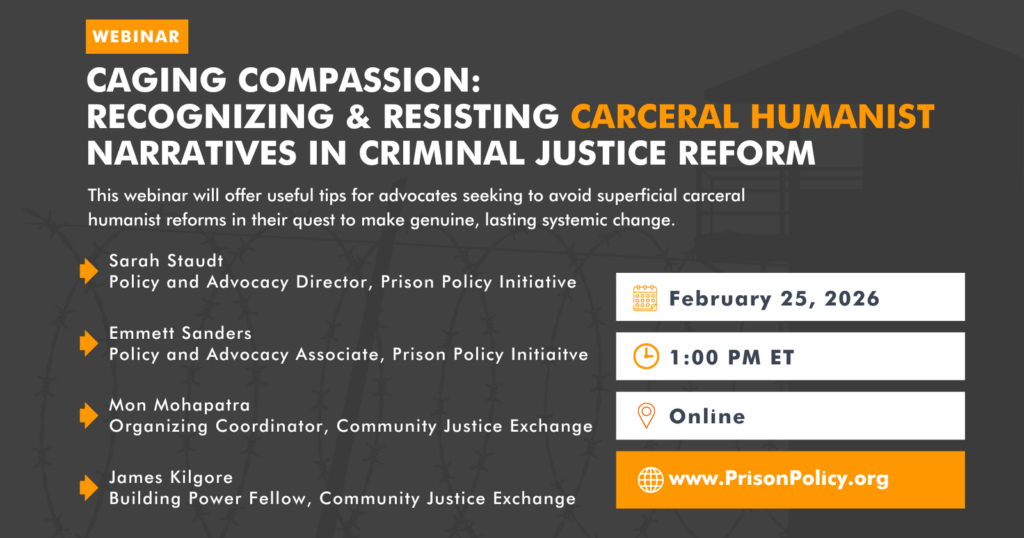
On February 25, 2026 at 1 p.m. EST, Sustainable Action Now urges advocates, policy leaders, researchers, and community organizers to attend a critical national webinar examining one of the most urgent and misunderstood dynamics in modern criminal justice reform:
How do we recognize and resist “carceral humanist” narratives that soften the language of incarceration without dismantling the systems that cause harm?
Hosted by the Prison Policy Initiative and featuring leading voices James Kilgore and Mon Mohapatra, this webinar is not simply another reform discussion. It is a strategic intervention into how the criminal legal system rebrands itself in moments of public scrutiny—particularly within the context of private prisons and profit-driven incarceration.
This event directly aligns with Sustainable Action Now’s ongoing coverage in our Private Prisons category, where we examine the structural incentives, corporate influence, and narrative strategies that perpetuate mass incarceration in the United States.
What Is “Carceral Humanism” — And Why Does It Matter?
The term “carceral humanism” refers to reforms that appear compassionate on the surface—using the language of rehabilitation, dignity, mental health, or improved conditions—while preserving the fundamental architecture of incarceration.
These reforms often:
- Repackage detention as “care”
- Reframe incarceration as “treatment”
- Expand electronic monitoring under the guise of alternatives
- Shift facilities from punitive branding to therapeutic aesthetics
- Increase funding for supervision systems without reducing incarceration rates
The result? The system evolves—but remains intact.
In the private prison landscape, this shift is particularly consequential. As public criticism of for-profit incarceration intensifies, corporate operators adapt messaging. The emphasis moves from punishment to “programming.” From incarceration to “services.” From cages to “community-based supervision.”
Yet surveillance expands. Control persists. Contracts endure.
Understanding this rhetorical pivot is essential for anyone serious about dismantling mass incarceration.
Why This Webinar Is Urgent in 2026
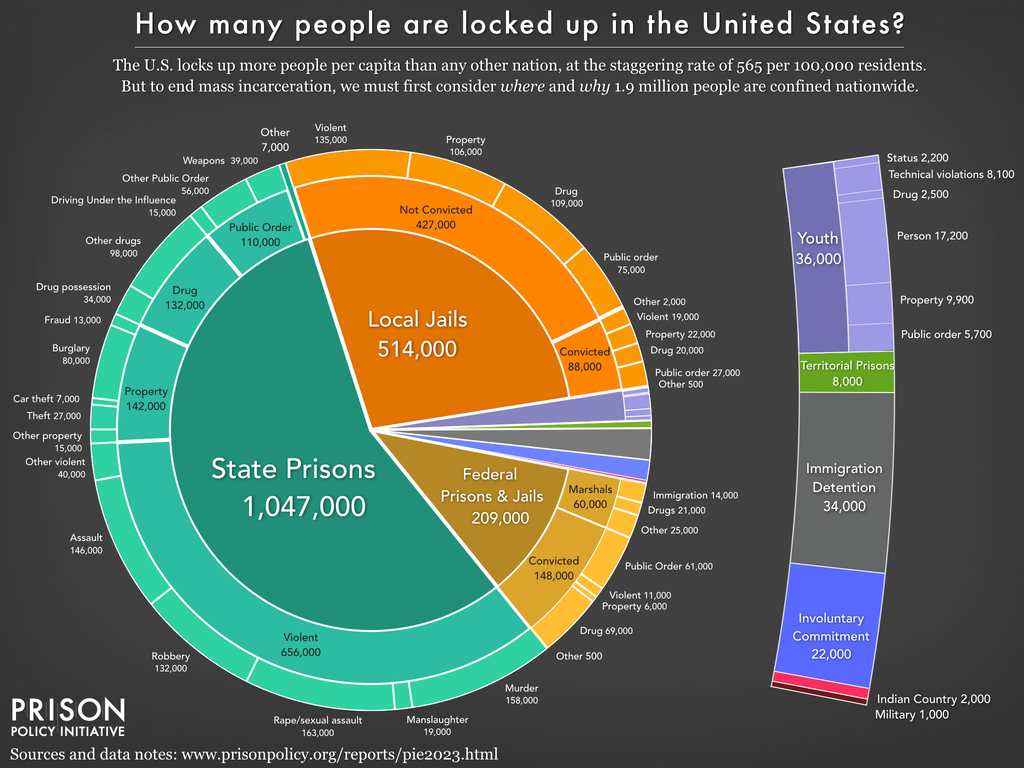
Across the United States, reform conversations are accelerating. Legislatures debate alternatives to incarceration. Private prison contracts are scrutinized. Immigration detention facilities face increased oversight.
But reform language alone does not equal systemic change.
Key trends driving urgency include:
1. Expansion of “Alternatives” That Expand the Net
Electronic monitoring, probation expansion, and data-driven supervision technologies are frequently presented as decarceration tools. Yet in many jurisdictions, they widen the number of people under correctional control.
2. Rebranding of Private Prison Operators
Corporate entities increasingly position themselves as service providers, rehabilitation partners, or behavioral health collaborators—despite maintaining revenue models tied to confinement or supervision contracts.
3. Immigration Detention Framed as Humanitarian Management
Facilities are often described as protective or administrative rather than carceral, even as detention numbers fluctuate and oversight challenges remain.
4. Policy Reform Without Structural Divestment
Legislation may adjust sentencing frameworks without addressing profit incentives, contractual guarantees, or surveillance expansion.
The February 25 webinar addresses these tensions head-on.
The Private Prison Context: Structural Incentives Matter
Private prisons operate within a financial architecture that rewards occupancy, contract renewal, and cost efficiency. Even when rhetoric shifts toward “improved conditions,” the underlying incentive model frequently remains unchanged.
Sustainable Action Now has consistently emphasized:
- Profit incentives distort justice outcomes
- Occupancy guarantees undermine decarceration efforts
- Contractual opacity shields accountability
- Community divestment follows carceral investment
When reforms fail to challenge these structural drivers, they risk becoming cosmetic rather than transformative.
The webinar hosted by the Prison Policy Initiative provides analytical tools to detect when reform is merely rhetorical.
Featured Speakers: Deep Experience, Critical Insight
James Kilgore
A longtime researcher and advocate focused on incarceration, electronic monitoring, and racial justice, Kilgore has extensively examined how surveillance-based “alternatives” can replicate carceral control under different branding.
Mon Mohapatra
An organizer and policy expert working at the intersection of immigration detention and criminal legal reform, Mohapatra brings frontline perspective on how humanitarian language can mask detention expansion.
Together, these voices bring theoretical clarity and practical strategy to resisting reforms that preserve dehumanization.
What Participants Will Learn
This is not a passive informational session. It is a strategic framework-building event. Attendees can expect:
- A clear definition of carceral humanist reform narratives
- Case studies illustrating narrative shifts in policy
- Guidance on identifying reform language that obscures harm
- Tools for advocating structural change rather than surface modification
- Strategies for coalition-building that center abolitionist and decarceral principles
For advocates in the private prisons space, this analysis is indispensable.
The Broader Sustainability Lens
Why is Sustainable Action Now covering criminal justice reform within a sustainability framework?
Because sustainability is not limited to climate or wildlife. It includes:
- Sustainable communities
- Equitable public investment
- Ethical governance systems
- Human dignity in public institutions
Mass incarceration destabilizes communities, extracts public funds, and entrenches inequality. When private prison contracts divert billions into profit structures, those resources are unavailable for education, housing, mental health care, and climate resilience.
A sustainable society cannot coexist with a system that monetizes confinement.
Resisting Narrative Capture
Narrative capture occurs when reform language is co-opted by institutions seeking legitimacy without relinquishing power.
Examples include:
- “Modernized facilities” replacing aging prisons
- “Reentry-focused detention” expanding supervision contracts
- “Humane incarceration” investments without reducing prison populations
- “Risk assessment tools” that encode systemic bias
Recognizing these patterns allows advocates to demand:
- True population reduction
- Contract termination with private prison operators
- Investment in non-carceral community infrastructure
- Transparent data reporting
- Accountability mechanisms tied to decarceration outcomes
The February 25 webinar equips participants to challenge reform frameworks that fail these tests.
Event Details
WEBINAR: Recognizing & Resisting Carceral Humanist Narrative in Criminal Justice Reform
Date: February 25, 2026
Time: 1:00 p.m. EST
Host: Prison Policy Initiative
Speakers: James Kilgore and Mon Mohapatra
Registration is open now.
For those following Sustainable Action Now’s Private Prisons coverage, this event represents an essential strategic checkpoint in 2026’s reform landscape.
Why This Conversation Shapes the Future of Reform
The future of criminal justice reform will be determined not only by legislation—but by narrative.
If reform language continues to soften incarceration without dismantling it, the system will persist under new branding.
If advocates sharpen their analytical tools and refuse narrative dilution, meaningful structural change becomes possible.
This webinar is about drawing that line.
At Sustainable Action Now, we are committed to elevating conversations that move beyond optics and into structural accountability. The February 25 discussion does exactly that.
Register. Engage. Challenge the narrative.
Because sustainable justice demands more than better language.
It demands transformation.