
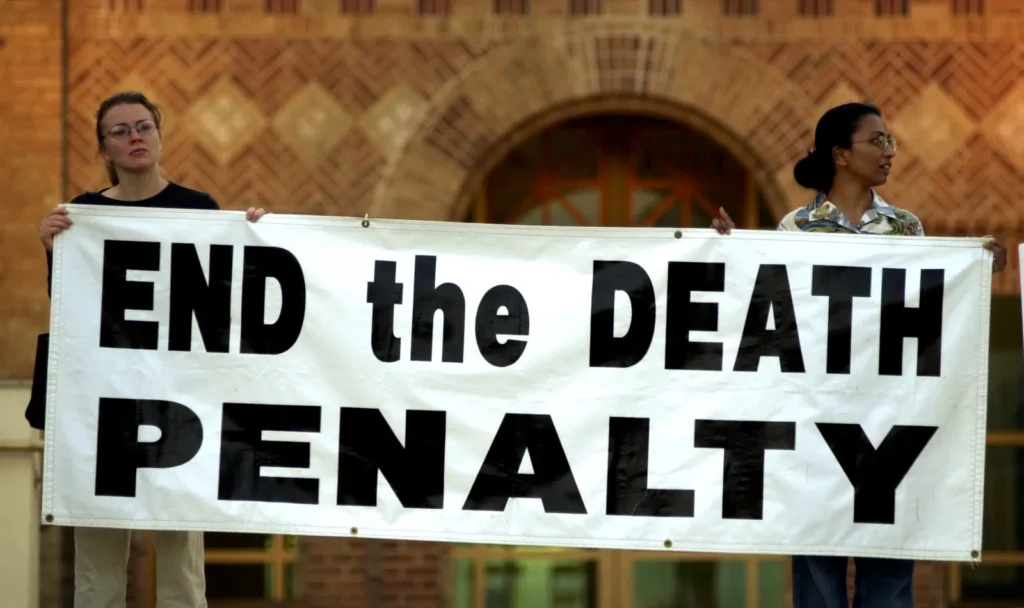
Across the United States, the death penalty remains one of the most divisive issues in criminal justice. While some states continue to carry out executions at an unprecedented pace, a growing coalition of conservatives, faith leaders, and civil rights advocates is questioning the system’s fairness, cost, and effectiveness. This movement reflects a fundamental shift in thinking about justice—one that transcends political affiliation and challenges long-standing assumptions about the role of the state in administering life and death.
A Conservative Perspective on Abolition
Conservatives Concerned About the Death Penalty (CCATDP) has emerged as a leading voice within the conservative movement advocating for an end to capital punishment. Grounded in principles of limited government, fiscal responsibility, and a pro-life philosophy, the organization has framed abolition as a moral and practical imperative. Executive Director Demetrius Minor has highlighted that despite recent increases in executions, new death sentences are near historic lows in conservative states like Oklahoma, Arkansas, and Kansas. This discrepancy suggests that public sentiment—and even jury behavior—is shifting away from capital punishment.
Legislative efforts reflect this evolving stance. Republican lawmakers in Indiana, Missouri, Ohio, Pennsylvania, Kentucky, and Oklahoma have introduced or co-sponsored bills in the past two years aimed at repealing or restricting the death penalty. These initiatives signal a bipartisan recognition that the system may no longer serve the public interest or align with conservative values of limited government and fiscal prudence.
Bipartisan Coalitions and Faith-Based Advocacy
CCATDP has also joined a broad coalition of more than 50 organizations working to end capital punishment state by state. This alliance includes faith leaders and civil rights advocates, reflecting a diverse coalition united by concerns over the death penalty’s fairness and reliability. Catholic and other Christian leaders in states such as Tennessee have publicly urged Republican governors to halt upcoming executions, emphasizing the pro-life arguments against state-sanctioned killing.
High-profile cases have further fueled calls for reform. Instances like Robert Roberson’s case in Texas, which drew concern from Republican donors, underscore the risks of wrongful convictions and the moral implications of executing potentially innocent individuals. The movement is increasingly focused on the real human toll of a system that is costly, inefficient, and prone to irreversible mistakes.
The Human Cost of Capital Punishment
Artists and advocates have long sought to highlight the human dimension of the death penalty. Conceptual artist Toby Lee Greenberg’s work, The Menu, exemplifies this approach by documenting the last meals of individuals about to be executed. Each meal becomes a window into the humanity of those condemned, forcing observers to confront the finality of state-sanctioned death. Greenberg’s research revealed hundreds of wrongful convictions, with 201 exonerations in the U.S. to date, raising profound questions about justice and fairness.
Florida’s 2025 execution of Mark Allen Geralds illustrates the system’s ongoing flaws. Geralds, the eighteenth person executed in what has been the deadliest year in the state’s history, faced a series of legal and procedural irregularities, including mental health concerns, suppressed evidence, and untested forensic material. Despite decades of legal challenges and efforts to prove his innocence, Geralds waived his remaining appeals—a decision that the state leveraged to expedite execution. His case highlights a system that can grind down even those committed to fighting for their lives, while offering little transparency or accountability.
Florida’s secrecy laws further complicate oversight, protecting the identities of executioners and drug suppliers and shielding critical procedural details from public scrutiny. This lack of transparency raises serious ethical and constitutional questions, creating a climate in which mistakes may go unnoticed and irreversible harm occurs. The state’s accelerated execution schedule has prompted widespread concern among legal experts, advocacy organizations, and families affected by capital punishment.
Why Reform Matters
The death penalty debate is not purely abstract—it is grounded in tangible human consequences, systemic inequities, and moral responsibility. From wrongful convictions to procedural errors and mental health oversights, the system demonstrates significant vulnerabilities that challenge its legitimacy. Advocates for abolition emphasize that ending the death penalty is both a moral and pragmatic choice: it reduces government costs, eliminates the risk of executing innocent people, and reflects a commitment to justice that transcends partisan divides.
Those interested in understanding the complexities and human costs of capital punishment can learn more and support efforts to end it through organizations such as Sustainable Action Now. By raising awareness and advocating for change, citizens can contribute to a more equitable and accountable justice system.