For years, the zoo industry has sold the public a comforting story: that elephants in captivity are “ambassadors,” that breeding programs are “conservation,” and that bigger exhibits and new babies prove animals are thriving. But the reality—documented again and again across North America—is far darker.
Behind the marketing language, elephant captivity too often looks like this:
- forced breeding and invasive reproductive procedures
- broken family bonds and trauma from transfers
- lifelong confinement for animals who evolved to roam, forage, and socialize across vast landscapes
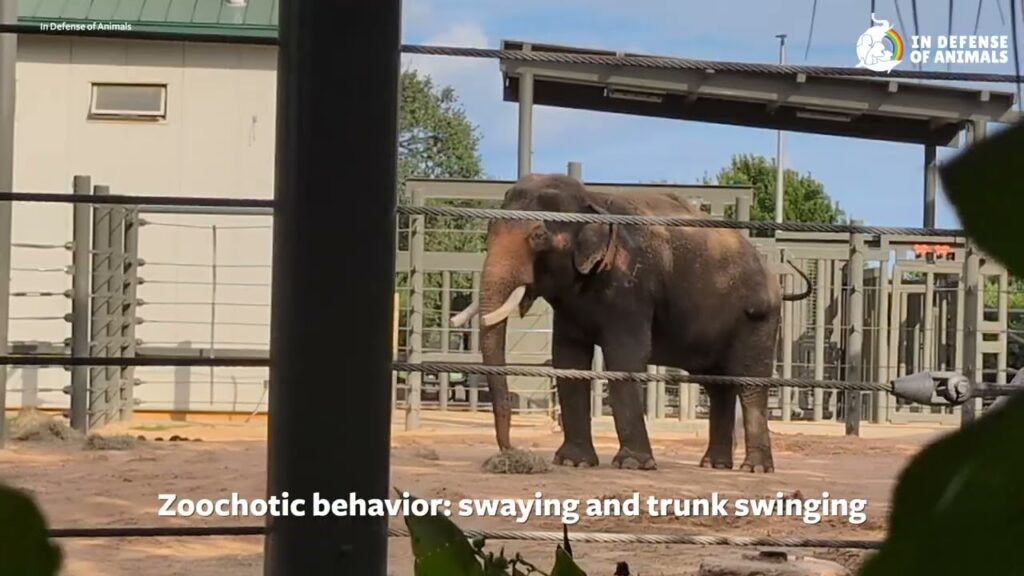
- psychological collapse, including stereotypic “zoochotic” behaviors like swaying, pacing, and repetitive head-bobbing
- and an ongoing pipeline that treats elephants as inventory—bought, traded, loaned, and moved to serve breeding goals, not animal welfare
This Sustainable Action Now Report brings together the key findings and patterns highlighted in the 2025 “10 Worst Zoos for Elephants in North America” list—and connects them to the urgent call that matters right now: End Billy and Tina’s suffering at the Tulsa Zoo.
If you take one action after reading, make it this: visit our campaign hub and share it widely:
👉 https://sustainableactionnow.org/zoos/
The 2025 “10 Worst Zoos” List: A Systemic Problem, Not Isolated Bad Actors
The 2025 list names facilities across the United States and Canada that exemplify the worst patterns of elephant captivity—especially where breeding, confinement, and constant churn between zoos create predictable suffering.
10 Worst Zoos 2025 (for elephants)
- Houston Zoo — Houston, Texas
- Sedgwick County Zoo — Wichita, Kansas
- Omaha’s Henry Doorly Zoo & Aquarium — Omaha, Nebraska
- African Lion Safari — Hamilton, Ontario, Canada
- Denver Zoo — Denver, Colorado
- Columbus Zoo & Aquarium — Powell, Ohio
- ABQ BioPark — Albuquerque, New Mexico
- Oklahoma City Zoo — Oklahoma City, Oklahoma
- Fresno Chaffee Zoo — Fresno, California
- Tulsa Zoo — Tulsa, Oklahoma
Hall of Shame: Oregon Zoo — Portland, Oregon
Path to Progress Award: Louisville Zoo — Louisville, Kentucky
This isn’t just a “bad exhibit” here or there. The themes are consistent: breeding pressure, marketing incentives, EEHV tragedies, stressful transfers, and elephant psychology unraveling in plain sight.
The Core Issue: Zoos Treat Elephants Like a Breeding Product Line
Elephants are not designed for captivity. They are intensely social, deeply intelligent, and physically built to travel long distances every day. In the wild, elephant societies are anchored by choice—choice in movement, choice in social relationships, choice in foraging, choice in how they spend their time.
Captivity removes nearly all of that choice.
And when zoos add breeding programs on top of confinement, the results can become catastrophic: early pregnancies, forced procedures, calves born into stress, calves dying young, mothers separated, and bulls used as biological tools rather than living beings.
This is why the “10 Worst” list matters: it exposes how captivity isn’t merely uncomfortable for elephants—it is often structurally incompatible with elephant life.
#1 Worst Zoo (2025): Houston Zoo — Built to Breed, Not to Live
Houston Zoo ranks as the No. 1 Worst Zoo for Elephants in North America in 2025 because it represents one of the most extreme versions of an industry-wide problem: prolific breeding with an appalling death toll.
The record described is stark: 25 births involving its Asian elephant program—with 17 deaths. It’s a number that should stop every “conservation” claim in its tracks.
A major driver of this program has been the use of a primary bull elephant who sired the majority of calves—followed by increasingly invasive reproductive tactics when losses continued. The pattern that emerges is not conservation. It’s industrial output—calves produced under a framework where death and relocation are treated as acceptable collateral.
Even when the facility lost calves to EEHV (elephant endotheliotrophic herpesvirus), the program reportedly continued under the banner of “study,” despite the fact that such captive-focused outcomes do not translate into protecting wild elephants from the threats they actually face.
The end result isn’t a thriving elephant community. It’s a pipeline of births, losses, and animals shipped out to serve broader breeding and research agendas.
#2 Worst Zoo: Sedgwick County Zoo — “Baby Boom” as a Business Strategy
Sedgwick County Zoo’s 2025 ranking centers on what many advocates recognize immediately: when a zoo celebrates a surge of elephant births with fundraising campaigns and attendance spikes, it’s showing you the point.
The reported births of multiple calves in a short period are framed as joyful milestones. But the deeper story is commercialization: babies as marketing, breeding as a crowd magnet, and elephants as a public-relations engine.
When elephants are treated as a ticket-selling strategy, welfare inevitably becomes secondary—especially when mothers, calves, and herd members are confined to environments that cannot meet complex elephant needs.
#3 Worst Zoo: Omaha’s Henry Doorly Zoo & Aquarium — Manufactured “Families,” Scheduled Lives
Omaha’s elephant program is described as a carefully managed production of “family” aesthetics—an illusion of natural life built inside a profoundly controlled system.
Captive elephants do not have true mate choice. Pregnancies are monitored, pairings are assigned, and bulls are moved around through breeding loans. Young females can be bred early compared to wild norms, creating additional risk for both mother and calf.
What the public sees as “a growing family” often masks a logistical reality: a managed herd designed around institutional goals, not elephant autonomy.
#4 Worst Zoo: African Lion Safari (Ontario) — Big Collection, Bigger Breeding Pressure
This facility stands out because of the sheer number of elephants involved. Housing one of the largest collections of Asian elephants in North America, it illustrates the risks of large-scale captive breeding: an intensified cycle of pregnancies, limited genetic diversity when the same bull fathers repeated calves, and a steady churn of transfers.
Transfers matter because elephant bonds matter. Breaking those bonds repeatedly can produce life-shortening stress and trauma—especially for animals with long memory and complex social lives.
#5 Worst Zoo: Denver Zoo — Bulls Reduced to “Sperm Banks”
Denver’s placement on the list highlights a particularly grim niche of the zoo industry: all-male elephant holding systems tied to invasive semen collection and artificial insemination pipelines.
The mechanics are disturbing because they reduce elephants—especially bulls—to biological extraction targets. The program creates a ripple effect: more calves at other zoos, more males produced, more transfers, and more facilities built to warehouse displaced bulls.
It’s the captivity economy feeding itself.
#6 Worst Zoo: Columbus Zoo & Aquarium — Breeding, Loss, and the “Research Lab” Response
Columbus is cited for accelerated breeding and the way baby elephants are used as promotional moments—while deaths and disease are reframed as justification for more infrastructure and continued breeding.
EEHV is a recurring theme across these facilities, particularly among calves in captive conditions. When zoos respond to losses not by stepping back from breeding, but by doubling down—building labs, fundraising, and continuing pregnancies—it raises a painful question:
If the system predictably produces suffering, why is it being expanded?
#7 Worst Zoo: ABQ BioPark — Four Dead Babies, Still Breeding
ABQ BioPark’s listing underscores how normalized tragedy can become inside captive breeding logic. When repeated calf deaths do not stop a breeding program, what does?
The description emphasizes isolation, continued breeding despite catastrophic outcomes, and the role of institutional messaging that frames death as unfortunate-but-acceptable within the “conservation” narrative.
But the lived reality for elephants is not narrative. It’s confinement, grief, and stress.
#8 Worst Zoo: Oklahoma City Zoo — Early Breeding, Transfers, and Another Baby Due
Oklahoma City Zoo appears again because it reflects the industry’s repeat pattern: early breeding ages, constant movement of elephants between facilities, and repeated tragedy treated as a public-relations hurdle rather than a moral line in the sand.
Transfers, breeding loans, and tight captive conditions are not “management details.” For elephants, they are life-defining traumas.
#9 Worst Zoo: Fresno Chaffee Zoo — Secrecy, Breeding, and the “Stolen” History
Fresno’s listing highlights an additional red flag: opacity. When the public can’t obtain clear answers about breeding practices, enclosure conditions, and elephant management, trust collapses—and so should the benefit of the doubt.
This facility’s narrative also includes the “Stolen 18” context described in the source material: wild elephants taken from their families and routed into captive life, with subsequent breeding creating unnatural family trees that cannot—and will not—translate into freedom.
#10 Worst Zoo: Tulsa Zoo — 7 Elephants, 7 Tales of Torment (and Billy & Tina at the Center)
Tulsa Zoo’s ranking is where this report becomes urgent and personal.
The account presented describes an elephant program defined by:
- advanced zoochosis (visible stress behaviors like pacing, swaying, bobbing)
- overcrowding and rotation systems (bulls unable to share space safely, shuffled between holding yards and exhibits)
- a breeding history marked by EEHV deaths and repeated heartbreak
- and the possibility of further breeding expansion—even in conditions that already appear inadequate
But the flashpoint is the alleged clandestine transfer of Billy and Tina from the Los Angeles Zoo to Tulsa in May 2025, despite years of public calls for sanctuary placement.
Billy and Tina’s reported stress behaviors are not “quirks.” They’re often the visible outward expression of profound psychological distress—behavior that becomes common when an elephant’s mind and body are trapped in an environment that cannot meet its fundamental needs.
If you want to help change this outcome, start here: 👉 https://sustainableactionnow.org/zoos/
Hall of Shame: Oregon Zoo — Decades of Breeding Death and Despair
Oregon Zoo’s Hall of Shame designation is about longevity: a long-running breeding legacy with repeated deaths, invasive control methods, and the normalization of treating elephants as assets within an institutional system.
The story described includes decades of breeding, painful procedures, coerced management, and the chilling idea that an elephant’s “value” can be reduced to whether they can reproduce.
When an animal’s life is evaluated through profitability and breeding utility, welfare becomes negotiable—and elephants pay the price.
Path to Progress Award: Louisville Zoo — Proof That Sanctuaries Are Possible
The most important part of this list isn’t only the condemnation. It’s the proof that a different outcome is achievable.
Louisville Zoo is recognized for doing what many institutions insist is impossible: retiring elephants to sanctuary and closing the elephant exhibit.
The reported relocation of two elephants—Mikki and Punch—to a sanctuary environment illustrates what advocates have said for decades:
- Older elephants can successfully transition.
- Elephants can thrive when given space, grass, freedom of movement, and choice.
- Closing elephant exhibits is not an extremist idea—it’s a responsible, compassionate one.
This matters because it destroys the industry’s most common excuse: “There’s nowhere else for them to go.”
There is. And it’s better.
The Pattern Behind the List: Captivity Breaks Elephants
Across all facilities named, the same structural problems show up repeatedly:
1) Breeding isn’t conservation
Elephants bred in zoos are not being released to wild habitats. The breeding cycle primarily serves captivity itself—restocking exhibits and generating revenue-driving “baby” narratives.
2) EEHV tragedies cluster in captivity
The repeated appearance of EEHV calf deaths across multiple zoos signals that the captive breeding pipeline carries predictable risks—especially when stress, movement between facilities, and unnatural social conditions are part of the system.
3) Transfers are trauma
Zoo-to-zoo shuffling breaks bonds. For elephants, bond disruption is not a mild stressor—it can shape health outcomes, behavior, and lifespan.
4) Zoochosis is not rare—it’s expected
Swaying, pacing, repetitive movements, and “walking the wall” are not signs of adaptation. They are often signs of psychological harm.
What You Can Do Right Now
The most effective action is to keep pressure focused where elephants are actively suffering and where decisions are still being made.
Start here and share widely: 👉 https://sustainableactionnow.org/zoos/
Then take these practical steps:
- Stop financially supporting elephant captivity by choosing sanctuaries and ethical wildlife organizations instead of traditional elephant exhibits.
- Contact local officials and zoo leadership when public institutions use taxpayer resources to expand elephant programs.
- Push for exhibit closures, not “renovations.” Bigger cages are still cages.
- Support sanctuary placement as the standard outcome—not the exception.
The Sustainable Action Now Bottom Line
Elephants do not belong in zoos—not because people don’t care, but because captivity cannot deliver what elephants biologically require: space, autonomy, stable social bonds, and the freedom to live without being treated as inventory.
The 2025 list is a warning flare. It shows what the zoo industry becomes when breeding, branding, and business are prioritized over life itself.
And it makes one thing unmistakably clear:
Billy and Tina should not spend their lives in an elephant prison.
They—and every elephant trapped in these systems—deserve sanctuary.
Take action here: 👉 https://sustainableactionnow.org/zoos/