
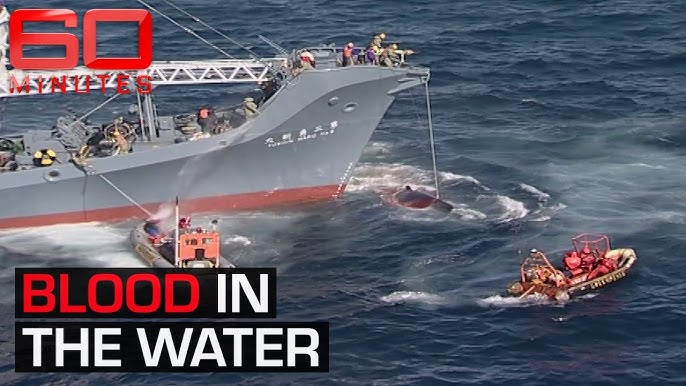
Across the world’s oceans, whales have long been recognized as some of the most intelligent, socially complex, and ecologically important animals on the planet. Their migrations span thousands of miles, their communication systems remain among the most sophisticated in the animal kingdom, and their presence plays a crucial role in maintaining the health of marine ecosystems.
Yet despite decades of international efforts to protect them, commercial whaling has not disappeared.
While the majority of the world’s nations observe a global ban on commercial whaling that has been in place since the mid-1980s, one country continues to maintain a large-scale whale hunt in the North Atlantic: Norway.
This ongoing practice has sparked the long-running international campaign widely known as “Stop Norway Whaling.” Led by marine conservation organizations and supported by animal welfare advocates across the globe, the campaign seeks to end Norway’s commercial whaling industry and strengthen global protections for whales.
The issue has grown increasingly prominent in recent years as scientists, environmental organizations, and concerned citizens raise new questions about animal welfare, ocean health, and the role whales play in stabilizing the Earth’s climate.
The Global Whaling Moratorium—and Norway’s Exception
In 1986, the International Whaling Commission introduced a worldwide moratorium on commercial whaling in response to decades of overhunting that had pushed many whale species to the brink of extinction.
The moratorium was designed as a protective measure to allow whale populations to recover and to ensure that large-scale industrial hunting would not return to the oceans.
Most countries that historically engaged in whaling accepted the ban and eventually phased out their industries.
Norway, however, took a different path.
When the moratorium was introduced, Norway filed a formal objection through the International Whaling Commission’s procedures. That objection allows the country to continue commercial whaling legally under its own national regulations.
As a result, Norway today operates one of the world’s largest remaining commercial whale hunts.
The Scale of Norway’s Whaling Industry
In recent years, Norway has set annual quotas that allow for the killing of approximately 1,000 minke whales per season in the North Atlantic.
Minke whales are the smallest of the baleen whale species commonly hunted commercially, but they are still large marine mammals capable of living for decades and traveling thousands of miles during seasonal migrations.
Although Norway’s quotas are high, the number of whales actually taken each year varies depending on weather conditions, market demand, and the number of active vessels participating in the hunt.
Nevertheless, Norway consistently kills more whales annually than other whaling nations such as Iceland and Japan combined.
For marine conservation groups, this scale makes Norway the focal point of global anti-whaling advocacy efforts.
The Technology of Modern Whaling
Commercial whaling today differs significantly from the large-scale industrial hunts of the twentieth century, but it still involves powerful weapons designed to kill massive marine animals.
Norwegian whaling vessels typically use harpoons equipped with explosive grenade tips known as penthrite harpoons.
These harpoons are designed to penetrate the whale’s body and detonate internally, ideally causing rapid death through catastrophic trauma.
However, animal welfare advocates argue that the method does not always achieve the intended result.
Studies examining whale deaths during hunts have indicated that some animals do not die instantly after being struck. In certain cases, whales may continue struggling in the water for extended periods before succumbing to injuries.
Reports cited by advocacy organizations suggest that some whales can remain alive for many minutes after being hit, raising serious ethical concerns about the humaneness of the hunting method.
This issue has become one of the central arguments in the campaign to end commercial whaling.
A Changing Economic Landscape
Interestingly, Norway’s whaling industry is not expanding—it is gradually shrinking.
Despite the government’s large quotas, the number of vessels participating in the hunt has steadily declined over the past decade.
Today, fewer than a dozen boats regularly take part in Norway’s whaling season.
Several factors are contributing to this decline.
One major issue is profitability. Whale meat consumption has been falling in Norway, particularly among younger generations who are less interested in traditional whaling practices.
As domestic demand declines, the economic viability of the industry becomes increasingly uncertain.
In addition, international criticism and consumer pressure have made whale products controversial on the global market.
These trends have led many observers to believe that Norway’s whaling industry may be slowly fading—even without legislative bans.
The “Cruelty for Cosmetics” Controversy
Another issue driving international concern is how whale products are used after the hunt.
Historically, whale meat was consumed widely in Norway. Today, however, demand has decreased significantly.
In some cases, whale-derived materials are reportedly used for products beyond traditional food markets, including pet food and ingredients used in certain cosmetic items.
For animal welfare advocates, this raises troubling questions.
If the economic justification for whaling no longer centers on feeding people, critics argue that continuing the hunt becomes even harder to defend ethically.
The phrase “cruelty for cosmetics” has become a rallying point for activists who believe whales should not be killed for nonessential consumer goods.
Why Whales Matter for Ocean Health
Beyond ethical considerations, scientists increasingly emphasize the ecological importance of whales.
Whales are not simply large animals living in the ocean—they are key players in maintaining marine ecosystem balance.
One of the most fascinating discoveries in marine biology over the past decade is the role whales play in ocean nutrient cycling.
When whales dive deep to feed and return to the surface, they transport nutrients from the depths of the ocean to surface waters. This process supports the growth of phytoplankton—tiny organisms that form the foundation of marine food webs.
Phytoplankton also play a crucial role in regulating Earth’s climate.
These microscopic plants absorb carbon dioxide during photosynthesis, helping remove greenhouse gases from the atmosphere.
In this way, healthy whale populations contribute indirectly to climate stability.
Reducing whale populations through hunting can therefore have ripple effects that extend far beyond individual animals.
Norway’s Position: Sustainability and Science
The Norwegian government maintains that its whaling practices are both sustainable and scientifically justified.
Officials argue that the North Atlantic minke whale population is abundant, with estimates suggesting more than 100,000 individuals in the region.
From Norway’s perspective, harvesting a limited number of whales each year does not threaten the species’ survival.
Authorities also emphasize that the hunt is conducted under strict regulations designed to ensure humane practices and careful monitoring.
Recently, the government introduced additional requirements for harpooners, including mandatory tests intended to ensure hunters can achieve quick and effective kills.
These measures aim to address welfare concerns raised by critics.
However, opponents argue that even improved regulations cannot eliminate the ethical and ecological problems associated with commercial whaling.
A Growing International Campaign
The Stop Norway Whaling movement has expanded significantly in recent years as environmental organizations, marine scientists, and concerned citizens around the world call for stronger protections for whales.
Campaigns often focus on raising public awareness, encouraging policy changes, and applying economic pressure to discourage whaling practices.
Advocates emphasize that ending commercial whaling would align Norway with the majority of the international community that already respects the global moratorium.
They also argue that protecting whales benefits not only marine ecosystems but also coastal economies built around whale watching and ecotourism.
How Individuals Can Help Protect Whales
Many international campaigns encourage supporters to take several practical steps to help reduce demand for whale products and increase pressure for policy change.
Support public awareness campaigns
Sharing information about the ecological and ethical issues surrounding commercial whaling helps build global awareness and encourage dialogue.
Sign petitions and advocacy initiatives
Many campaigns call on supporters to contact government officials and express concern about ongoing whaling practices.
Make informed consumer choices
Avoiding products linked to whaling industries—including certain seafood exports or whale-derived materials—can send strong market signals.
Encourage responsible tourism
Visitors traveling to Norway are often encouraged not to treat whale meat as a novelty experience.
Reducing tourist demand can play a meaningful role in limiting the industry’s economic viability.
A Turning Point for Ocean Conservation
The debate over Norway’s commercial whaling industry reflects a broader global conversation about humanity’s relationship with marine life.
In past centuries, whales were hunted relentlessly for oil, meat, and other materials. Today, growing scientific knowledge and changing public values have led many societies to view these animals differently.
Whales are now widely recognized not only as magnificent creatures but also as vital contributors to ocean health and planetary stability.
The Stop Norway Whaling campaign represents an effort to align global conservation policies with these evolving perspectives.
Protecting the Giants of the Ocean
The future of whales depends on decisions being made today—by governments, industries, and individuals.
Ending commercial whaling would mark a significant milestone in global ocean conservation and reinforce the international commitment to protecting wildlife.
For advocates working to safeguard marine ecosystems, the message is clear:
Whales are more valuable alive in our oceans than they are as commodities.
And as the global movement to protect them continues to grow, the hope is that the world’s largest and most iconic marine mammals will be able to thrive once again in the vast waters they have called home for millions of years.
The Global Movement to End Commercial Whaling Intensifies as Norway Expands Its 2026 Whale Hunt
Across the world’s oceans, whales represent some of the most remarkable and vital species on Earth. These intelligent marine mammals travel thousands of miles through international waters, play critical roles in ocean ecosystems, and inspire awe in cultures across the globe.
Yet despite decades of international agreements designed to protect them, commercial whaling remains a reality in parts of the world.
In February 2026, Norway announced a significant increase in its commercial whaling quota for the upcoming hunting season. The decision has triggered a powerful response from conservationists, marine scientists, and environmental advocates who are renewing calls for an end to commercial whaling once and for all.
The announcement comes at a moment when global awareness of whale protection is reaching new heights, fueled by new advocacy campaigns, major documentary releases, and international petitions seeking millions of signatures.
For organizations working to protect marine wildlife, the stakes could not be higher.
Norway’s 2026 Whaling Quota: A Major Increase
On February 13, 2026, Norwegian authorities confirmed that the country would allow hunters to kill up to 1,641 minke whales during the upcoming whaling season.
This new quota represents an increase of 235 whales compared with the previous year, making it one of the largest quotas Norway has issued in recent years.
The whaling season typically begins in April, when Norwegian vessels head into the North Atlantic to hunt minke whales using explosive harpoon technology designed for large marine mammals.
While quotas do not always translate directly into the number of whales actually killed, they set the legal ceiling for the hunt and signal the government’s support for the continuation of commercial whaling.
For whale conservation advocates, the decision has intensified concerns about the future of marine protection efforts.
The Global Whaling Ban—and the Exception That Remains
The controversy surrounding Norway’s whaling industry stems largely from the international moratorium on commercial whaling established in 1986.
That agreement, implemented by the International Whaling Commission, was intended to halt the industrial-scale hunting that had pushed many whale species to the brink of extinction during the twentieth century.
Most countries that historically participated in whaling accepted the ban and transitioned away from commercial hunts.
Norway, however, filed a formal objection to the moratorium when it was introduced. This legal mechanism allows the country to continue whaling under its own regulations while remaining a member of the international commission.
As a result, Norway remains one of the few nations still conducting large-scale commercial whaling operations today.
The Rising Global Campaign Against Whaling
In response to the expanded 2026 quota, environmental organizations and marine conservation groups have launched a renewed wave of international advocacy.
A coalition of organizations working on ocean protection recently launched a global petition aimed at ending commercial whaling permanently.
The campaign was unveiled around World Whale Day in February 2026, a symbolic moment that celebrates whales while raising awareness about threats they continue to face.
Organizers hope to gather millions of signatures from supporters around the world before the petition is delivered later in the year.
The goal is to send a clear message: public opinion is increasingly aligned with protecting whales rather than exploiting them.
A New Documentary Ignites Global Attention
The debate over Norway’s whaling industry has also been intensified by the recent release of a new investigative documentary.
The film, titled Harpooned: The Great Whale Betrayal, includes footage captured during Norwegian whaling operations and offers a behind-the-scenes look at the realities of modern whale hunting.
The documentary has quickly gained traction across social media platforms, where clips and discussions have sparked renewed global outrage.
For many viewers, the footage provides a stark reminder of how commercial whaling actually unfolds in the open ocean.
Scenes showing the pursuit and harpooning of whales have reignited conversations about whether the practice aligns with modern ethical standards for wildlife protection.
The Welfare Debate: How Whales Are Killed
Modern commercial whaling typically involves specialized harpoons equipped with explosive grenade tips designed to cause rapid death.
These harpoons penetrate the whale’s body and detonate internally, ideally killing the animal quickly.
However, animal welfare advocates argue that the process is not always instantaneous.
In some cases, whales may remain alive for extended periods after being struck, struggling before finally succumbing to their injuries.
Because whales are massive animals with powerful cardiovascular systems, even lethal injuries can take time to result in death.
These realities have fueled growing criticism of whaling practices among animal welfare experts and the broader public.
For many advocates, the question is not simply about sustainability—it is about compassion and the ethical treatment of intelligent marine life.
Declining Demand for Whale Meat
One of the most striking developments in recent years is the sharp decline in demand for whale meat within Norway itself.
Younger generations are increasingly disconnected from the country’s traditional whaling culture, and dietary habits have shifted toward other foods.
Recent estimates suggest that fewer than two percent of Norwegians regularly consume whale meat.
This trend has created a difficult economic reality for the industry.
Even though government quotas allow the killing of large numbers of whales, the domestic market for whale products continues to shrink.
In some cases, whale meat that cannot be sold for human consumption is reportedly diverted into alternative uses, including pet food or other processed products.
For critics, this raises serious ethical concerns about killing large marine mammals for products that are far removed from essential human needs.
The Ecological Importance of Whales
Beyond ethical considerations, scientists increasingly emphasize the crucial ecological roles whales play in ocean ecosystems.
Whales contribute to a process sometimes referred to as the “whale pump.”
By diving deep to feed and returning to the surface, whales transport nutrients from deep waters into sunlit surface layers where microscopic plants known as phytoplankton grow.
Phytoplankton form the base of marine food webs and help absorb carbon dioxide from the atmosphere.
Healthy whale populations therefore contribute not only to marine biodiversity but also to the global fight against climate change.
When whales are removed from ecosystems, these nutrient cycles can be disrupted, potentially affecting entire ocean environments.
Tourism and the Living Value of Whales
Many coastal communities around the world have discovered that whales are far more valuable alive than hunted.
Whale watching has become a thriving global industry that supports tourism economies in dozens of countries.
Visitors travel from across the world to witness whales breaching, feeding, and migrating in their natural habitats.
This form of wildlife tourism creates economic opportunities while reinforcing the importance of conservation.
For advocates, the contrast is clear: protecting whales can generate long-term economic benefits that far outweigh the short-term gains of commercial whaling.
A Critical Moment Before the 2026 Whaling Season
As April approaches, when Norway’s whaling season typically begins, conservation groups are intensifying their efforts to raise awareness and encourage global engagement.
The coming weeks represent a crucial window for advocacy campaigns.
Petitions, public awareness efforts, and international dialogue are all aimed at encouraging policymakers to reconsider the future of commercial whaling.
Advocates hope that increased global attention may help shift the conversation toward stronger protections for whales.
How Individuals Can Support Whale Protection
For people who care about ocean conservation, there are several ways to participate in the growing movement to protect whales.
Many advocacy campaigns encourage individuals to support educational initiatives, share information about the ecological importance of whales, and participate in international petitions calling for stronger protections.
Travel choices can also play a role.
Visitors to coastal destinations can support responsible whale watching programs that promote conservation while avoiding activities that encourage whale exploitation.
Consumer awareness, public dialogue, and policy engagement all contribute to the broader effort to safeguard marine wildlife.
The Future of Whales in a Changing World
Whales have survived for millions of years, navigating vast ocean ecosystems and evolving complex social behaviors that scientists are only beginning to understand.
Yet their survival has often depended on human decisions.
From the era of industrial whaling that nearly wiped out several species to the global moratorium that helped populations begin to recover, humanity’s actions have shaped the fate of these ocean giants.
Today, the debate over Norway’s whaling quotas represents another chapter in that story.
It is a moment when society must once again decide how it values the living wonders of the natural world.
For many advocates, the answer is clear.
Protecting whales is not only about preserving wildlife—it is about defending the health of our oceans, the stability of our climate, and the ethical responsibility humans hold toward the other creatures that share our planet.
As the global movement to end commercial whaling continues to grow, the hope is that the oceans of the future will remain filled with the songs, migrations, and magnificent presence of whales.