
Six Flags Wild Safari in New Jersey has earned national attention with its first-ever 2026 USA Today 10Best nomination as one of the country’s top safari parks, spotlighting its massive 350-acre drive-through experience and more than 1,200 animals from around the world. Yet behind the celebratory headlines, a growing coalition of animal-protection advocates and conservation groups continues to raise serious questions about what recognition should truly mean in modern wildlife tourism—and whether public popularity can coexist with ethical accountability.
For organizations focused on wildlife protection and animal welfare, recognition is not measured by ticket sales or guest satisfaction. It is measured by transparency, regulatory compliance, scientific standards of care, and the long-term physical and psychological well-being of animals held in captivity. These broader standards are increasingly shaping public expectations, policy debates, and the future of animal attractions nationwide. As part of a wider movement to rethink how wildlife is displayed and protected in commercial environments, Sustainable Action Now continues to track and elevate campaigns connected to animal welfare, conservation ethics, and environmental responsibility through its ongoing coverage of current causes and advocacy efforts.
At the center of the debate is Six Flags Wild Safari’s long-running operation alongside its neighboring theme park, a combination that animal advocacy organizations argue creates unavoidable conflicts between entertainment and animal welfare.
Animal advocacy groups, including People for the Ethical Treatment of Animals (PETA) and World Animal Protection, have publicly challenged the safari’s practices for years, contending that wildlife should not be used as entertainment attractions and that captive environments—even large ones—cannot adequately meet the complex physical and behavioral needs of many species.
PETA has consistently argued that animals do not belong in commercial amusement settings and has highlighted several allegations involving safety and regulatory compliance. One of the most serious claims referenced by the organization involves a past whistleblower report alleging that a baboon was struck and killed by a vehicle within the drive-through portion of the safari. The organization has also called for federal investigations, asserting that the park operated for years without the proper permits required to transfer or manage protected species, including Siberian tigers and African elephants.
World Animal Protection has focused its campaign more narrowly on the safari’s elephant exhibit, placing national attention on the park’s five African elephants—particularly one elephant named Joyce, whose life in captivity has become a focal point for international advocacy. According to the organization, the physical space provided to the elephants is dramatically smaller than what would be required in the wild, and the surrounding environment creates ongoing stress that may negatively affect their health.
The group has repeatedly stated that the elephants’ enclosure represents a fraction of their natural roaming range—estimated by advocates to be hundreds of thousands of times smaller than what elephants would experience in open ecosystems. Beyond physical limitations, World Animal Protection has emphasized environmental stressors created by the park’s proximity to high-energy amusement rides. The vibrations and noise from nearby roller coasters, they argue, introduce constant disruption that undermines the elephants’ ability to rest, socialize naturally, and regulate stress.
As part of a broader international campaign, World Animal Protection has launched a public petition calling for the relocation of Joyce and the four other elephants to an accredited elephant sanctuary. The campaign, hosted through FreeJoyce.org, had surpassed 60,000 signatures by late 2025, signaling sustained public interest in the case and growing scrutiny of how aging captive animals are managed in entertainment-driven facilities.
The petition outlines several specific demands. Advocates are urging Six Flags to permanently close the elephant exhibit, commit to no longer acquiring or breeding elephants, and relocate the existing elephants to a specialized sanctuary such as Elephant Refuge North America. The organization has also offered to cover the estimated $50,000 relocation cost and to manage transportation and administrative logistics associated with the transfer.
Environmental conditions remain central to the petition’s arguments. In addition to the size of the enclosure, campaign leaders highlight the persistent low-frequency “rumble” generated by nearby attractions, which they say creates a chronically stressful environment that would not be present in a sanctuary designed exclusively for elephant care and rehabilitation.
Beyond the elephant exhibit, broader ethical concerns surrounding Six Flags Wild Safari include accreditation standards and federal oversight. The facility is not accredited by the Association of Zoos and Aquariums, widely regarded as the most rigorous and internationally recognized accrediting body in the zoological industry. Instead, the safari holds accreditation from the Zoological Association of America, a separate organization that some animal-welfare advocates argue applies less demanding standards when it comes to enclosure size, enrichment programs, and long-term conservation planning.
Regulatory scrutiny intensified in late 2021 when the U.S. Fish and Wildlife Service denied a permit renewal request tied to the park’s wildlife transactions. Federal officials cited concerns related to the quality of animal care and alleged unpermitted animal transfers involving protected species. While the agency did acknowledge that the facility itself was structurally adequate and that animal care staff were qualified, the permit denial added a new layer of oversight to the ongoing debate surrounding the safari’s operational practices.
Six Flags has firmly rejected claims that it fails to meet federal standards. Company representatives maintain that the safari operates in full compliance with U.S. laws governing animal care, transport, and exhibition. In public statements, the company has emphasized that its animal care team includes trained professionals and veterinary specialists and that all animals receive ongoing medical attention, nutrition planning, and behavioral monitoring.
The company has also directly addressed calls to relocate Joyce and the other elephants. Six Flags argues that relocation is not always the most humane option, particularly for aging animals with long-established social bonds and medical needs. Joyce, now in her 40s, is described by the company as requiring specialized geriatric care and consistent medical oversight. According to Six Flags, removing her from a familiar environment could introduce new health risks and disrupt social connections with other elephants in the group.
Six Flags leadership has stated that keeping Joyce and the other elephants in their current setting is, in their view, the most ethical and responsible choice available. They contend that stability, continuity of care, and existing veterinary infrastructure offer a level of protection that may be difficult to replicate during relocation, even to a reputable sanctuary.
In response to past regulatory concerns, the company reports that it has submitted all necessary documentation related to permit renewals and compliance requirements and continues to work with federal authorities to maintain its operating approvals.
For the 2026 season, Six Flags is also promoting infrastructure improvements and operational upgrades across the safari experience. Among the changes is the return of an in-park boarding option from Frontier Station, designed to improve guest access to the safari while streamlining transportation logistics and minimizing disruption to animal habitats. The company states that these upgrades are intended to enhance both visitor experience and animal care operations, reinforcing what it describes as a long-term commitment to “first-rate” welfare standards.
Despite the ongoing controversy, public enthusiasm for the safari remains strong. The USA Today 10Best nomination highlights the park’s popularity, immersive layout, and messaging around wildlife education and conservation awareness. For many visitors, Six Flags Wild Safari represents a rare opportunity to view large mammals and exotic species up close in a drive-through setting.
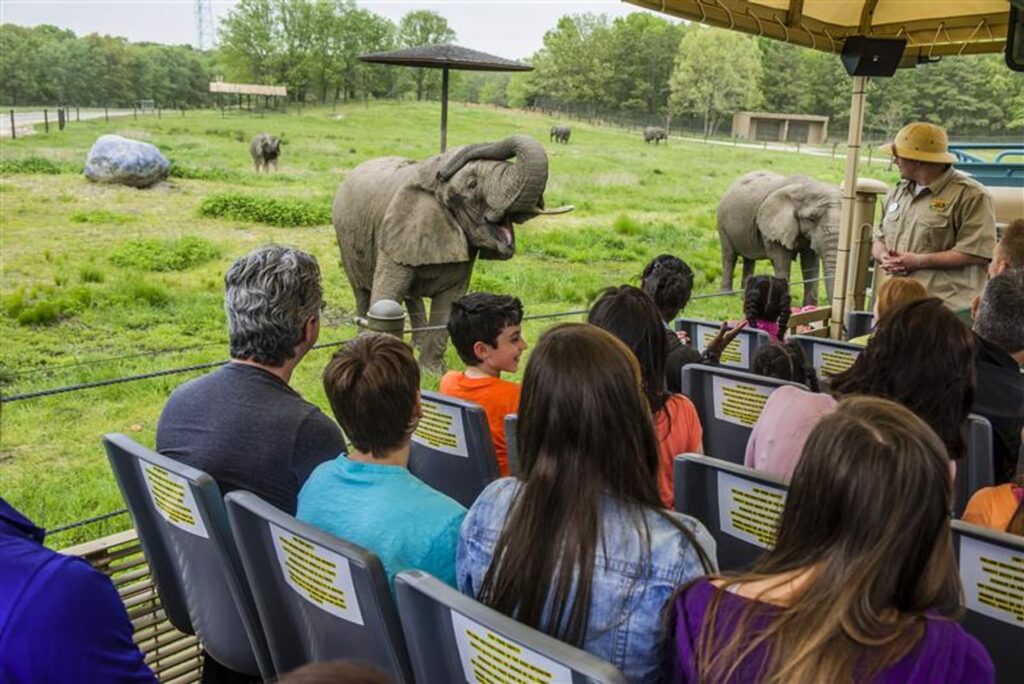
The safari spans more than 350 acres and features animals representing six continents. Visitors encounter a wide range of species, including Siberian tigers, African lions, rhinoceroses, baboons, and bears. Guests can explore the park either through the traditional drive-through route or via guided in-park truck tours that bring visitors closer to select habitats.
The 2026 season will also showcase several new animal births from the past year, which the park is positioning as highlights for families and returning visitors. Three Grant’s zebra foals born late last year are expected to be fully visible and active throughout the spring. A young giraffe named Mbi has recently joined the herd in the Wilde Plains section, drawing attention as one of the safari’s newest residents.
Yet for animal welfare organizations and environmental advocates, the presence of newborn animals does not resolve deeper questions about long-term captivity, space limitations, and the broader ethics of wildlife tourism. As campaigns surrounding Joyce and the elephant exhibit continue to gain traction, the situation at Six Flags Wild Safari has become a national case study in how public attractions, regulatory agencies, and advocacy groups define responsible stewardship in an era of heightened environmental awareness.
The growing divide between commercial success and ethical accountability reflects a broader shift across the wildlife tourism industry. Increasingly, travelers, families, and conservation supporters are seeking transparency about how animals are sourced, housed, and protected—not just how they are displayed. The outcome of ongoing advocacy efforts surrounding Six Flags Wild Safari may influence future standards for animal attractions throughout the United States, particularly as public pressure continues to shape regulatory priorities and corporate responsibility policies.
For organizations like Sustainable Action Now and the global network of advocates working through environmental and animal-protection campaigns, the debate is not about eliminating public interest in wildlife. It is about redefining how that interest is expressed—through education, conservation partnerships, and ethical practices that place animal well-being at the center of every decision.