
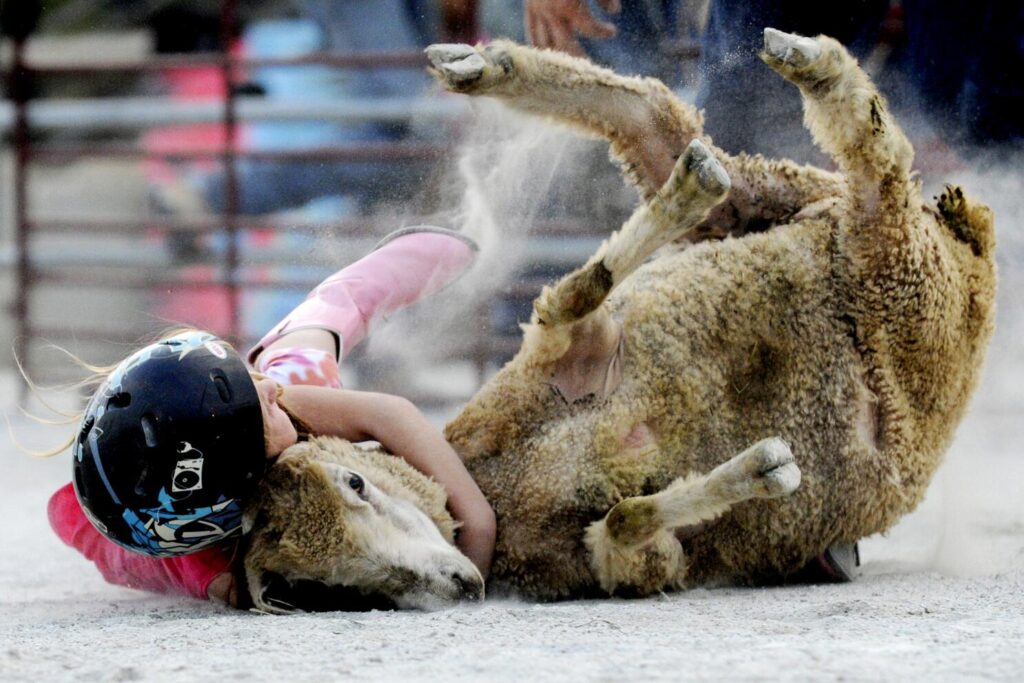
Across the United States and beyond, rodeos continue to be marketed as wholesome celebrations of western heritage, family entertainment, and rural tradition. But behind the dust, announcers, and grandstand applause, a growing number of veterinarians, animal protection advocates, and welfare experts argue that rodeos represent one of the most normalized and least regulated forms of animal exploitation still operating in public view.
At Sustainable Action Now, our investigations and advocacy work continue to expose how animals are harmed for spectacle across multiple industries—from wildlife attractions and fashion supply chains to live-animal entertainment. Rodeos belong squarely within this broader crisis of the abuse of animals and wildlife, where animals are used, injured, and discarded for profit under the cover of tradition and cultural nostalgia.
Opponents of rodeos argue that these events are inherently inhumane by design. The suffering is not accidental. It is built into the structure of the competitions themselves.
Inherent cruelty and physical harm
Rodeo events such as calf roping, steer wrestling, saddle bronc riding, and bull riding rely on speed, force, and violent restraint. Critics point to a long record of severe injuries suffered by animals during competitions, including broken necks, fractured backs and legs, torn ligaments, and internal hemorrhaging.
Calf roping, in particular, has drawn sustained criticism. Young calves are chased at high speeds, roped by the neck, and abruptly slammed to the ground. The sudden force can cause damage to the spine, neck, and internal organs. Steer wrestling involves a rider jumping from a moving horse onto a running steer, twisting the animal’s head and neck until the steer is forced to the ground—placing enormous strain on the cervical spine.
In bull riding and bucking events, animals are deliberately agitated and driven into violent movement. The injuries that result are often hidden from public view, occurring in holding areas or later in transport, away from spectators and cameras.
While rodeo promoters frequently describe injuries as “rare,” independent observers and animal advocates emphasize that many injuries—especially internal trauma—are never publicly reported.
The use of pain-inducing tools
One of the most serious ethical concerns centers on the equipment used to provoke animals into performing.
Electric prods, commonly referred to as hotshots, are used to force animals into chutes or into the arena. Metal spurs are applied to sensitive areas of an animal’s body during rides. Flank straps—tight straps placed around an animal’s abdomen or groin area—are used to increase bucking behavior.
Flank straps are often presented to the public as harmless. However, they are intentionally positioned around extremely sensitive tissue and tightened to create discomfort, irritation, and stress. The goal is not to showcase natural behavior—it is to trigger a pain response that forces animals to buck violently.
These tools exist for one purpose: to override an animal’s instinct to remain still or flee, and instead generate dramatic movement for entertainment.
Psychological distress and fear-based behavior
Beyond physical injuries, animal welfare experts emphasize the psychological toll that rodeo environments impose on animals.
Rodeo animals are repeatedly exposed to loud crowds, sudden noise, unfamiliar environments, confinement in chutes, aggressive handling, and forced separation from herd companions. These conditions create intense stress and fear.
Behavioral indicators commonly observed in rodeo animals include wide, whites-of-the-eyes visible, flared nostrils, trembling, vocalization, defensive kicking, rearing, and frantic attempts to escape. These are not signs of excitement or play. They are classic fear responses in prey animals.
Animals used in rodeos are not trained participants in a sport. They are reacting to threat, pain, and disorientation.
A false narrative of traditional ranching
Rodeos are often defended as demonstrations of traditional ranching skills. In reality, most rodeo events bear little resemblance to modern, humane livestock handling.
Today’s professional ranching increasingly emphasizes low-stress animal handling, calm movement of livestock, and injury prevention—both for animals and workers. Quiet herding techniques, controlled environments, and reduced physical force are considered best practice across modern agricultural operations.
Timed calf roping, steer wrestling, and bucking competitions are not necessary ranching tasks. They are manufactured scenarios designed solely for competition and spectacle.
The industry’s branding of rodeo as heritage masks a fundamental truth: modern animal agriculture has largely moved away from the very practices that rodeos continue to glorify.
The inevitable “detour to the slaughterhouse”
One of the least discussed realities of rodeo culture is what happens to animals once they are no longer profitable.
When rodeo animals become injured, too slow, too old, or no longer produce the dramatic performances required for competition, they are commonly sold at auction and sent to slaughter. Their lives in entertainment end not in retirement, but in processing facilities.
This pipeline from arena to slaughterhouse exposes the economic logic driving the industry. Animals are assets. When their performance value declines, they are replaced.
A system with virtually no meaningful legal protection
Perhaps most alarming is how little legal oversight exists.
The federal Animal Welfare Act—the primary U.S. law regulating the treatment of animals in exhibition and transport—explicitly exempts rodeos. This exemption allows rodeo operators to avoid many of the welfare standards that apply to other forms of animal display.
At the state level, protections are often minimal, inconsistent, or poorly enforced. Oversight typically relies on the Professional Rodeo Cowboys Association (PRCA), which sets its own internal rules and animal welfare guidelines.
Critics argue that self-regulation is deeply inadequate. Enforcement mechanisms are weak, penalties are minimal, and conflicts of interest are inherent when the same industry that profits from the events is responsible for policing itself.
For advocates working to end the abuse of animals and wildlife, rodeos represent a regulatory blind spot where cruelty is both normalized and shielded from meaningful scrutiny.
Responding to the industry’s most common defenses
Rodeo promoters and associations regularly present several talking points to defend the practice. Animal advocates challenge these claims directly.
One of the most common arguments is that animals are valuable and therefore well cared for.
The reality is that financial value does not guarantee individual welfare. High prize money and competitive pressure often incentivize risk-taking, aggressive handling, and pushing animals beyond safe limits. Like race cars in motorsports, animals become replaceable equipment within a competitive system built on speed, performance, and spectacle.
Another frequent claim is that rodeo animals are athletes who enjoy competing.
This comparison collapses under ethical scrutiny. Unlike human athletes, animals cannot consent to participation. They are not choosing to enter the arena. Their behavior is coerced through confinement, fear, and physical discomfort. Performance is extracted, not volunteered.
The industry also asserts that the thick skin and hides of animals protect them from harm.
While cattle and horses do have thicker skin than humans, this provides no protection against internal injuries such as broken bones, punctured lungs, torn ligaments, spinal damage, or internal bleeding. Many of the most severe injuries suffered in rodeo events are internal and not immediately visible to spectators.
Rodeos in the wider crisis of animal exploitation
Rodeos are not an isolated issue. They are part of a much broader global system in which animals are routinely used for profit, entertainment, and branding—often with little public awareness of the harm involved.
At Sustainable Action Now, we continue to investigate and report on the abuse of animals and wildlife across industries, from live-animal attractions and fashion supply chains to laboratory testing and habitat exploitation. Rodeos persist because cultural nostalgia, corporate sponsorship, and weak legal frameworks continue to shield the industry from meaningful reform.
But public attitudes are changing.
Communities across North America and internationally are increasingly questioning whether tradition alone can justify pain, fear, and physical harm inflicted on animals for entertainment. Several cities and regions have already taken steps to restrict or ban particularly harmful events such as calf roping.
The central question facing society is no longer whether rodeos can be made slightly safer. It is whether deliberately provoking animals into distress and danger should exist at all as a form of public amusement.
The future of public entertainment must exclude animal suffering
True cultural progress does not come from preserving harmful practices simply because they are familiar. It comes from re-evaluating traditions through the lens of ethics, science, and compassion.
Rodeos rely on fear, force, and pain to produce spectacle. They rely on regulatory loopholes to avoid accountability. And they rely on public distance from the reality faced by the animals inside the chutes and arenas.
As public awareness grows, the legitimacy of rodeos as entertainment will continue to erode.
For those committed to protecting animals, challenging the rodeo industry is part of a much larger movement—one that demands transparency, legal reform, and an end to industries that profit from animal suffering hidden in plain sight.