There are moments in human history when progress forces a deeper reflection—not just on how far we have traveled, but on what we are ultimately responsible for protecting. The recent Artemis II mission has delivered one of those moments. As four astronauts traveled farther from Earth than any humans since the Apollo era—surpassing the long-standing distance record set during Apollo 13—the achievement was not simply a technical milestone. It was a perspective shift. A recalibration of how humanity sees itself in relation to the only home it has ever known.
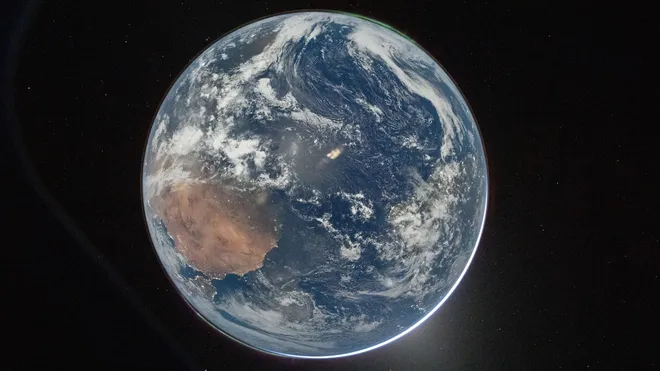
During the mission’s daring lunar flyby, Artemis II pushed beyond 248,655 miles from Earth, breaking a record that had stood since April 1970. That distance is not just a number. It represents a threshold—a point at which Earth is no longer the dominant visual presence, but a small, fragile sphere suspended in vastness. For those aboard the spacecraft, the view was immediate and undeniable. For those of us here on the ground, it arrives as something else: a reminder that everything we know, everything we depend on, and everything we are responsible for exists within that single, finite system.
At Sustainable Action Now, this moment is not viewed through the lens of space exploration alone. It is understood as a defining intersection between innovation and responsibility, between technological progress and environmental awareness. The farther humanity travels outward, the more urgent the need becomes to understand, preserve, and protect what remains behind.
The Artemis II mission, with its precise navigation and historic trajectory, also delivered a rare and symbolic visual event—a solar eclipse observed from deep space during the lunar flyby. In that moment, the alignment of celestial bodies created a powerful visual contrast: light obscured, then restored, reinforcing the delicate balance that defines existence not only in space, but on Earth itself. It is this balance that lies at the core of climate awareness.
From this vantage point, Earth is not defined by borders, industries, or economies. It is defined by interconnected systems—oceans, forests, atmosphere, and life itself. Climate is not an abstract concept at that scale. It is the operating system of the planet, the force that sustains biodiversity, regulates temperature, and makes life possible. When viewed from the distance achieved by Artemis II, the urgency of protecting that system becomes unmistakable.
This is why Sustainable Action Now continues to expand its focus through its climate initiative, accessible through Climate. The platform is designed not only to inform, but to activate—to connect global events with individual and collective responsibility. The story of Artemis II is not separate from climate action; it reinforces it. It demonstrates that while humanity has the capability to reach beyond Earth, it does not yet have the ability to replicate or replace it.
The emotional resonance of this moment is equally important. “Take a minute to sit with the sounds of the beings you share the planet with.” This is more than a reflection—it is an invitation. In a world defined by constant movement and noise, the act of pausing to recognize the shared existence of life on Earth becomes a form of awareness in itself. The sounds of wind through trees, the rhythm of ocean waves, the calls of wildlife—these are not background elements. They are indicators of a living system that is increasingly under pressure.
Artemis II reminds us that Earth is not just where we live. It is where life exists in its known form. Every ecosystem, every species, every climate pattern is part of a network that has developed over millions of years. The responsibility to maintain that network does not diminish as technology advances—it intensifies. Exploration and preservation are not opposing forces; they are interconnected obligations.
There is also a deeper human dimension to this moment. The idea that “everyone deserves to celebrate happiness” takes on new meaning when placed in the context of planetary stewardship. Happiness, at its core, is tied to stability, to security, and to the ability to exist within an environment that supports life. Climate action is not separate from that goal—it is central to it. Protecting the planet is not an abstract responsibility; it is a direct investment in the well-being of every current and future generation.
The Artemis II mission underscores a critical truth: progress without perspective is incomplete. The ability to travel farther than ever before must be matched by an equal commitment to understanding what that distance reveals. From space, there are no excess resources, no expendable systems, and no alternative environments waiting to be utilized. There is only Earth—finite, interconnected, and irreplaceable.
At Sustainable Action Now, this moment is being recognized as an opportunity to deepen engagement, expand awareness, and reinforce the connection between global achievement and local responsibility. The climate conversation is not static. It evolves with every new development, every new insight, and every new perspective that challenges how we understand our place in the world.
Artemis II has provided one of the most powerful perspectives available. It has shown us Earth as it truly is: small, unified, and essential. The question that follows is not whether we can continue to explore beyond it. The question is whether we will commit to protecting it with the same level of precision, focus, and determination that made that exploration possible.
The path forward is not defined by distance traveled, but by actions taken. Engage with the ongoing work through Sustainable Action Now’s Climate Initiative, and become part of a movement that understands the stakes, embraces the responsibility, and recognizes that the future of humanity is inseparable from the health of the planet it calls home.
This is not just a milestone in space exploration. It is a moment of clarity.