
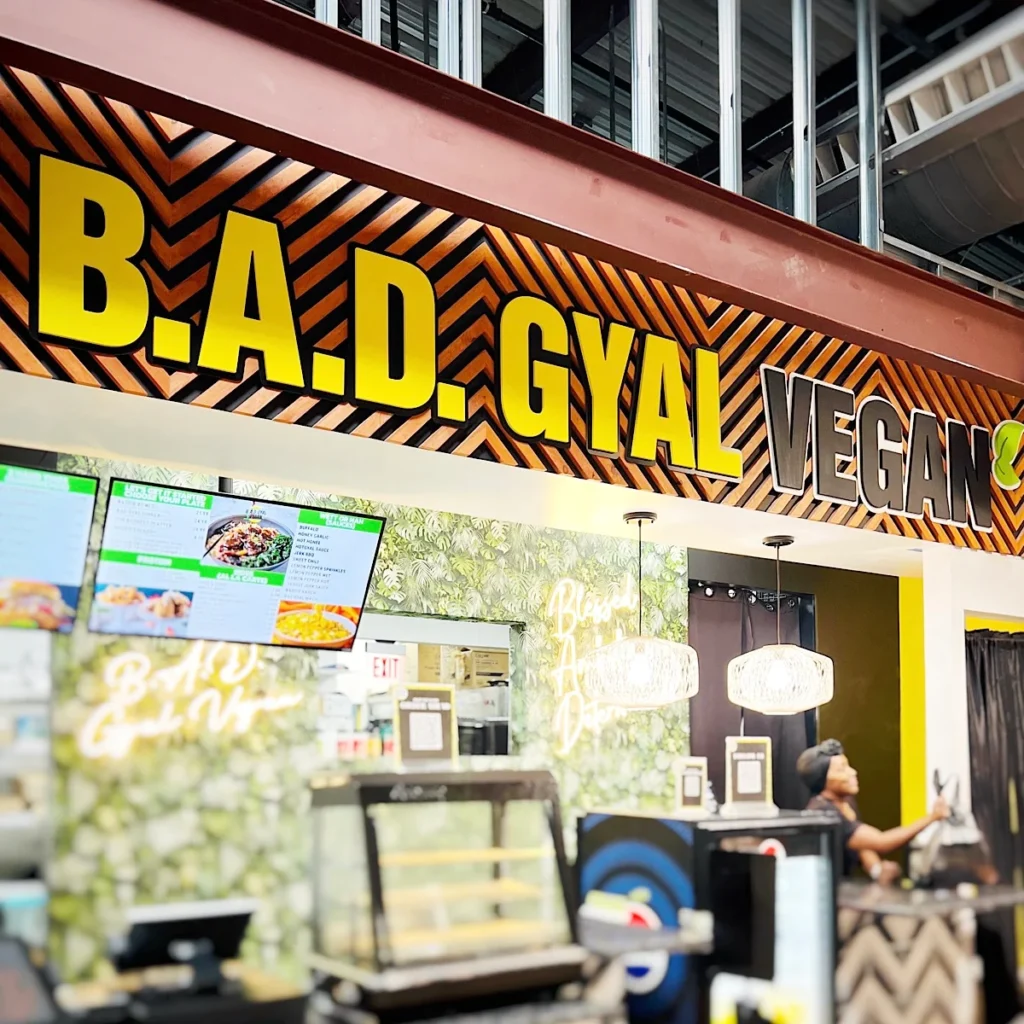
In a city celebrated for bold flavors and unapologetic creativity, one vegan restaurant is redefining what it means to eat with purpose.
When People for the Ethical Treatment of Animals (PETA) stopped by B.A.D. Gyal Vegan in Atlanta to connect with Chef Chyna and sample the restaurant’s now-famous plant-based “Voxtail,” it wasn’t just a food review—it was a cultural signal.
Plant-based cuisine is no longer a niche lifestyle choice. It is a statement about health, climate, animal welfare, and economic empowerment. And at B.A.D. Gyal Vegan, that statement comes plated with heat, heritage, and serious flavor.
At Sustainable Action Now, we explore why this Atlanta hotspot is more than a restaurant—it’s part of a broader shift away from industrial animal agriculture and toward a sustainable, justice-centered food system.
B.A.D. Gyal Vegan: Bold Flavor Without the Harm
B.A.D. Gyal Vegan has built its reputation on one central principle: you do not have to sacrifice flavor to eliminate animal products.
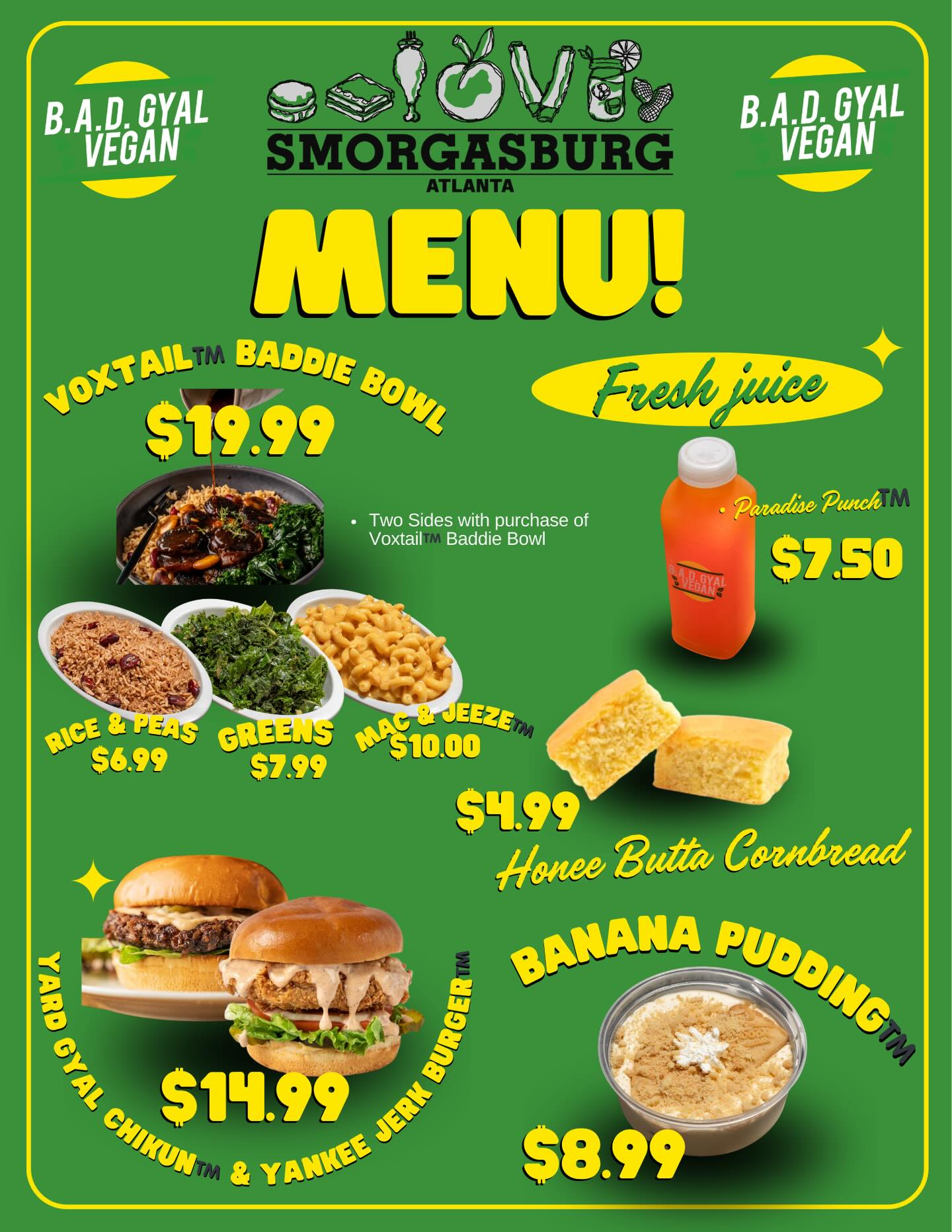
Chef Chyna’s culinary philosophy fuses Caribbean and Southern influences into fully plant-based dishes that honor tradition while rejecting cruelty. The standout? The signature plant-based “Voxtail”—a creative reinterpretation of oxtail that delivers the rich, savory depth diners crave without contributing to slaughterhouse supply chains.
In cities like Atlanta—where culinary identity is sacred—this matters. Replacing animal-based staples with plant-powered alternatives is not about erasing culture. It’s about evolving it.
The restaurant’s message is clear: indulgence and ethics can coexist.
Why Plant-Based Dining Is a Climate Strategy
Every vegan meal carries climate implications.
Animal agriculture is a leading contributor to:
- Methane emissions from cattle
- Deforestation for grazing and feed crops
- Water consumption and contamination
- Nitrous oxide from manure management
Beef production, in particular, has one of the highest greenhouse gas footprints per pound of protein. By reimagining traditionally meat-heavy dishes through plant-based innovation, restaurants like B.A.D. Gyal Vegan directly reduce:
- Carbon intensity per meal
- Water use
- Land demand
- Supply chain emissions
Choosing plant-based options—even a few times per week—can significantly reduce an individual’s dietary carbon footprint.
When that choice becomes mainstream dining rather than fringe activism, systemic impact accelerates.
The Cultural Shift: From “Alternative” to Aspirational
For decades, vegan food was framed as restrictive, austere, or bland. That narrative has collapsed.
Today’s plant-based chefs are not apologizing. They are leading.
B.A.D. Gyal Vegan embraces bold branding, confident identity, and unapologetic flavor. The restaurant positions veganism not as sacrifice—but as empowerment.
“Eat like a baddie” is more than a tagline. It reframes plant-based living as strong, stylish, and culturally relevant.
This is how movements scale—by making values aspirational.
From Private Prisons to Food Justice: Why This Story Matters at SAN
At Sustainable Action Now, our private prisons coverage examines how profit-driven systems exploit human lives. Industrial animal agriculture operates on a parallel model—commodifying sentient beings for efficiency and margin.
Both systems share structural characteristics:
- High-volume confinement
- Profit per unit of life
- Externalized social costs
- Disproportionate impacts on marginalized communities
Plant-based entrepreneurship disrupts that model.
By shifting consumer demand, restaurants like B.A.D. Gyal Vegan weaken the economic incentives that drive factory farming expansion. Food justice and prison reform intersect in their demand for dignity, transparency, and ethical accountability.
Where we invest, eat, and spend reflects who we are.
Atlanta as a Plant-Based Powerhouse
Atlanta has rapidly emerged as a hub for innovative vegan cuisine. Black-owned vegan restaurants, in particular, are reshaping the narrative around food access, health equity, and economic independence.
This matters because:
- Diet-related illnesses disproportionately impact communities of color.
- Food deserts limit access to fresh, healthy ingredients.
- Cultural representation in plant-based spaces has historically been limited.
B.A.D. Gyal Vegan challenges all three dynamics at once—proving that plant-based food can be culturally rooted, nutritionally empowering, and economically viable.
The Power of Visibility: PETA’s Visit
When PETA spotlights a restaurant like B.A.D. Gyal Vegan, it amplifies the conversation beyond a single neighborhood.
It signals:
- Demand for cruelty-free dining is rising.
- Vegan chefs are innovators, not imitators.
- Consumers are ready for bold plant-based experiences.
Visibility fuels normalization. Normalization fuels market change.
Plant-Based Economics: Why This Is the Future
The global plant-based food market continues to expand as consumers seek:
- Lower environmental impact
- Health-conscious dining
- Ethical sourcing
- Supply chain transparency
Restaurants that master flavor first—and ethics second—position themselves at the forefront of this shift.
Delivery options further increase accessibility. Whether dining in Atlanta or ordering from home, consumers can now align convenience with conscience.
That is the future of food.
What Makes the “Voxtail” So Important?
Signature dishes carry symbolic weight.
By recreating a beloved comfort food without animal products, Chef Chyna demonstrates that culinary satisfaction does not require animal suffering.
The “Voxtail” is not imitation—it is innovation.
It disrupts the assumption that traditional dishes must remain tied to traditional sourcing. It shows that sustainability does not mean abandonment of flavor heritage.
This is how cultural preservation and climate action can move together.
The Broader Impact: Individual Choices, Systemic Change
Critics often argue that individual dietary choices are insignificant in the face of global climate challenges. That framing misunderstands market dynamics.
Consumer demand drives:
- Agricultural production patterns
- Retail inventory decisions
- Restaurant menu design
- Investment in food technology
Every thriving plant-based restaurant strengthens the economic case for scaling alternatives to factory farming.
B.A.D. Gyal Vegan is not merely serving food—it is participating in systemic transformation.
Visit or Order: Align Appetite With Action
If you are in Atlanta, B.A.D. Gyal Vegan belongs on your must-visit list.
If you are not, support plant-based innovators in your own community.
Dining is political. Spending is directional. Flavor is influential.
When bold, flavorful vegan food becomes mainstream, the ripple effects extend from kitchen tables to climate metrics.
Sustainable Action Now: The Bigger Picture
At SAN, we spotlight stories that demonstrate how local action fuels global change.
B.A.D. Gyal Vegan represents:
- Climate-conscious entrepreneurship
- Ethical innovation in food systems
- Cultural leadership in plant-based dining
- A direct challenge to industrial animal agriculture
The transition to a sustainable future will not occur solely through legislation. It will unfold through everyday decisions—what we order, what we support, what we celebrate.
And if the future tastes like Chef Chyna’s plant-based “Voxtail,” it will be bold, unapologetic, and powered by compassion.
Eat like a baddie.
But more importantly—eat like the climate, the animals, and the next generation depend on it.