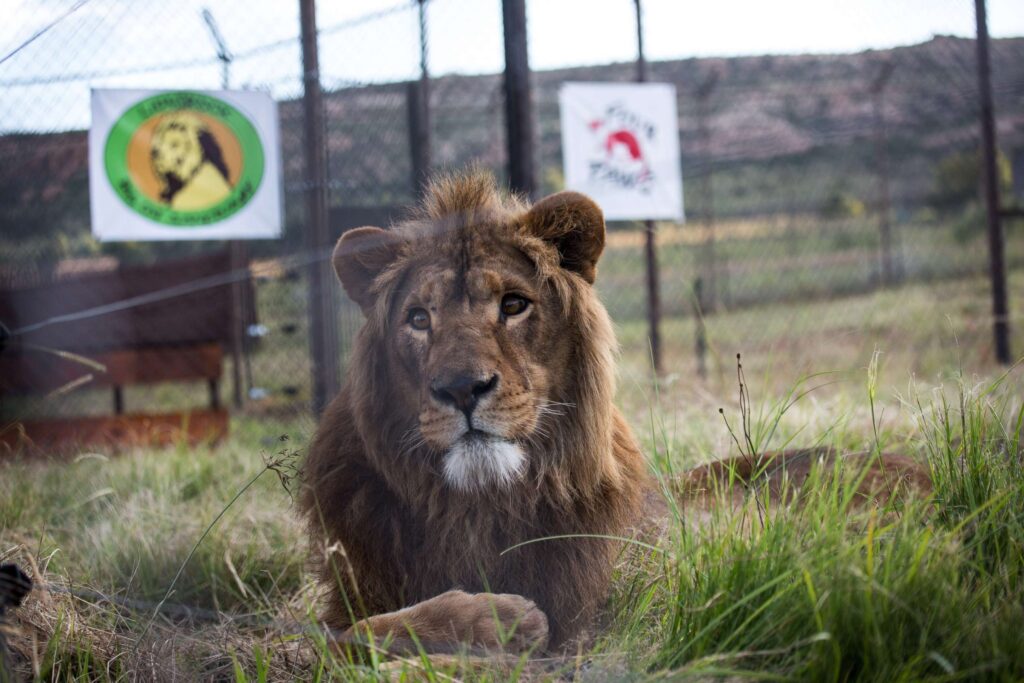
There is a defining moment in every rescue that marks the transition from survival to life. For two young lions once confined within an illegal breeding operation in South Africa, that moment did not come quickly. It arrived only after months of intervention, legal processes, and sustained advocacy—an extended effort that ultimately led to their relocation to LIONSROCK, a sanctuary designed to offer rescued big cats the space, dignity, and autonomy they were previously denied.
Their story begins within a system that has increasingly come under global scrutiny: the exploitation of wildlife through unregulated breeding and inadequate care. Removed from natural environments and placed into conditions that prioritize profit over welfare, lions in these settings often face restricted movement, limited enrichment, and social instability. For these two brothers, once part of a larger pride under compromised conditions, the trajectory changed only when authorities intervened, identifying the environment as unsuitable and initiating the process of removal.
What followed was not immediate liberation, but a period of waiting that reflects a broader reality in wildlife rescue operations. Relocating large predators is a complex undertaking, requiring coordination across legal, logistical, and veterinary domains.
Permits must be secured, transport conditions carefully managed, and receiving facilities prepared to meet the specific needs of the animals. This process, while time-intensive, is essential to ensuring that rescue does not introduce new risks.
When the lions finally arrived at LIONSROCK in November 2022, they entered an environment fundamentally different from the one they had known. Unlike traditional containment facilities, the sanctuary operates with a focus on species-appropriate living conditions. Enclosures are designed to support natural behaviors, offering space to roam, varied terrain, and opportunities for physical and cognitive engagement. For animals that have experienced restriction, this shift is not merely physical—it is behavioral and psychological.As the lions matured, another critical transition emerged. In natural settings, young males eventually separate from dominant males within a pride, establishing their own territory and social structure. Recognizing this instinctual progression, the sanctuary team made the decision to provide the brothers with their own dedicated space. This move was not only a matter of safety, but an acknowledgment of their developmental needs—an effort to align their environment with the rhythms of their species.
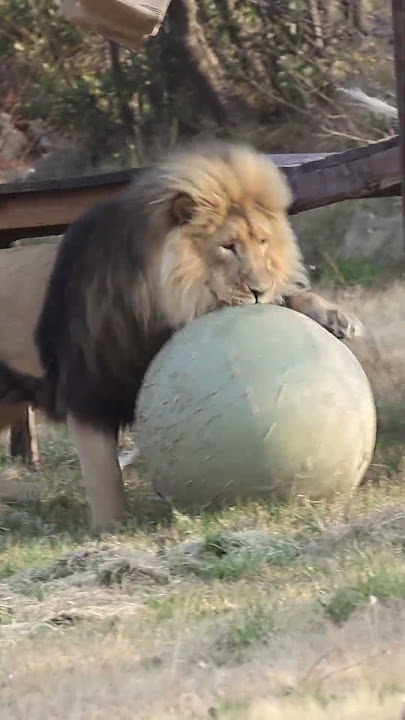
What has followed is a transformation that is both visible and instructive. The lions now exhibit behaviors that reflect a return to instinct: movement driven by curiosity rather than confinement, interaction shaped by choice rather than necessity, and play that signals both physical health and psychological recovery. Observations of their daily activity reveal a dynamic range of behaviors—rolling, wrestling, exploring, and engaging with enrichment tools that stimulate both body and mind.
Among these elements, even simple objects can take on significant importance. Enrichment devices, such as large interactive balls, are not incidental additions; they are designed to encourage movement, coordination, and engagement. For animals that have experienced limited stimulation, these tools play a critical role in rebuilding behavioral patterns that were suppressed or underdeveloped.
The visual of these lions at play—energetic, responsive, and fully engaged in their environment—stands in stark contrast to the conditions from which they were removed. It is a reminder that recovery is not only possible, but measurable. The shift from confinement to expression, from restriction to exploration, reflects the effectiveness of environments that prioritize welfare over containment.
This transformation is part of a broader framework of rescue and rehabilitation that extends across regions and species. Organizations working within this space are increasingly focused on creating systems that do more than remove animals from harm—they aim to restore conditions that allow for long-term well-being. This includes not only physical care, but the design of habitats that support natural behaviors, social structures, and individual autonomy.
Within the global network of animal rescue initiatives, efforts like those at LIONSROCK are emblematic of a larger movement toward ethical wildlife management. They highlight the importance of addressing not only the symptoms of exploitation, but the structures that enable it. By providing viable alternatives to captivity and commercial breeding, sanctuaries play a critical role in reshaping how wildlife is treated and valued.
The opportunity for public engagement is also evolving. Programs such as symbolic adoption offer a way for individuals to contribute directly to the care and support of rescued animals. These initiatives bridge the gap between awareness and action, providing a tangible connection to the work being done on the ground. Contributions support ongoing care, habitat maintenance, and the continued capacity to respond to new rescue cases.
At the same time, visitor programs at sanctuaries like LIONSROCK are redefining how people experience wildlife. Rather than presenting animals as attractions, these environments emphasize education, respect, and the realities of rescue. They create a space where observation is paired with understanding, reinforcing the message that these animals are not exhibits, but individuals with histories and needs.
The broader implications of this work are reflected in ongoing efforts across Sustainable Action Now’s rescue network initiatives, where the focus remains on scaling impact and strengthening the systems that make rescues possible. Each successful case contributes to a growing body of evidence that humane, sustainable approaches to animal welfare are not only achievable, but essential.
The story of these two lions is not an isolated success. It is part of a continuum, one that begins with intervention and extends through recovery, adaptation, and long-term care. It demonstrates the importance of patience, the value of expertise, and the impact of environments designed with intention.
In the end, what stands out is not only the change in circumstance, but the change in expression. The energy, movement, and engagement now visible in these lions are indicators of a life reclaimed. They reflect a state that was always possible, but previously out of reach.
As rescue networks continue to expand and refine their efforts, the trajectory becomes clearer. From confinement to sanctuary, from restriction to autonomy, from survival to vitality—the path is defined by action, supported by structure, and sustained by a commitment to ensuring that every rescued animal has the opportunity to live in a way that aligns with its nature.