High in the snow-covered Swiss Alps, where silence blankets the landscape and temperatures plunge deep into winter extremes, a remarkable story of resilience, conservation, and commitment unfolds every single day. At the Arosa Bear Sanctuary, winter is not a season of inactivity—it is a test of systems, dedication, and purpose.
While the bears retreat into dormancy, conserving energy in their dens, the sanctuary itself remains fully alive. Behind the scenes, a small but highly focused team ensures that this world-class rescue and rehabilitation environment continues to function without interruption. This is the reality of modern animal welfare: even when nature slows down, responsibility does not.
Through Sustainable Action Now’s ongoing coverage of global rescue networks, Arosa Bear Sanctuary stands as a powerful example of what long-term, ethical wildlife care truly requires.
Winter in the Alps: A Sanctuary Transformed
Winter dramatically reshapes the sanctuary’s environment. Snowfall accumulates rapidly, terrain becomes more difficult to navigate, and operational demands shift from public engagement to infrastructure maintenance and animal monitoring.
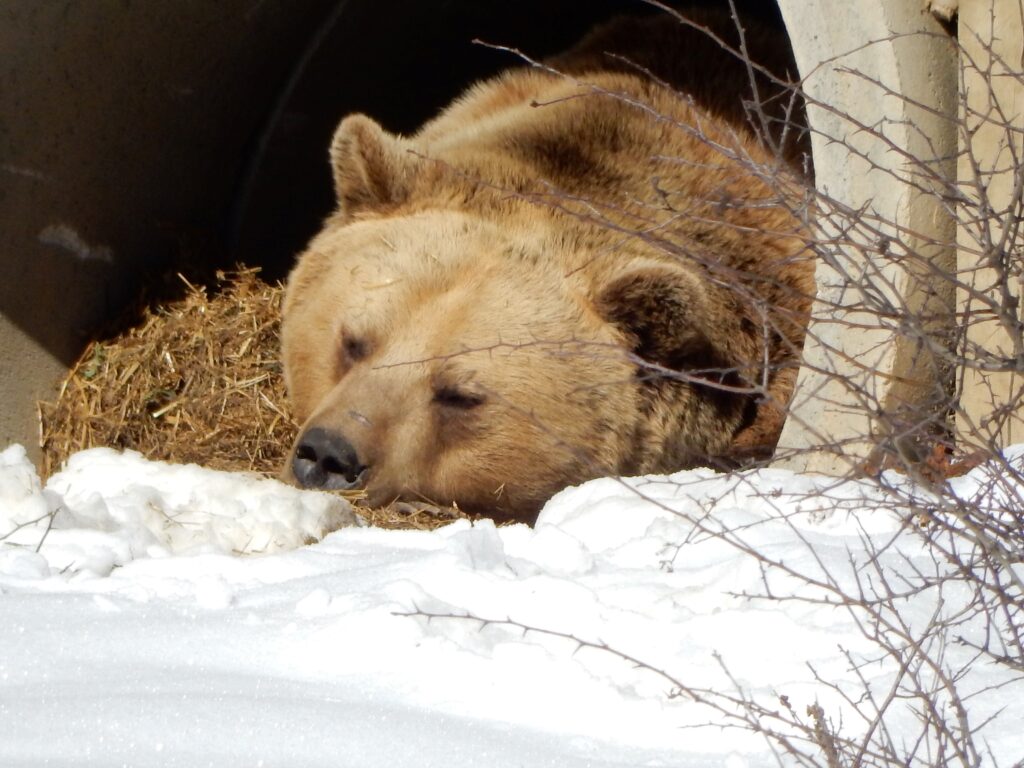
For the bears, this season is defined by dormancy—a natural biological process that allows them to conserve energy when food sources are scarce. But unlike full hibernation, bears in sanctuaries like Arosa may still wake periodically, adjust their position, or even briefly emerge depending on conditions.
This winter, Jamila, one of the sanctuary’s most closely followed residents, demonstrated exactly that behavior. In early February, she was observed exploring areas outside her den, actively seeking snow-free ground. As conditions intensified and snowfall increased, her instincts shifted—she returned to her den, choosing warmth and energy conservation over exploration.
This kind of adaptive behavior underscores the sanctuary’s success in providing an environment that mirrors natural conditions while still ensuring safety and care.
The Human Element: Two People, One Mission
What makes Arosa Bear Sanctuary particularly compelling during winter is not just the behavior of the bears—it’s the operational model behind the scenes.
In peak summer months, the sanctuary is supported by a team of seven staff members, managing everything from visitor engagement to animal care and facility operations. But winter tells a very different story.
As tourism slows and the bears enter dormancy, the team is reduced to just two part-time staff members.
Two individuals are responsible for maintaining the entire sanctuary.
This includes daily safety checks across a large, mountainous enclosure, ensuring that fencing remains secure despite heavy snow loads and shifting terrain. It involves constant snow clearing to keep pathways accessible and prevent structural strain. It requires administrative coordination, monitoring systems, and readiness to respond to any unexpected changes in animal behavior or environmental conditions.
This is not passive oversight—it is active, ongoing stewardship in one of the most challenging climates imaginable.
Infrastructure Under Pressure: What Winter Really Demands
Operating a sanctuary in alpine winter conditions introduces a unique set of logistical challenges that extend far beyond routine animal care.
Snow accumulation can compromise fencing integrity, requiring regular inspections and reinforcement. Ice formation can create hazards for both animals and staff, necessitating continuous mitigation efforts. Access routes must be cleared repeatedly to ensure emergency readiness.
Every day becomes a balance between environmental forces and human intervention.
And yet, this work is largely invisible to the public. Visitors who experience the sanctuary during warmer months see a thriving, open habitat. What they don’t see is the winter infrastructure strategy that makes that experience possible.
Conservation Beyond Visibility: Why Winter Work Matters
One of the most important takeaways from Arosa Bear Sanctuary’s winter operations is this: conservation is not seasonal.
Rescue work does not pause when animals are less visible. In fact, winter is often when the most critical maintenance and planning occur. It is when teams prepare for the next cycle of activity, ensuring that habitats remain safe, sustainable, and ready for the months ahead.
This is particularly relevant within the broader context of global animal rescue networks. Sanctuaries are not just places of refuge—they are complex systems that require year-round investment, expertise, and coordination.
Arosa exemplifies this model at the highest level.
Guided Access: A Rare Winter Perspective
Despite the challenging conditions, the sanctuary remains accessible.
Guided tours continue to be available daily upon request, offering a unique opportunity to experience the sanctuary in its most serene and introspective state. Winter visits provide a different kind of connection—one that emphasizes environment, scale, and the quiet reality of animal care during dormancy.
It’s not about spectacle. It’s about understanding.
For those willing to venture into the alpine winter, the experience offers a deeper appreciation of what sanctuaries represent and the effort required to sustain them.
The Role of Global Partnerships in Animal Rescue
Arosa Bear Sanctuary operates within a broader ecosystem of international animal welfare initiatives, including collaborations with organizations dedicated to ending the exploitation of wildlife and providing safe, permanent homes for rescued animals.
These partnerships are essential. They enable knowledge sharing, resource allocation, and coordinated rescue efforts that extend far beyond a single location.
Through this networked approach, sanctuaries like Arosa become part of a global movement—one that prioritizes ethical treatment, habitat restoration, and long-term care over short-term visibility.
Redefining What Success Looks Like in Animal Welfare
Success in animal rescue is often misunderstood. It’s not measured by constant activity or public visibility. It’s measured by stability, safety, and the ability to provide animals with an environment where they can express natural behaviors—even if that behavior is simply resting undisturbed in a den during winter.
At Arosa Bear Sanctuary, success looks like Jamila choosing to stay warm and conserve energy.
It looks like fences holding strong under heavy snow.
It looks like two dedicated individuals ensuring that everything continues to function, day after day, without interruption.
A Model for Sustainable, Ethical Conservation
As Sustainable Action Now continues to highlight leading examples in the global rescue network, Arosa Bear Sanctuary stands out as a model of operational excellence and ethical commitment.
It demonstrates that sustainability is not just about environmental impact—it’s about systems that endure, adapt, and deliver consistent care regardless of external conditions.
It shows that real conservation work happens in the quiet moments, in the off-season, and in the unseen effort that keeps everything running.
Continuing the Mission
The story unfolding at Arosa this winter is not an isolated one. It is part of a larger narrative—one that spans continents, organizations, and countless individuals dedicated to protecting animals and preserving their dignity.
Through ongoing coverage, Sustainable Action Now will continue to bring these stories forward, connecting audiences with the realities of modern conservation and the people who make it possible.
Because whether it’s summer crowds or winter silence, the mission remains the same: protect, sustain, and ensure that every rescued animal has a place to call safe.
And at Arosa Bear Sanctuary, that mission never pauses.