
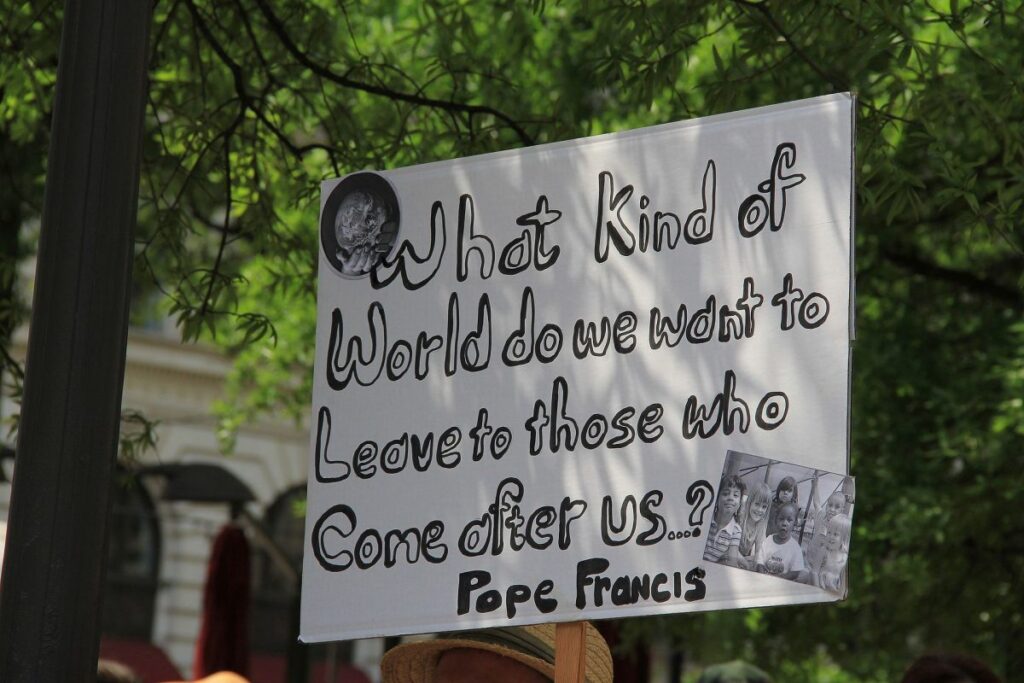
Across New Jersey, a meaningful shift is taking place at the intersection of faith, community, and environmental stewardship—one that is redefining how individuals and organizations approach the urgency of climate change. At a recent event, Dr. Elizabeth Cerceo presented a compelling framework that positions climate action not simply as a scientific or political issue, but as a deeply rooted moral and spiritual responsibility. Her message reflects a broader movement gaining traction throughout the state, where faith-based communities are increasingly stepping forward as influential voices in the effort to address environmental challenges.
Within the evolving landscape of New Jersey’s lifestyle and civic engagement initiatives, this approach introduces a powerful new dimension to the conversation. Rather than relying solely on data-driven appeals or policy-focused arguments, it connects environmental responsibility to values that resonate on a personal and communal level—care, stewardship, accountability, and compassion.
Dr. Cerceo’s perspective centers on a fundamental idea: that caring for the environment is not separate from spiritual life, but an extension of it. By framing climate action as a form of stewardship, she emphasizes the responsibility individuals have to protect and preserve the natural world—not only for themselves, but for future generations. This approach aligns with longstanding principles found across many faith traditions, where the concept of caring for creation is embedded within broader teachings about responsibility and interconnectedness.
What distinguishes this movement is its ability to translate these principles into tangible action. Faith-based organizations are uniquely positioned to mobilize communities at scale, bringing together individuals who share not only beliefs, but a commitment to collective action. Through sermons, community programs, educational initiatives, and service projects, these groups are creating pathways for engagement that extend beyond awareness into meaningful, sustained impact.
In New Jersey, where diverse communities and traditions coexist, this approach has particular relevance. The state’s faith-based organizations represent a wide range of perspectives, yet many are finding common ground in the shared goal of environmental responsibility. This convergence is creating opportunities for collaboration that transcend individual institutions, fostering a sense of unity around a cause that affects all communities equally.
Dr. Cerceo’s presentation highlighted the importance of reframing climate change in a way that resonates emotionally as well as intellectually. While scientific data remains essential, it is often the personal connection—the sense of duty, the recognition of impact, the desire to protect—that drives action. By integrating these elements into the conversation, faith-based initiatives are expanding the reach of climate advocacy, engaging individuals who may not have previously seen themselves as part of the movement.
This shift is also influencing how environmental issues are discussed within communities. Rather than positioning climate change as a distant or abstract concern, it is being brought into everyday life, connected to local experiences and immediate realities. Issues such as air quality, access to clean water, and the impact of extreme weather events are being framed not only as environmental challenges, but as matters of community well-being and justice.
The emphasis on justice is particularly significant. Faith-based approaches to climate action often incorporate a focus on equity, recognizing that the effects of environmental degradation are not distributed evenly. Vulnerable communities frequently bear the greatest burden, making climate action not only an environmental issue, but a social one. By addressing these disparities, faith-based initiatives are contributing to a more comprehensive understanding of what meaningful climate action entails.
Education plays a central role in this movement. Through workshops, discussions, and community outreach, organizations are equipping individuals with the knowledge and tools needed to take action in their own lives. This includes everything from energy conservation and sustainable practices to advocacy and community engagement. The goal is not only to inform, but to empower—creating a sense of agency that encourages ongoing participation.
At the same time, these efforts are reinforcing the importance of collective action. While individual choices matter, the scale of the challenge requires coordinated efforts that bring together communities, institutions, and leaders. Faith-based organizations, with their established networks and strong community ties, are well-positioned to facilitate this coordination, serving as both conveners and catalysts for broader initiatives.
The growing involvement of faith communities in climate action also reflects a broader cultural shift. As conversations around sustainability and environmental responsibility become more prominent, there is an increasing recognition that addressing these issues requires engagement from all sectors of society. By entering this space, faith-based groups are contributing perspectives that enrich the conversation, adding depth and dimension to the ways in which solutions are developed and implemented.
For New Jersey, this movement represents an opportunity to lead by example. The state’s diverse population, combined with its strong tradition of community engagement, creates an environment where innovative approaches to complex challenges can take root. By integrating faith-based perspectives into the broader climate conversation, New Jersey is demonstrating how values-driven initiatives can complement scientific and policy-based efforts, creating a more holistic approach to environmental stewardship.
Dr. Cerceo’s message serves as both a reflection of this emerging movement and a call to action. It challenges individuals and communities to reconsider their relationship with the environment, to see it not as a separate concern, but as an integral part of their values and responsibilities. In doing so, it opens the door to a more inclusive and impactful approach to climate action—one that is grounded in both conviction and community.
As this movement continues to grow, its influence is likely to extend beyond individual events and organizations, shaping the way climate action is understood and pursued across New Jersey. By linking faith to environmental responsibility, it offers a framework that is both accessible and profound, inviting individuals from all backgrounds to engage with one of the most pressing challenges of our time in a way that is both meaningful and sustainable.