
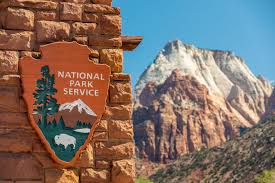
Across the United States, the National Park System is undergoing one of its most complex and consequential transformations in decades. What began as an internal effort to reassess interpretive content has expanded into a broader restructuring—touching everything from historical narratives and visitor access to pricing models and operational strategy.
At the center of this moment is a convergence of pressures: cultural, economic, environmental, and political. The result is a sweeping recalibration of how America’s most iconic landscapes are experienced, interpreted, and sustained.
For Sustainable Action Now, this is not just a parks story—it is a sustainability story. It raises critical questions about access, equity, conservation funding, and how national identity is shaped through public lands.
Rewriting the Narrative: A System Under Review
The National Park Service is currently engaged in a large-scale effort to reevaluate and update interpretive materials across its network. This includes exhibits, signage, educational programming, and historical framing at sites nationwide.
The scope is extensive—hundreds of potential changes are under consideration.
What was initially positioned as a modernization effort has evolved into a complex, resource-intensive process. The challenge is not just logistical; it is philosophical. Parks are not neutral spaces—they are curated experiences that reflect decisions about what stories are told, how they are told, and whose perspectives are prioritized.
Revisiting those decisions at scale introduces both opportunity and friction.
On one hand, there is the potential to present a more comprehensive, nuanced understanding of history. On the other, the sheer volume of revisions has created operational strain, slowing progress and stretching internal capacity.
The result is a process that has become, in practical terms, a long-term undertaking rather than a quick reset.
A New Pricing Model: The “America-First” Approach
Beginning January 1, 2026, the National Park Service implemented a revised fee structure that has immediately reshaped access dynamics.
The new model introduces a tiered pricing system that differentiates between U.S. residents and international visitors. At 11 of the most heavily visited parks—including Yellowstone, Yosemite, the Grand Canyon, and Zion—non-U.S. visitors are now subject to a $100 per-person surcharge.
Annual access has also been recalibrated.
The widely used “America the Beautiful” annual pass remains priced at $80 for U.S. residents but has increased significantly to $250 for nonresidents. Additional updates include expanded motorcycle coverage and redesigned passes featuring patriotic themes.
Fee-free days, traditionally open to all visitors, are now reserved exclusively for U.S. residents. Scheduled dates for 2026 include Memorial Day, mid-June observances, Independence Day weekend, and the anniversary of the National Park Service.
These changes represent more than a pricing adjustment—they signal a shift in how access is prioritized and how revenue is generated.
Access vs. Equity: The Emerging Tension
From a sustainability perspective, the new pricing structure introduces a critical debate.
National parks are often described as shared global treasures—ecosystems and landscapes that hold value beyond national borders. Restricting access through higher costs for international visitors raises questions about inclusivity and global stewardship.
At the same time, parks face increasing financial pressures.
Maintenance backlogs, infrastructure demands, and climate-related impacts require funding that must come from somewhere. The revised fee model appears to be an attempt to balance these realities—prioritizing domestic access while leveraging international demand to support operations.
The challenge is ensuring that this balance does not come at the expense of broader engagement or long-term support.
Operational Realities: A System Under Pressure
Beyond policy changes, the day-to-day realities within the park system highlight the complexity of managing such a vast network.
Seasonal conditions, environmental events, and infrastructure needs continue to shape access in real time.
In the Great Smoky Mountains, scheduled prescribed burns are temporarily closing roads and trails, reflecting the ongoing need for active land management. In Hawaiʻi Volcanoes, storm damage has disrupted operations, with recovery efforts still underway. Sections of the Blue Ridge Parkway remain inaccessible due to winter conditions and rehabilitation work.
These are not isolated incidents—they are part of a broader pattern.
Climate variability, aging infrastructure, and increasing visitation are placing sustained pressure on the system. Each closure, adjustment, and repair underscores the need for adaptive management strategies.
Expansion and Evolution: The Push for New National Parks
Amid these challenges, the system continues to grow.
A recent legislative move to elevate Chiricahua National Monument in Arizona to full national park status reflects ongoing interest in expanding the network. This expansion brings new opportunities for conservation and tourism but also adds to the operational demands facing the National Park Service.
Growth, in this context, is both a strength and a responsibility.
It requires careful planning to ensure that new designations are supported with adequate resources and infrastructure from the outset.
Rethinking Summer Access: Moving Beyond Reservations
In another notable shift, the National Park Service has announced changes to its summer access strategy for 2026.
At several high-traffic parks—including Arches, Glacier, and Yosemite—timed entry reservations will not be required. Instead, the system will rely on real-time traffic management to regulate flow.
This marks a departure from previous years, where reservation systems were used to control overcrowding.
Rocky Mountain National Park will continue its timed entry model, highlighting a hybrid approach across the system.
The move toward real-time management introduces both flexibility and uncertainty. It allows for more spontaneous visitation but may also lead to congestion during peak periods.
From a sustainability standpoint, the effectiveness of this approach will depend on execution—how well traffic is managed, how visitors are informed, and how impacts are mitigated.
Climate Implications: Parks on the Front Lines
National parks are not just recreational spaces—they are frontline indicators of environmental change.
Wildfires, storms, shifting ecosystems, and infrastructure strain are all manifestations of broader climate dynamics. The operational challenges currently facing the National Park Service are, in many ways, reflections of these larger forces.
This places parks in a unique position.
They are both impacted by climate change and essential to understanding it. They serve as living laboratories, educational platforms, and conservation anchors.
Ensuring their resilience is not optional—it is fundamental to broader sustainability goals.
The Bigger Picture: What This Moment Represents
Taken together, the changes unfolding across the National Park Service represent a pivotal moment.
They highlight the complexity of managing public lands in a rapidly changing world. They reveal the trade-offs between access, funding, and preservation. And they underscore the importance of aligning policy with both immediate needs and long-term objectives.
For Sustainable Action Now, the takeaway is clear: sustainability is not static.
It requires continuous adjustment, informed decision-making, and a willingness to confront difficult questions. How do we fund conservation without limiting access? How do we update narratives without losing continuity? How do we manage increasing demand without compromising the very environments people come to experience?
These are not easy questions—but they are necessary ones.
Moving Forward: A System in Transition
The National Park Service is entering a period of transition—one that will shape how parks are experienced for years to come.
The success of this transition will depend on execution, transparency, and the ability to balance competing priorities. It will require collaboration across agencies, communities, and stakeholders.
And it will demand a clear vision of what national parks are meant to represent in the 21st century.
At Sustainable Action Now, we will continue to track these developments, analyze their implications, and connect them to the broader conversation around climate, conservation, and sustainable access.
Because the future of national parks is not just about preserving landscapes—it’s about defining how we interact with them, support them, and ensure they endure for generations to come.